
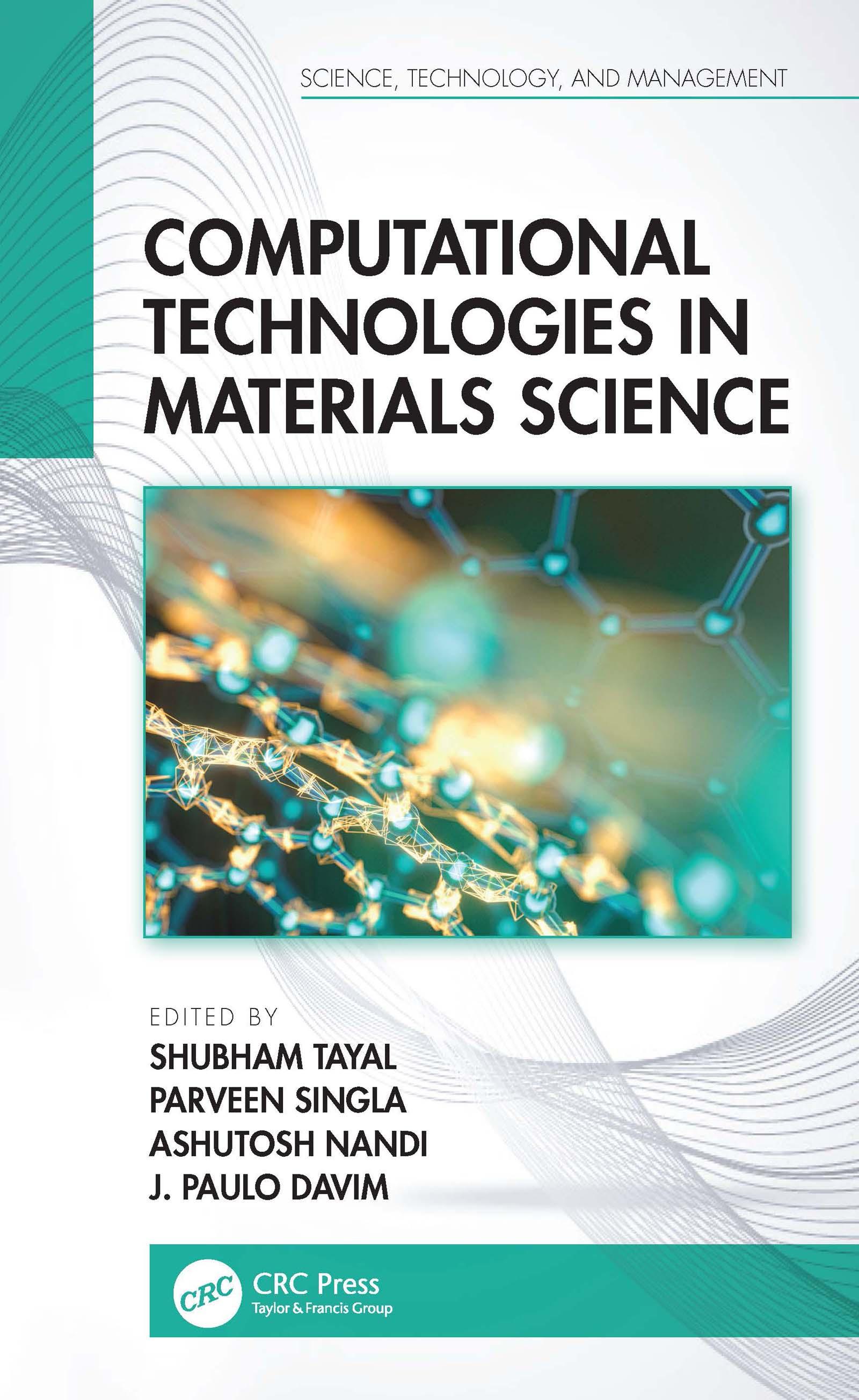
Advanced materials are essential for economic security and human well-being, with applications in industries aimed at addressing challenges in clean energy, national security, and human welfare. Yet, it can take years to move a material to the market after its initial discovery. Computational techniques have accelerated the exploration and development of materials, offering the chance to move new materials to the market quickly. Computational Technologies in Materials Science addresses topics related to AI, machine learning, deep learning, and cloud computing in materials science. It explores characterization and fabrication of materials, machine-learning-based models, and computational intelligence for the synthesis and identification of materials. This book
• Covers material testing and development using computational intelligence
• Highlights the technologies to integrate computational intelligence and materials science
• Details case studies and detailed applications
• Investigates challenges in developing and using computational intelligence in materials science
• Analyzes historic changes that are taking place in designing materials.
This book encourages material researchers and academics to develop novel theories and sustainable computational techniques and explores the potential for computational intelligence to replace traditional materials research.
Betaal eenvoudig met kaart, Klarna, Apple Pay of Google Pay. Niet tevreden? Je hebt altijd 14 dagen bedenktijd. Lees meer in onze voorwaarden. Heb je vragen, mail ons dan via hello@memmo.org.
Memmo maakt studeren makkelijker – waar je ook bent ter wereld. Wij brengen je cursusboeken en slimme studietools samen op één plek: samenvattingen, quizzen, podcasts en flashcards. En Ted, je studievriend die antwoord geeft op alles wat je je afvraagt. Meer dan 50.000 studenten studeren hier al – gebouwd om je sneller te laten leren en minder stress te geven.