
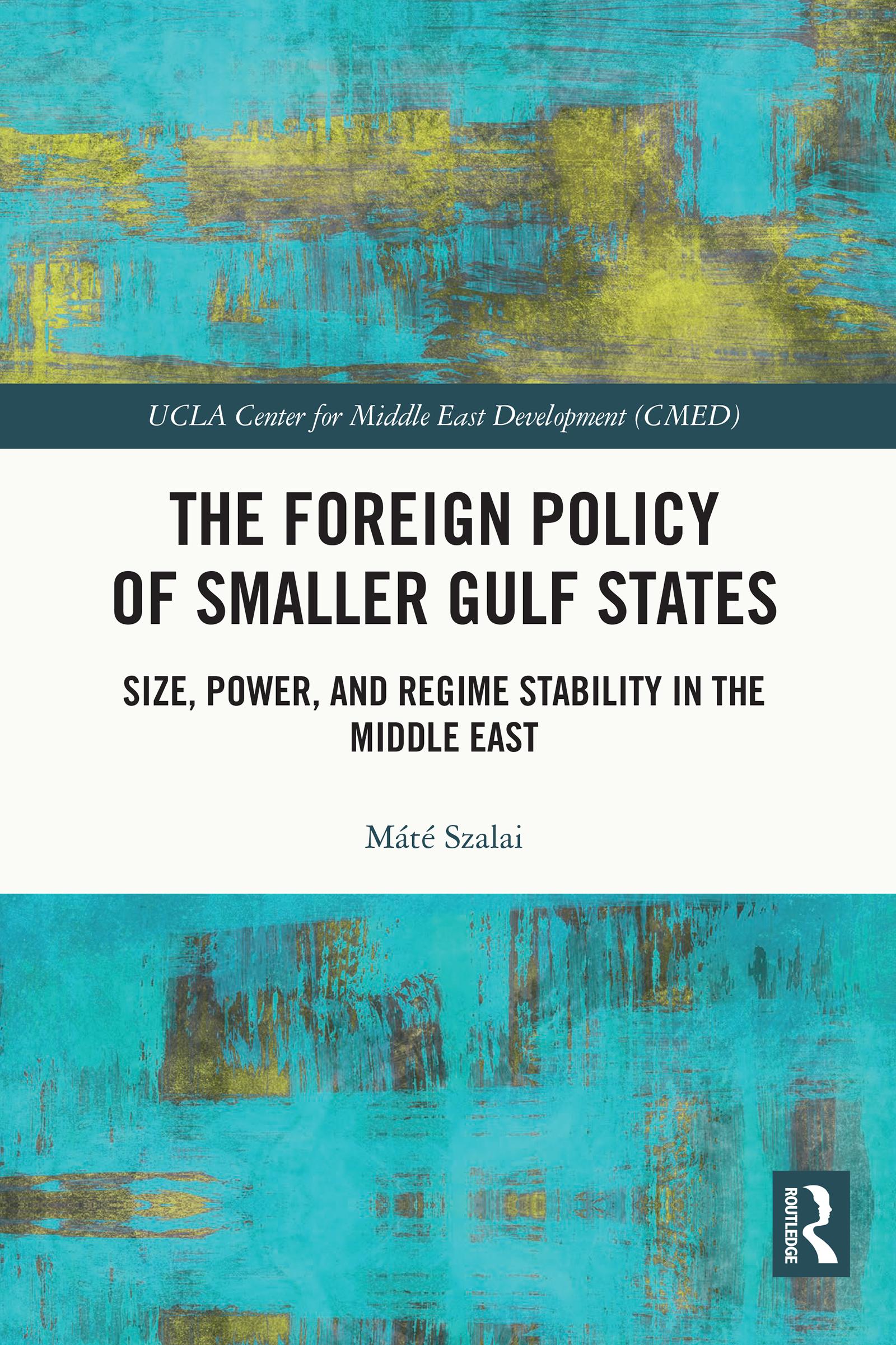
This book studies how smaller Gulf states managed to increase their influence in the Middle East, oftentimes capitalising on their smallness as a foreign policy tool. By establishing a novel theoretical framework (the complex model of size), this study identifies specific ways in which material and perceptual smallness affect power, identity, regime stability, and leverage in international politics.
The small states of the Gulf (Bahrain, Kuwait, Oman, Qatar, and the United Arab Emirates) managed to build up considerable influence in regional politics over the last decade, although their size is still considered an essential, irresolvable weakness, which makes them secondary actors to great powers such as Saudi Arabia or Iran. Breaking down explicit and implicit biases towards largeness, the book examines specific case studies related to foreign and security policy behaviour, including the Gulf wars, the Arab Uprisings, the Gulf rift, and the Abraham Accords.
Analysing the often-neglected small Gulf states, the volume is an important contribution to international relations theory, making it a key resource for students and academics interested in Small State Studies, Gulf studies, and the political science of the Middle East.
Betaal eenvoudig met kaart, Klarna, Apple Pay of Google Pay. Niet tevreden? Je hebt altijd 14 dagen bedenktijd. Lees meer in onze voorwaarden. Heb je vragen, mail ons dan via hello@memmo.org.
Memmo maakt studeren makkelijker – waar je ook bent ter wereld. Wij brengen je cursusboeken en slimme studietools samen op één plek: samenvattingen, quizzen, podcasts en flashcards. En Ted, je studievriend die antwoord geeft op alles wat je je afvraagt. Meer dan 50.000 studenten studeren hier al – gebouwd om je sneller te laten leren en minder stress te geven.