
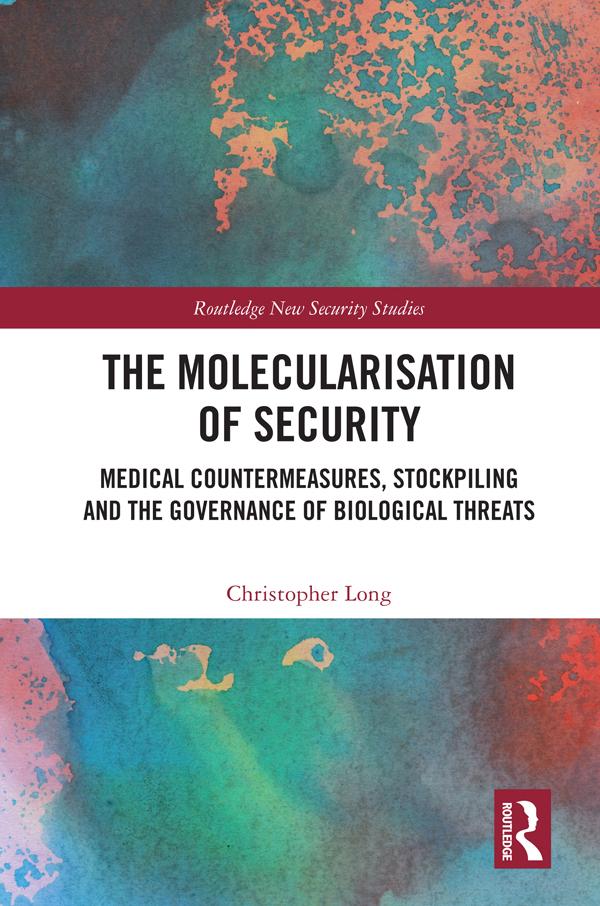
This book investigates the way that the molecular sciences are shaping contemporary security practices in relation to the governance of biological threats.
In response to biological threats, such as pandemics and bioterrorism, governments around the world have developed a range of new security technologies, called medical countermeasures, to protect their populations. This book argues that the molecular sciences’ influence has been so great that security practices have been molecularised. Focusing on the actions of international organisations and governments in the past two decades, this book identifies two contrasting conceptions of the nature or inherent workings of molecular life as driving this turn. On the one hand, political notions of insecurity have been shaped by the contingent or random nature of molecular life. On the other, the identification of molecular life’s constant biological dynamics supports and makes possible the development and stockpiling of effective medical countermeasures. This study is one of the few to take seriously the conceptual implications that the detailed empirical workings of biotechnology have on security practices today.
This book will be of much interest to students of security studies, bio-politics, life sciences, global governance, and International Relations in general.
Betaal eenvoudig met kaart, Klarna, Apple Pay of Google Pay. Niet tevreden? Je hebt altijd 14 dagen bedenktijd. Lees meer in onze voorwaarden. Heb je vragen, mail ons dan via hello@memmo.org.
Memmo maakt studeren makkelijker – waar je ook bent ter wereld. Wij brengen je cursusboeken en slimme studietools samen op één plek: samenvattingen, quizzen, podcasts en flashcards. En Ted, je studievriend die antwoord geeft op alles wat je je afvraagt. Meer dan 50.000 studenten studeren hier al – gebouwd om je sneller te laten leren en minder stress te geven.