
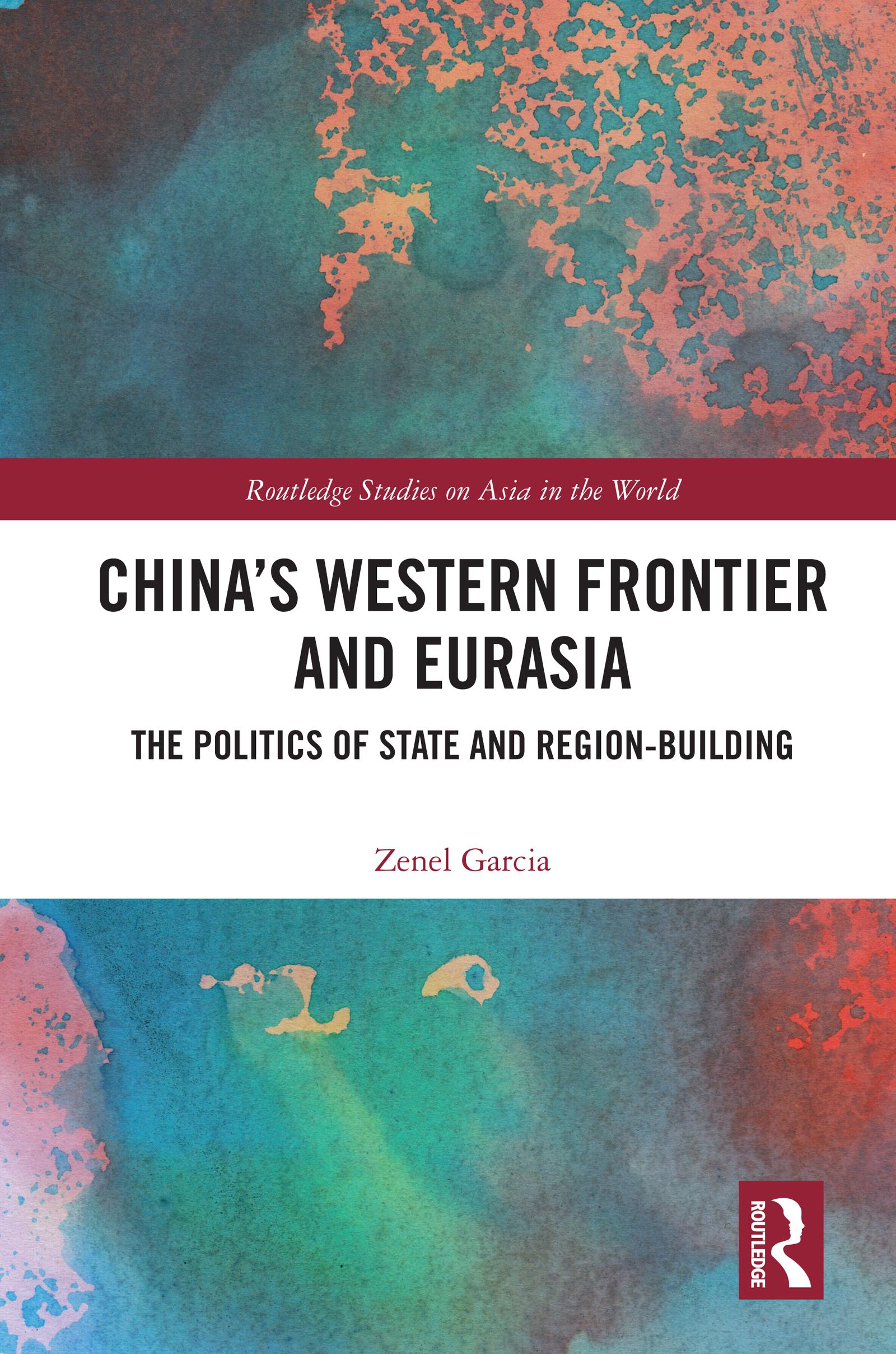
China has emerged as a dominant power in Eurasian affairs that not only exercises significant political and economic power, but increasingly, ideational power too.
Since the founding of the People’s Republic, Chinese Communist Party leaders have sought to increase state capacity and exercise more effective control over their western frontier through a series of state-building initiatives. Although these initiatives have always incorporated an international component, the collapse of the USSR, increasing globalization, and the party’s professed concerns about terrorism, separatism, and extremism have led to a region-building project in Eurasia. Garcia traces how domestic elite-led narratives about security and development generate state-building initiatives, and then region-building projects. He also assesses how region-building projects are promoted through narratives of the historicity of China’s engagement in Eurasia, the promotion of norms of non-interference, and appeals to mutual development. Finally, he traces the construction of regions through formal and informal institutions as well as integrative infrastructure. By presenting three phases of Chinese domestic state-building and region-building from 1988-present, Garcia shows how region-building projects have enabled China to increase state capacity, control, and development in its western frontier.
Recommended for scholars of China’s international relations and development policy.
Betaal eenvoudig met kaart, Klarna, Apple Pay of Google Pay. Niet tevreden? Je hebt altijd 14 dagen bedenktijd. Lees meer in onze voorwaarden. Heb je vragen, mail ons dan via hello@memmo.org.
Memmo maakt studeren makkelijker – waar je ook bent ter wereld. Wij brengen je cursusboeken en slimme studietools samen op één plek: samenvattingen, quizzen, podcasts en flashcards. En Ted, je studievriend die antwoord geeft op alles wat je je afvraagt. Meer dan 50.000 studenten studeren hier al – gebouwd om je sneller te laten leren en minder stress te geven.