
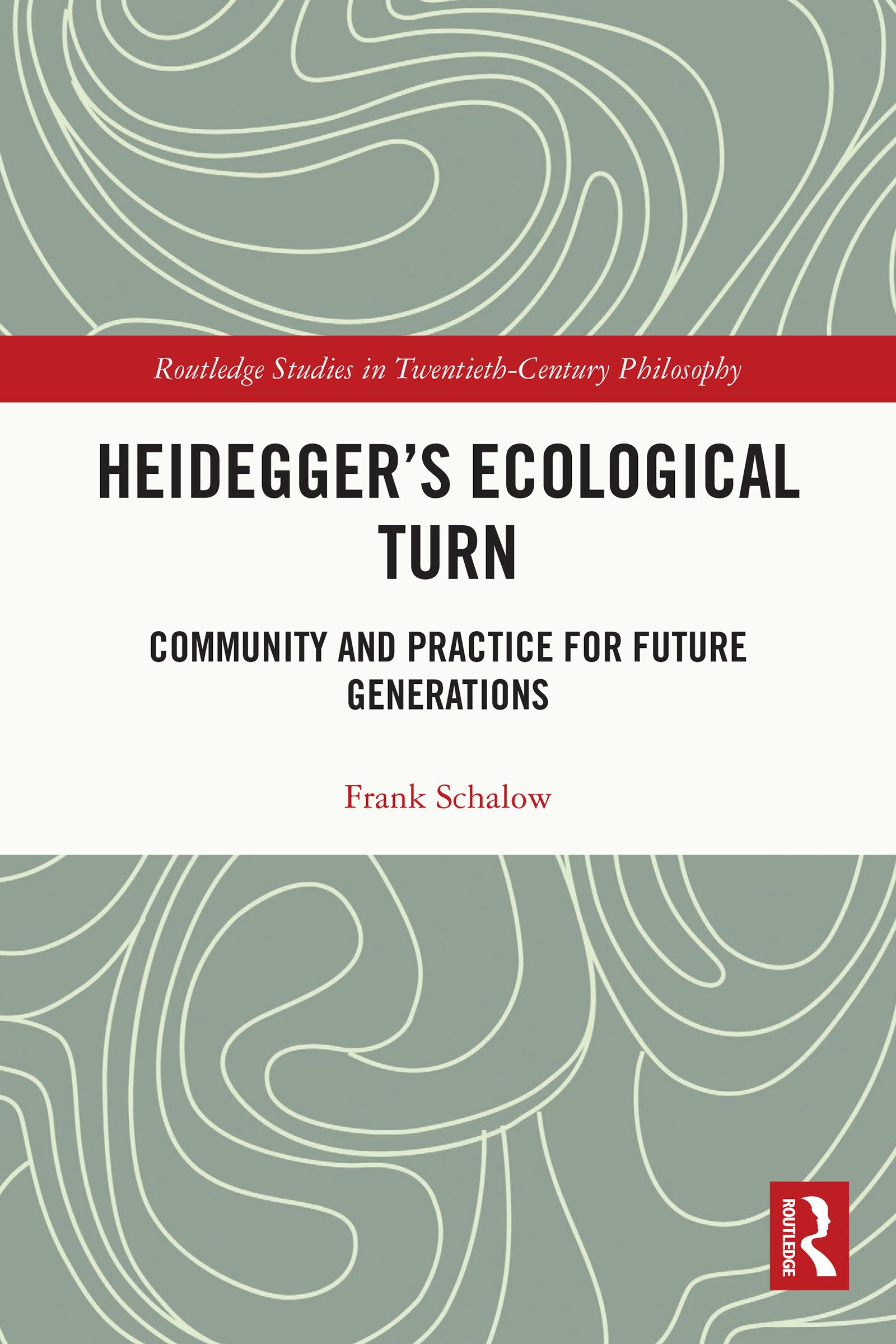
This book makes explicit the ecological implications of Martin Heidegger. It examines how the trajectory of Heidegger’s thinking harbors an "ecological turn," which comes to the forefront in his attempt to anticipate the impending crisis precipitated by modern technology.
Schalow’s emphasis on such key motifs as stewardship, dwelling, and "letting be" (Gelassenheit) serves to coalesce the problem of freedom in a new and innovative way, in order to expand the interpretive or hermeneutic horizon for re-examining Heidegger’s philosophy. By prioritizing a response to today’s environmental crisis and the possible impact upon future generations, the author traverses a divide within Heidegger scholarship by developing a deeper, critical outlook on his philosophy—without either reiterating standard interpretations or rejecting them wholesale. He develops a trans-human approach to ethics, which, by prioritizing the welfare of the earth, nature, and animals, counters the anthropocentric bias and destructive premise of modern technology.
Heidegger’s Ecological Turn will be of interest to Heidegger scholars and researchers working in phenomenology, hermeneutics, continental philosophy, and environmental philosophy.
Betaal eenvoudig met kaart, Klarna, Apple Pay of Google Pay. Niet tevreden? Je hebt altijd 14 dagen bedenktijd. Lees meer in onze voorwaarden. Heb je vragen, mail ons dan via hello@memmo.org.
Memmo maakt studeren makkelijker – waar je ook bent ter wereld. Wij brengen je cursusboeken en slimme studietools samen op één plek: samenvattingen, quizzen, podcasts en flashcards. En Ted, je studievriend die antwoord geeft op alles wat je je afvraagt. Meer dan 50.000 studenten studeren hier al – gebouwd om je sneller te laten leren en minder stress te geven.