
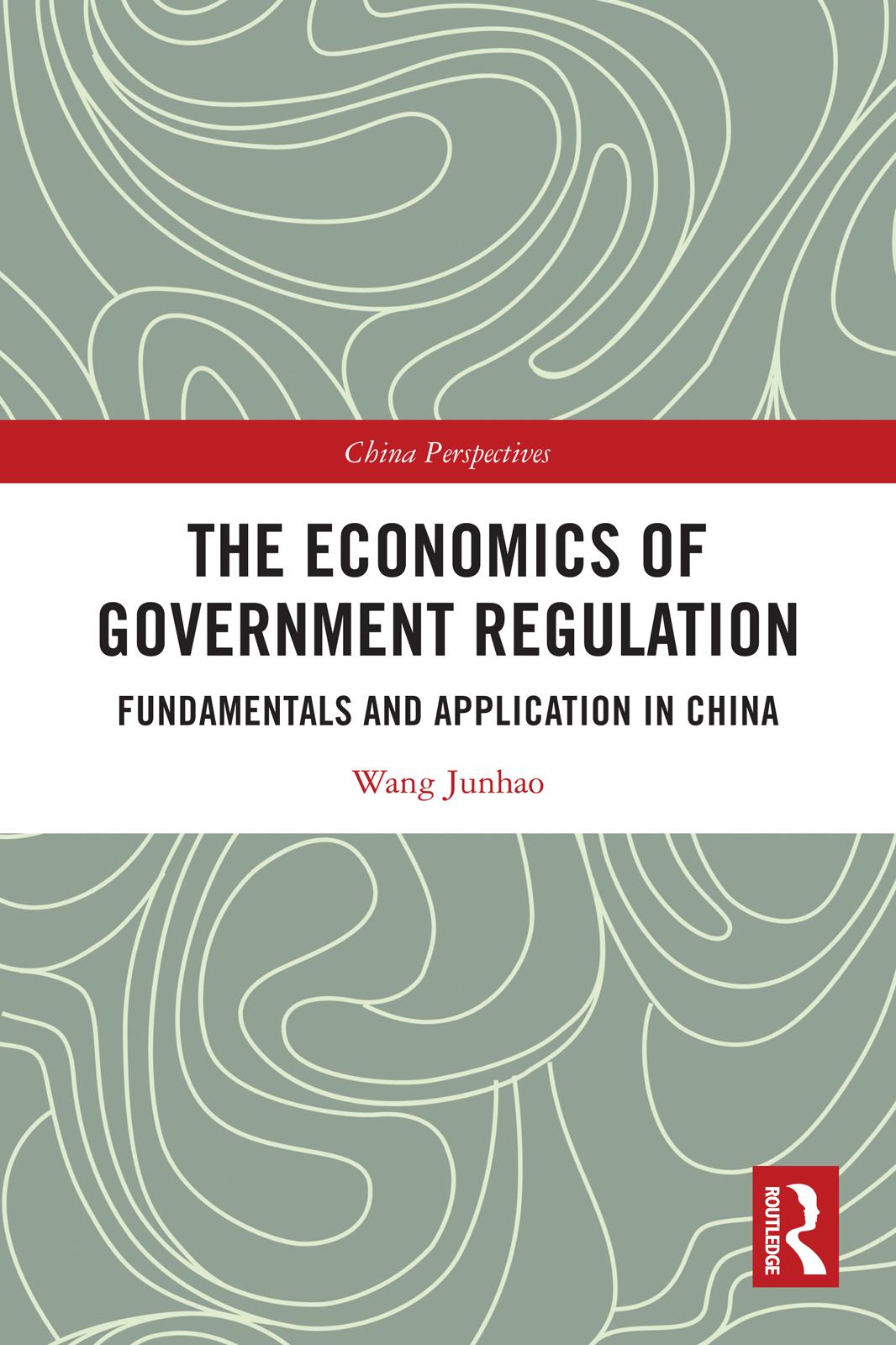
Regulation is a public policy approach closely related to calculations of the equilibrium of supply and demand and to cost-benefit analyses. Governments combine a variety of incentives and restrictions on behavior, including laws and regulations, in order to guide enterprises and smaller entities within the economy toward pursuing policies in the public interest.
This book offers an in-depth and systematic review of the economic theory of regulation, with particular emphasis on the Chinese context. The basic concepts cover economic and social regulation, regulatory process, regulation under asymmetric information, and capture theory. Drawing on a broad range of cases from across the telecommunications, electric power, and water sectors since the founding of the People’s Republic of China in 1949, the author explores economic regulation in China with reference to natural monopoly, investment, price level and price structure, entry, and competition. In addition, he discusses theories of externalities and asymmetric information, which are analyzed in the light of China’s environmental and product quality regulation. The author argues that the Chinese government has deregulated its economy to a large extent in the past and proposes that the Chinese government will enforce more social regulation in the future.
Students and scholars of government regulation, economics, and industrial organization will find this volume to be an essential guide.
Betaal eenvoudig met kaart, Klarna, Apple Pay of Google Pay. Niet tevreden? Je hebt altijd 14 dagen bedenktijd. Lees meer in onze voorwaarden. Heb je vragen, mail ons dan via hello@memmo.org.
Memmo maakt studeren makkelijker – waar je ook bent ter wereld. Wij brengen je cursusboeken en slimme studietools samen op één plek: samenvattingen, quizzen, podcasts en flashcards. En Ted, je studievriend die antwoord geeft op alles wat je je afvraagt. Meer dan 50.000 studenten studeren hier al – gebouwd om je sneller te laten leren en minder stress te geven.