
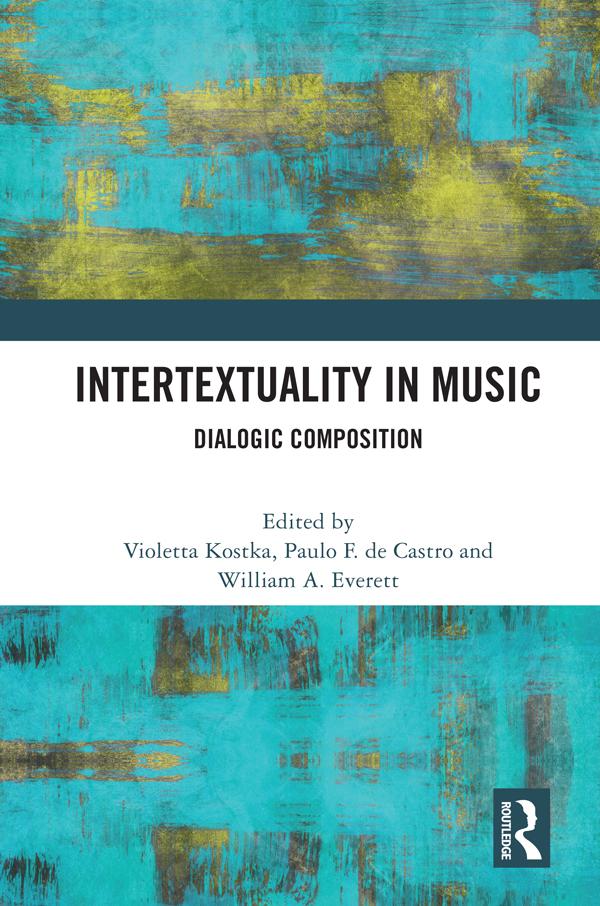
The concept of intertextuality – namely, the meaning generated by interrelations between different texts – was coined in the 1960s among literary theorists and has been widely applied since then to many other disciplines, including music. Intertextuality in Music: Dialogic Composition provides a systematic investigation of musical intertextuality not only as a general principle of musical creativity but also as a diverse set of devices and techniques that have been consciously developed and applied by many composers in the pursuit of various artistic and aesthetic goals. Intertextual techniques, as this collection reveals, have borne a wide range of results, such as parody, paraphrase, collage and dialogues with and between the past and present. In the age of sampling and remix culture, the very notion of intertextuality seems to have gained increased momentum and visibility, even though the principle of creating new music on the basis of pre-existing music has a long history both inside and outside the Western tradition. The book provides a general survey of musical intertextuality, with a special focus on music from the second half of the twentieth century, but also including examples ranging from the nineteenth century to the second decade of the twenty-first century. The volume is intended to inspire and stimulate new work in intertextual studies in music.
Betaal eenvoudig met kaart, Klarna, Apple Pay of Google Pay. Niet tevreden? Je hebt altijd 14 dagen bedenktijd. Lees meer in onze voorwaarden. Heb je vragen, mail ons dan via hello@memmo.org.
Memmo maakt studeren makkelijker – waar je ook bent ter wereld. Wij brengen je cursusboeken en slimme studietools samen op één plek: samenvattingen, quizzen, podcasts en flashcards. En Ted, je studievriend die antwoord geeft op alles wat je je afvraagt. Meer dan 50.000 studenten studeren hier al – gebouwd om je sneller te laten leren en minder stress te geven.