
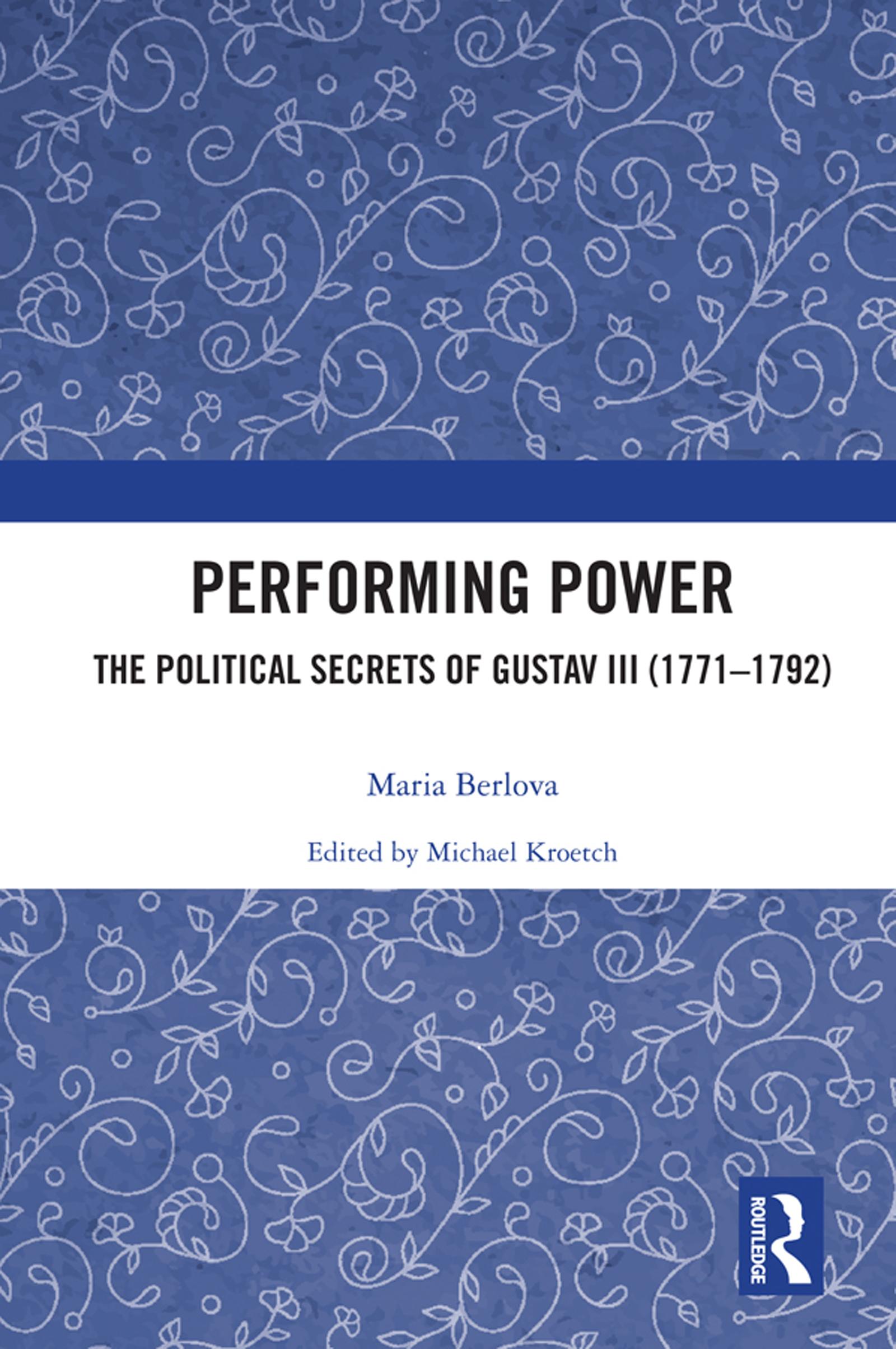
Performing Power explores 18th-century fabrication of the royal image by focusing on the example of King Gustav III (1746–1792) – one of Sweden’s most acclaimed and controversial monarchs – who conspicuously chose theater as the primary media for his image-making and role construction.
The text postulates that Gustav III was motivated by theater’s ability to aid him in fulfilling Enlightenment’s tenet of broadly educating the populace and inculcating it with royal ideology. That he was an amateur actor, stage director, and playwright were other engines driving his choice. The project challenges and expands the commonly accepted perception of Gustav III’s contribution to Swedish theater, which has generally been limited to founding its National Opera, developing its national drama, and forming its national dramatic repertoire. Maria Berlova presents Gustav III as a performing King who strategically used political events as a framework through which he could embody the image of the ideal or enlightened monarch as presented by Voltaire.
Through this, Performing Power explores the tight relationship and complex bond between theatrical arts and politics. This unique study will be of great interest to students and scholars in theater studies, 18th-century culture, and politics.
Betaal eenvoudig met kaart, Klarna, Apple Pay of Google Pay. Niet tevreden? Je hebt altijd 14 dagen bedenktijd. Lees meer in onze voorwaarden. Heb je vragen, mail ons dan via hello@memmo.org.
Memmo maakt studeren makkelijker – waar je ook bent ter wereld. Wij brengen je cursusboeken en slimme studietools samen op één plek: samenvattingen, quizzen, podcasts en flashcards. En Ted, je studievriend die antwoord geeft op alles wat je je afvraagt. Meer dan 50.000 studenten studeren hier al – gebouwd om je sneller te laten leren en minder stress te geven.