
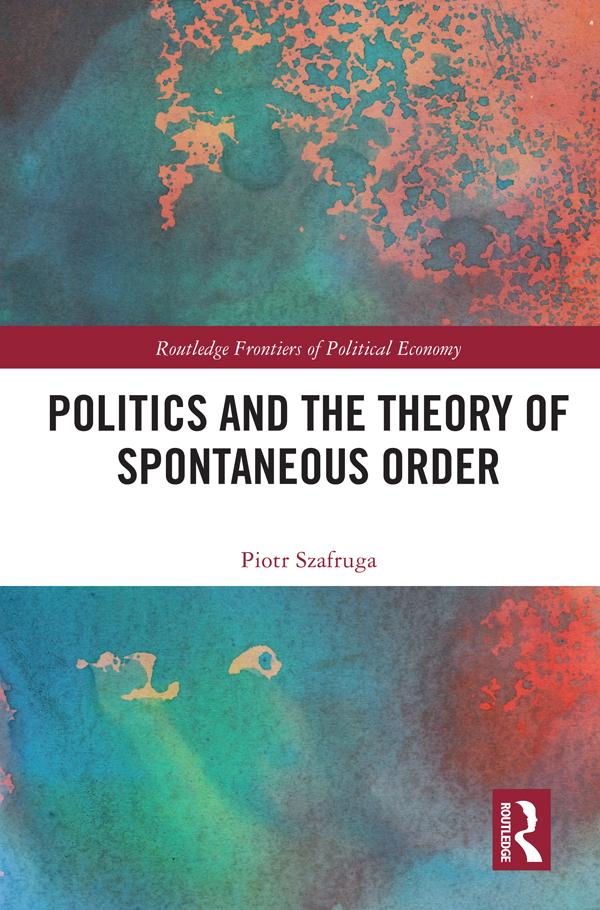
The theory of spontaneous order conceptualises and explains a number of institutional and social phenomena that are not an intended effect of either individual decisions or a collective consensus but an unplanned outcome of interactions between people pursuing their own aims. Drawing on these insights, this book demonstrates the utility of the theory of spontaneous order in explaining many phenomena in political economy and political science.
The book opens with a discussion of the history and development of the theory of spontaneous order, particularly in economics and the Austrian School. The epistemological premises of the theory are then explored including the formulation of the central idea of social individualism. Demonstrating the potential applications of the theory of spontaneous order to politics, core ideas are examined including democracy, fragile states and the concept of the veil of ignorance. Finally, the limitations and constraints of the theory of spontaneous order are also reviewed and discussed.
This book marks a valuable contribution to the literature on political economy, political science, public choice and political philosophy.
Betaal eenvoudig met kaart, Klarna, Apple Pay of Google Pay. Niet tevreden? Je hebt altijd 14 dagen bedenktijd. Lees meer in onze voorwaarden. Heb je vragen, mail ons dan via hello@memmo.org.
Memmo maakt studeren makkelijker – waar je ook bent ter wereld. Wij brengen je cursusboeken en slimme studietools samen op één plek: samenvattingen, quizzen, podcasts en flashcards. En Ted, je studievriend die antwoord geeft op alles wat je je afvraagt. Meer dan 50.000 studenten studeren hier al – gebouwd om je sneller te laten leren en minder stress te geven.