
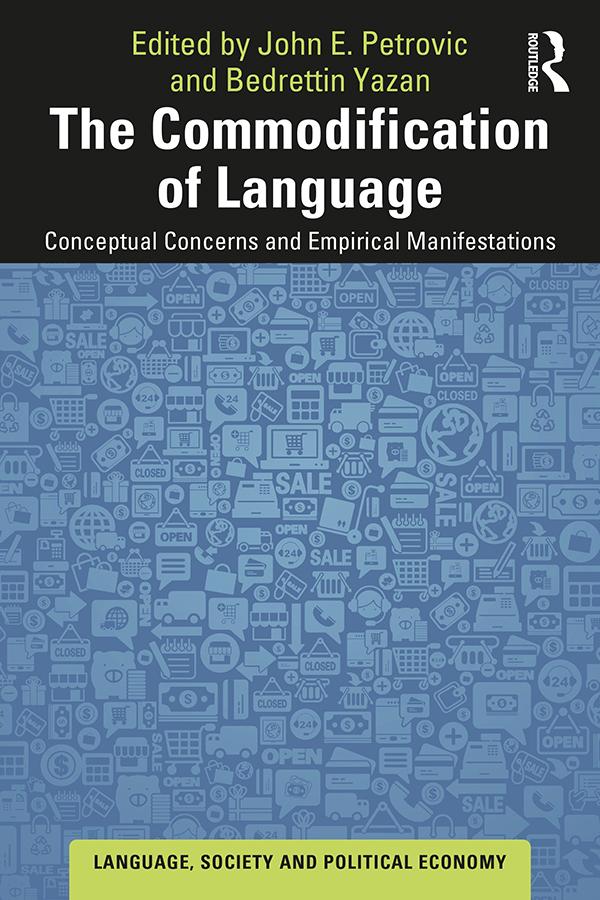
This volume seeks to add to our understanding of how language is constructed in late capitalist societies. Exploring the conceptual and theoretical underpinnings of the so-called "commodification of language" and its relationship to the notion of linguistic capital, the authors examine recent research that offers implications for language policy and planning.
Bringing together an international group of scholars, this collection includes chapters that address whether or not language can rightly be referred to as a commodity and, if so, under what circumstances. The different theoretical foundations of understanding language as a resource with exchange value – whether as commodity or capital – have practical implications for policy writ large. The implications of the "commodification of language" in more empirical terms are explored, both in terms of how it affects language as well as language policy at more micro levels. This includes more specific policy arenas such as language in education policy or family language policies as well as the implications for individual identity construction and linguistic communities.
With a conclusion written by leading scholar David Block, this is key reading for researchers and advanced students of critical sociolinguistics, language and economy, language and politics, language policy and linguistic anthropology within linguistics, applied linguistics, and language teacher education.
Betaal eenvoudig met kaart, Klarna, Apple Pay of Google Pay. Niet tevreden? Je hebt altijd 14 dagen bedenktijd. Lees meer in onze voorwaarden. Heb je vragen, mail ons dan via hello@memmo.org.
Memmo maakt studeren makkelijker – waar je ook bent ter wereld. Wij brengen je cursusboeken en slimme studietools samen op één plek: samenvattingen, quizzen, podcasts en flashcards. En Ted, je studievriend die antwoord geeft op alles wat je je afvraagt. Meer dan 50.000 studenten studeren hier al – gebouwd om je sneller te laten leren en minder stress te geven.