
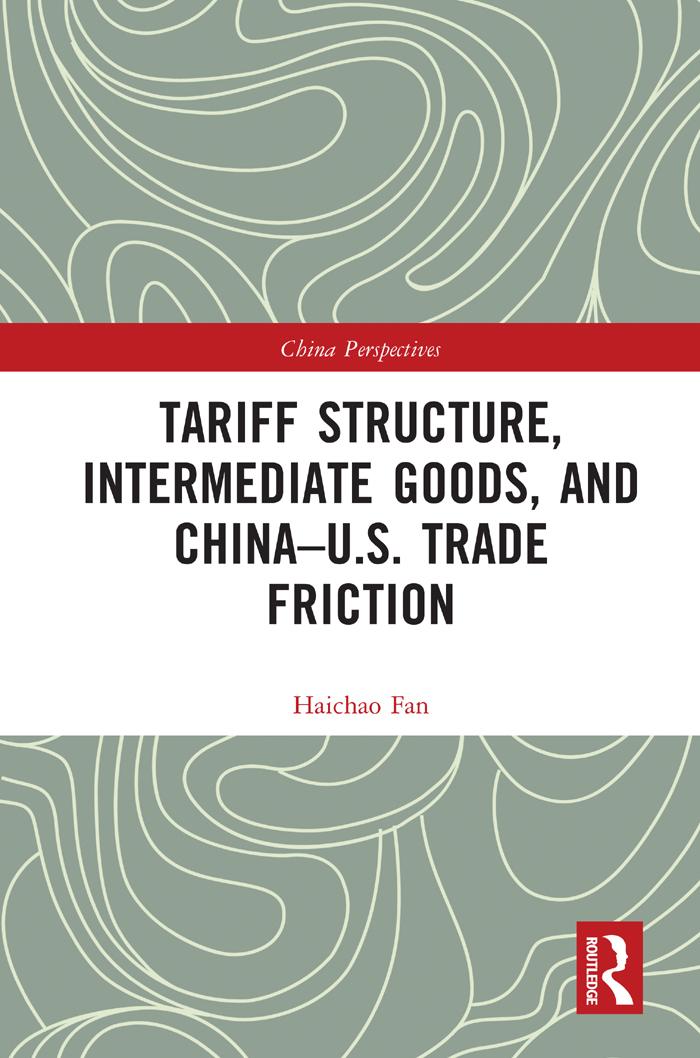
Focusing on the interconnection of tariff structure, international trade and welfare evaluation, the book investigates the characteristics of tariff structures of China and the U.S. in recent years and measures the impact of the Sino–U.S. trade friction that started in 2018. The first part of the book discusses levels and evolution trends of tariff systems of China and the U.S. from 2000 to 2014 and makes a comparison between the two countries' tariff structures. The second part centers on the Sino–U.S. trade friction in 2018, analyzing its development, overall impact on welfare, and relevant impact mechanisms. The author draws on the quantitative analysis method currently prevailing in the field of international trade, taking global value chains, intermediate goods, and variable markup into consideration. In contrast to the research conclusion applying standard trade theory, the result indicates that either unilateral imposition of additional tariffs or bilateral tariff friction will give rise to the deteriorated welfare level of both countries. The book will appeal to academics and policy makers interested in international trade, China–U.S. relation and the trade friction.
Betaal eenvoudig met kaart, Klarna, Apple Pay of Google Pay. Niet tevreden? Je hebt altijd 14 dagen bedenktijd. Lees meer in onze voorwaarden. Heb je vragen, mail ons dan via hello@memmo.org.
Memmo maakt studeren makkelijker – waar je ook bent ter wereld. Wij brengen je cursusboeken en slimme studietools samen op één plek: samenvattingen, quizzen, podcasts en flashcards. En Ted, je studievriend die antwoord geeft op alles wat je je afvraagt. Meer dan 50.000 studenten studeren hier al – gebouwd om je sneller te laten leren en minder stress te geven.