
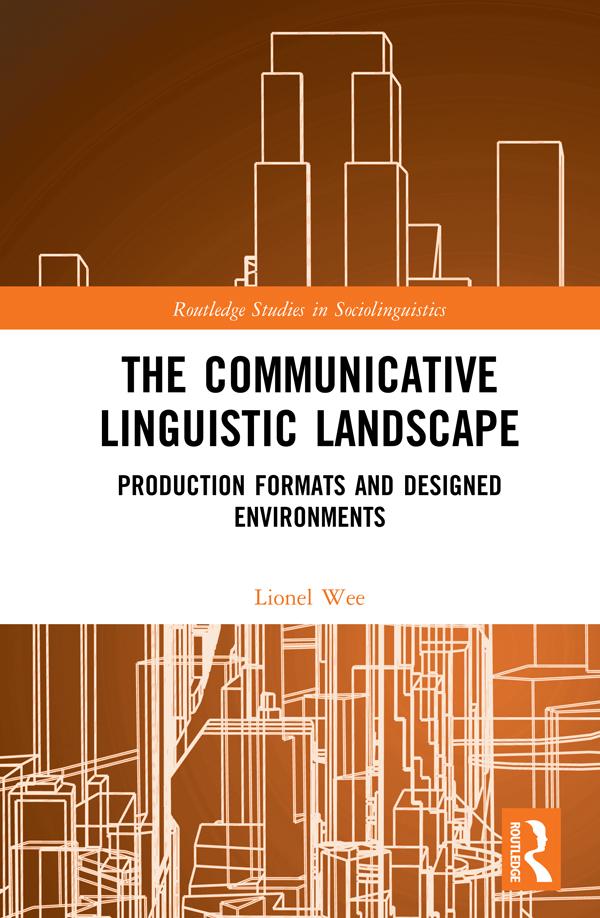
How exactly do linguistic landscapes communicate and what theoretical significance might follow from such an inquiry? This book addresses these questions by taking as its starting point the insight that the individual or organisation that is responsible for the production of a sign may not be physically present at the landscape itself. The information to be conveyed is typically designed as a piece of signage to be emplaced at the site. Drawing on Goffman’s notion of a production format, the book argues that the constructed piece of sign and its intended placement within the landscape combine to constitute an animator complex. This raises the possibility of a disruption to the sign and its placement in the landscape. The book describes various ways in which the integrity of the animator complex can be disrupted (e.g. the sign may be moved out of place through vandalism or acts of nature, or the organisation that the sign represents may no longer be in business), identifi es different types of animators, and expands on the implications for phenomena such as affect, multivocality, footing and the materiality of language. In doing so, the book also demonstrates the value of bringing in Bakhtin’s work on heteroglossia and the dialogicity of communication, integrating the ideas of Bakhtin with those of Goffman.
Betaal eenvoudig met kaart, Klarna, Apple Pay of Google Pay. Niet tevreden? Je hebt altijd 14 dagen bedenktijd. Lees meer in onze voorwaarden. Heb je vragen, mail ons dan via hello@memmo.org.
Memmo maakt studeren makkelijker – waar je ook bent ter wereld. Wij brengen je cursusboeken en slimme studietools samen op één plek: samenvattingen, quizzen, podcasts en flashcards. En Ted, je studievriend die antwoord geeft op alles wat je je afvraagt. Meer dan 50.000 studenten studeren hier al – gebouwd om je sneller te laten leren en minder stress te geven.