
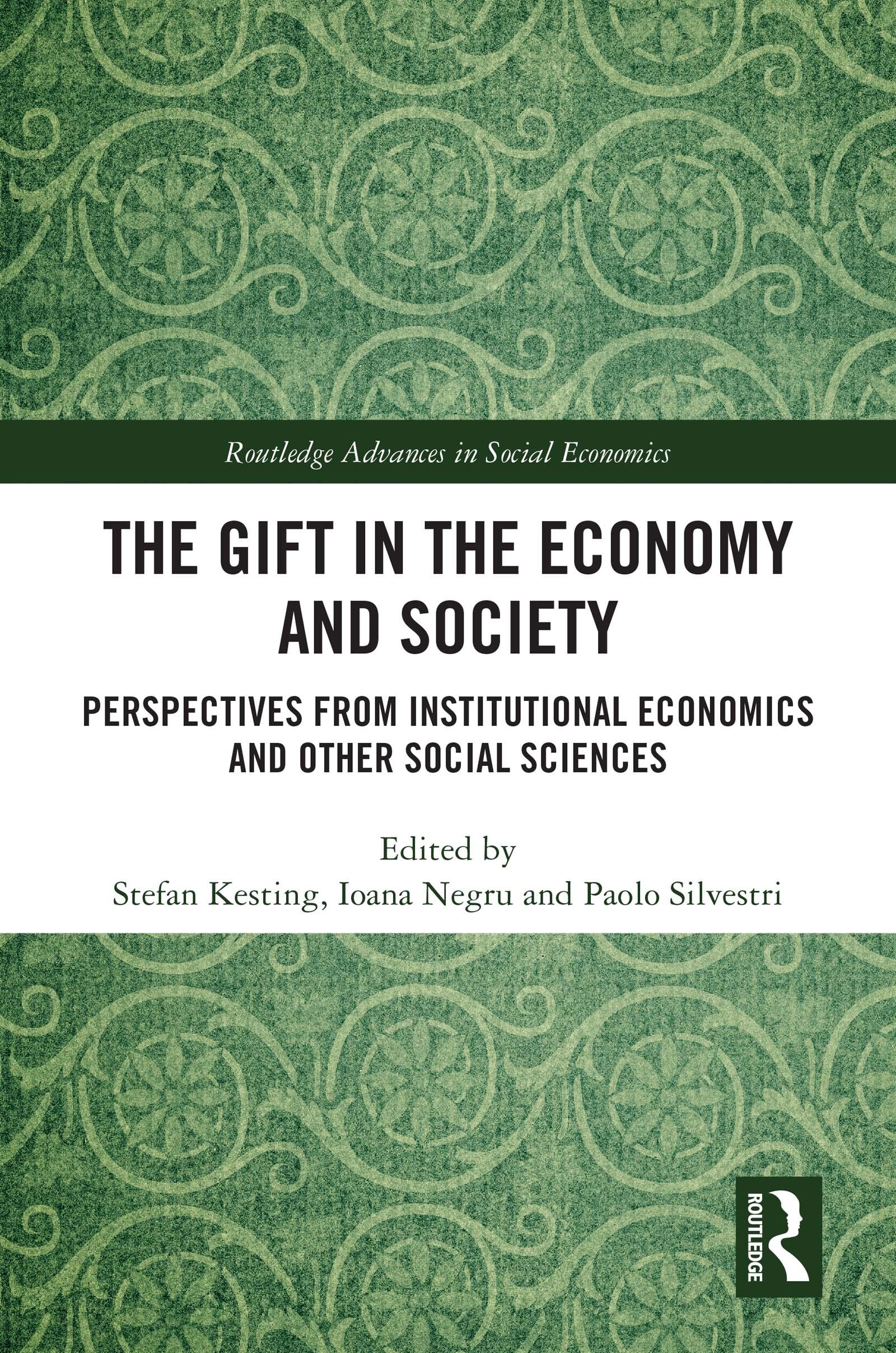
Mainstream economics offers a perspective on the gift which is constructed around exchange, axioms of self-interest, instrumental rationality and utility-maximisation – concepts that predominate within conventional forms of economic analysis. Recognising the gift as an example of social practice underpinned by social institutions, this book moves beyond this utilitarian approach to explore perspectives on the gift from social and institutional economics.
Through contributions from an international and interdisciplinary cast of authors, the chapters explore key questions such as: what is the relationship between social institutions, on the one hand, and gift, exchange, reciprocity on the other? What are the social mechanisms that underpin gift and gift-giving actions? And finally, what is the relationship between individuals, societies, gift-giving and cooperation? The answers to these questions and others serve to highlight the importance of the analysis of gift in economics and other social sciences. The book also demonstrates the potential of the analysis of the gift to contribute to solving current problems for humanity at various levels of social aggregation.
This key text makes a significant contribution to the literature on the gift which will be of interest to readers of heterodox economics, social anthropology, philosophy of economics, sociology and political philosophy.
Betaal eenvoudig met kaart, Klarna, Apple Pay of Google Pay. Niet tevreden? Je hebt altijd 14 dagen bedenktijd. Lees meer in onze voorwaarden. Heb je vragen, mail ons dan via hello@memmo.org.
Memmo maakt studeren makkelijker – waar je ook bent ter wereld. Wij brengen je cursusboeken en slimme studietools samen op één plek: samenvattingen, quizzen, podcasts en flashcards. En Ted, je studievriend die antwoord geeft op alles wat je je afvraagt. Meer dan 50.000 studenten studeren hier al – gebouwd om je sneller te laten leren en minder stress te geven.