
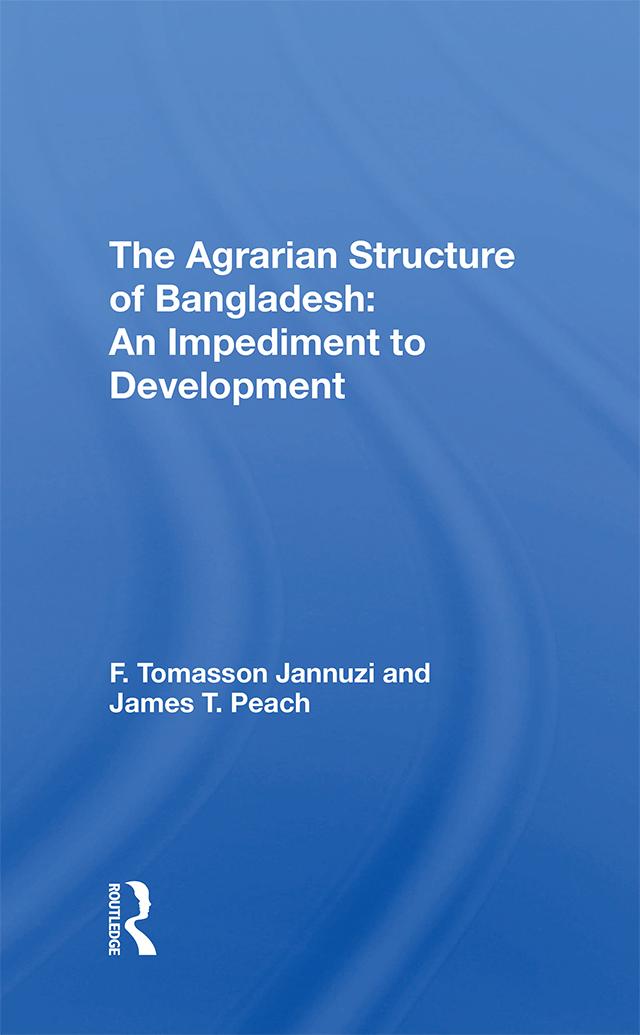
The relationship between the agrarian structure of Bangladesh and its problems of rural development is established in this study based on four years (1975-79) of field research. The authors suggest that the concentration of land in the hands of a rural elite is the principal impediment to the participation of weaker sections of the peasantry in economic progress. Tracing the failure of local attempts to change Bangladesh's agrarian structure by legislative means, they outline a modified program for rural development that is linked to agrarian reform. Agrarian reform, Drs. Jannuzi and Peach argue, is the prerequisite for a rural development strategy that provides for both economic growth and improved income distribution; thus, approaches to rural development in Bangladesh that place reliance on new agricultural technology without first changing the institutions that determine peoples' relationships to the land are not viable. The authors' policy recommendations, grounded in new data on the relative proportions of owners of land, sharecroppers, and the landless, are supplemented by a theoretical analysis of the institution of sharecropping and detailed field work methodology.
Pagina's: 150
Categorie: Ekonomi & Utveckling
e-ISBN: 9781000314519
Verzendgewicht: 1.2 kg
Verzending binnen: 1-2 dagen
Betaal eenvoudig met kaart, Klarna, Apple Pay of Google Pay. Niet tevreden? Je hebt altijd 14 dagen bedenktijd. Lees meer in onze voorwaarden. Heb je vragen, mail ons dan via hello@memmo.org.
Memmo maakt studeren makkelijker – waar je ook bent ter wereld. Wij brengen je cursusboeken en slimme studietools samen op één plek: samenvattingen, quizzen, podcasts en flashcards. En Ted, je studievriend die antwoord geeft op alles wat je je afvraagt. Meer dan 50.000 studenten studeren hier al – gebouwd om je sneller te laten leren en minder stress te geven.
Misschien vind je dit ook leuk
Koop het boek0