
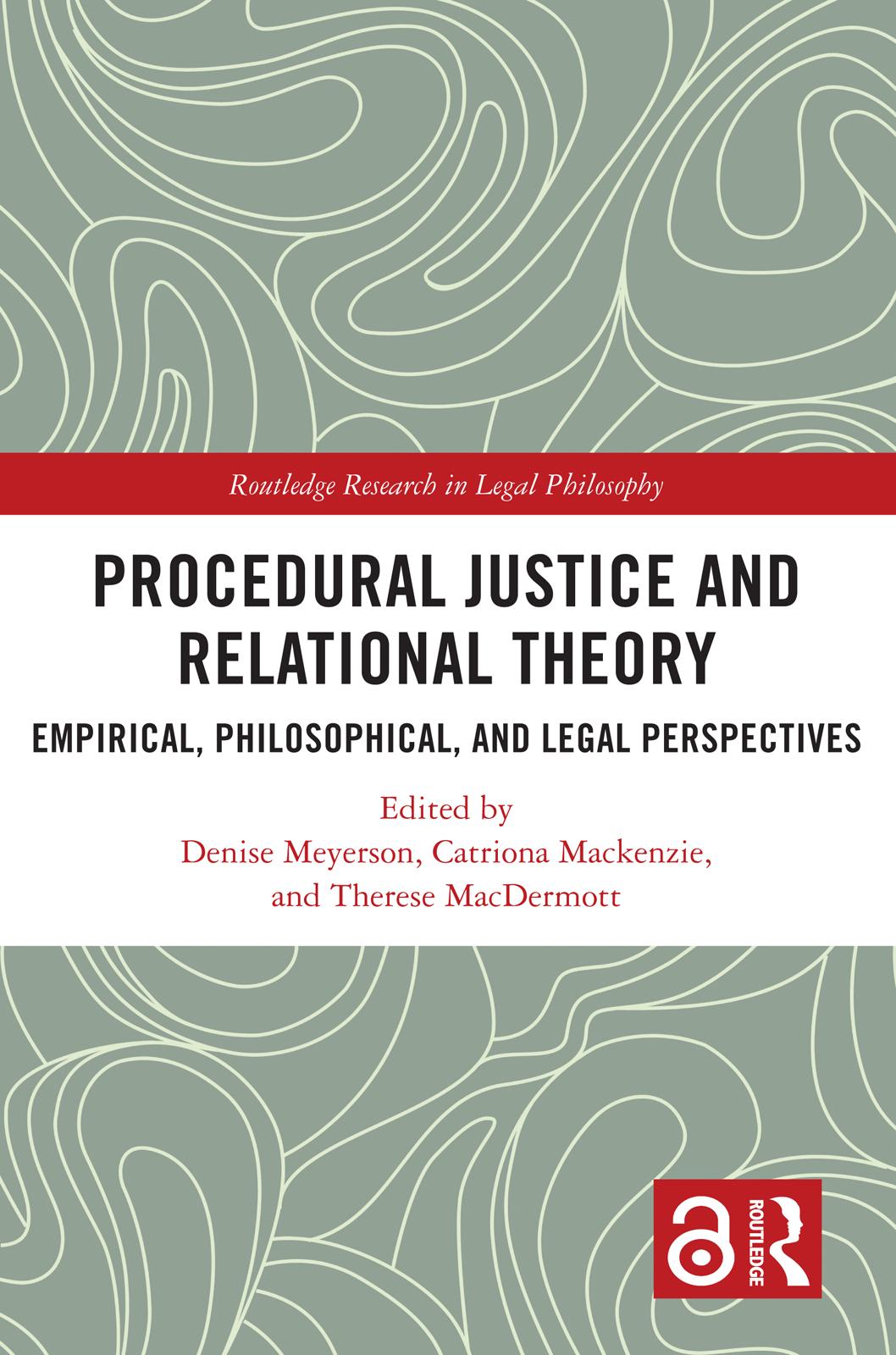
This book bridges a scholarly divide between empirical and normative theorizing about procedural justice in the context of relations of power between citizens and the state.
Empirical research establishes that people’s understanding of procedural justice is shaped by relational factors. A central premise of this volume is that this research is significant but needs to be complemented by normative theorizing that draws on relational theories of ethics and justice to explain the moral significance of procedures and make normative sense of people’s concerns about relational factors. The chapters in Part 1 provide comprehensive reviews of empirical studies of procedural justice in policing, courts and prisons. Part 2 explores empirical and normative perspectives on procedural justice and legitimacy. Part 3 examines philosophical approaches to procedural justice. Part 4 considers the implications of a relational perspective for the design of procedures in a range of legal contexts.
This collection will be of interest to a wide academic readership in philosophy, law, psychology and criminology.
Betaal eenvoudig met kaart, Klarna, Apple Pay of Google Pay. Niet tevreden? Je hebt altijd 14 dagen bedenktijd. Lees meer in onze voorwaarden. Heb je vragen, mail ons dan via hello@memmo.org.
Memmo maakt studeren makkelijker – waar je ook bent ter wereld. Wij brengen je cursusboeken en slimme studietools samen op één plek: samenvattingen, quizzen, podcasts en flashcards. En Ted, je studievriend die antwoord geeft op alles wat je je afvraagt. Meer dan 50.000 studenten studeren hier al – gebouwd om je sneller te laten leren en minder stress te geven.