
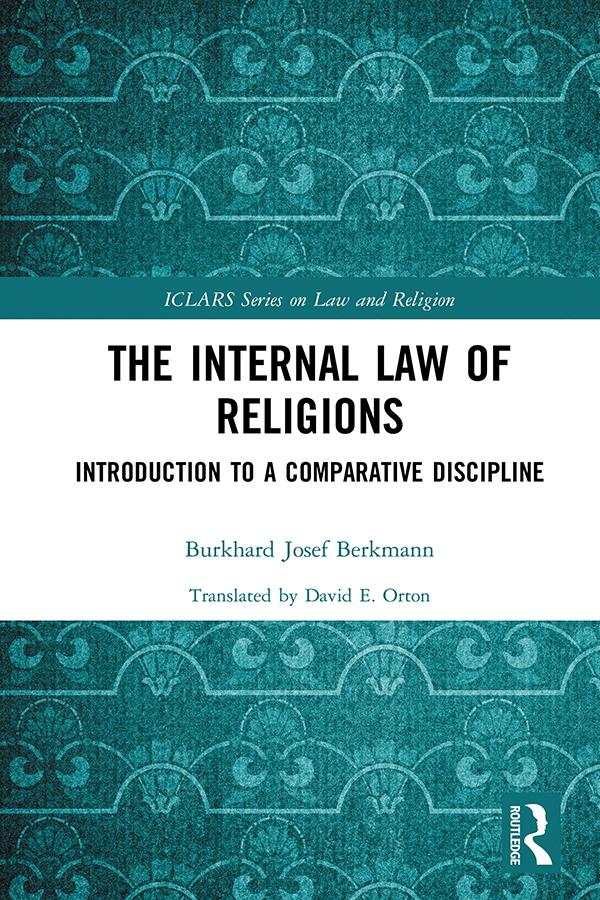
Comparative law of religions has developed in recent years as a new discipline at the intersection of legal and religious science, of theology and anthropology. This book presents a systematic theoretical basis for this new discipline.
While law is mostly associated with the state, many religions also have their own internal law. These internal legal norms are aimed at a particular form of behaviour on the part of believers. They therefore play a particular role in conflicts arising today between certain religious forms of behaviour. The comparison of the internal law of religions serves to establish and explain the commonalities and differences between various religious legal traditions. The religions examined here include: the law of Christian denominations, Jewish law, Islamic law, Hindu law, Buddhist law, and other religious legal systems. The work assesses six current approaches to the comparative law of religions, evaluating their strengths and weaknesses, leading to the development of a new approach. The book discusses the role of religious law in state law and looks to likely future developments.
The work will be essential for those interested in the administration of justice and politics, for those professions where intercultural competence is required, and for interreligious dialogue.
Betaal eenvoudig met kaart, Klarna, Apple Pay of Google Pay. Niet tevreden? Je hebt altijd 14 dagen bedenktijd. Lees meer in onze voorwaarden. Heb je vragen, mail ons dan via hello@memmo.org.
Memmo maakt studeren makkelijker – waar je ook bent ter wereld. Wij brengen je cursusboeken en slimme studietools samen op één plek: samenvattingen, quizzen, podcasts en flashcards. En Ted, je studievriend die antwoord geeft op alles wat je je afvraagt. Meer dan 50.000 studenten studeren hier al – gebouwd om je sneller te laten leren en minder stress te geven.