
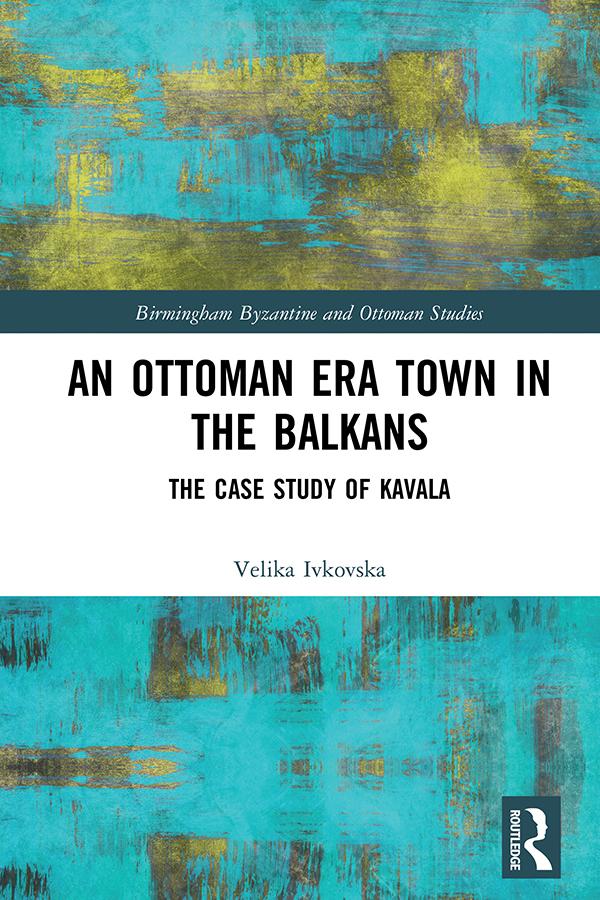
An Ottoman Era Town in the Balkans: The Case Study of Kavala presents the town of Kavala in Northern Greece as an example of Ottoman urban and residential development, covering the long period of Kavala’s expansion over five centuries under Ottoman rule. Kavala was part of the Ottoman Empire from 1387 to 1912. In the middle of the sixteenth century, Ibrahim Pasha, grand vizier of Suleiman the Magnificent, contributed to the town's prosperity and growth by the construction of an aqueduct. The Ottomans also rebuilt and extended the existing Byzantine fortress.
The book uncovers new findings about Kavala, and addresses the key question: is there an authentic "Ottoman" built environment that the town and its architecture share? Through the examination of travellers’ accounts, historical maps, and archival documents, the Ottoman influences on the urban settlement of Kavala are assessed. From its original founding by the Ottomans in the late fourteenth century to the nineteenth century when the expansion of tobacco production in the area transformed its prosperity, the development of Kavala as an Ottoman era town is explored.
The book will be of interest to scholars and students interested in Ottoman history and urban history.
Betaal eenvoudig met kaart, Klarna, Apple Pay of Google Pay. Niet tevreden? Je hebt altijd 14 dagen bedenktijd. Lees meer in onze voorwaarden. Heb je vragen, mail ons dan via hello@memmo.org.
Memmo maakt studeren makkelijker – waar je ook bent ter wereld. Wij brengen je cursusboeken en slimme studietools samen op één plek: samenvattingen, quizzen, podcasts en flashcards. En Ted, je studievriend die antwoord geeft op alles wat je je afvraagt. Meer dan 50.000 studenten studeren hier al – gebouwd om je sneller te laten leren en minder stress te geven.