
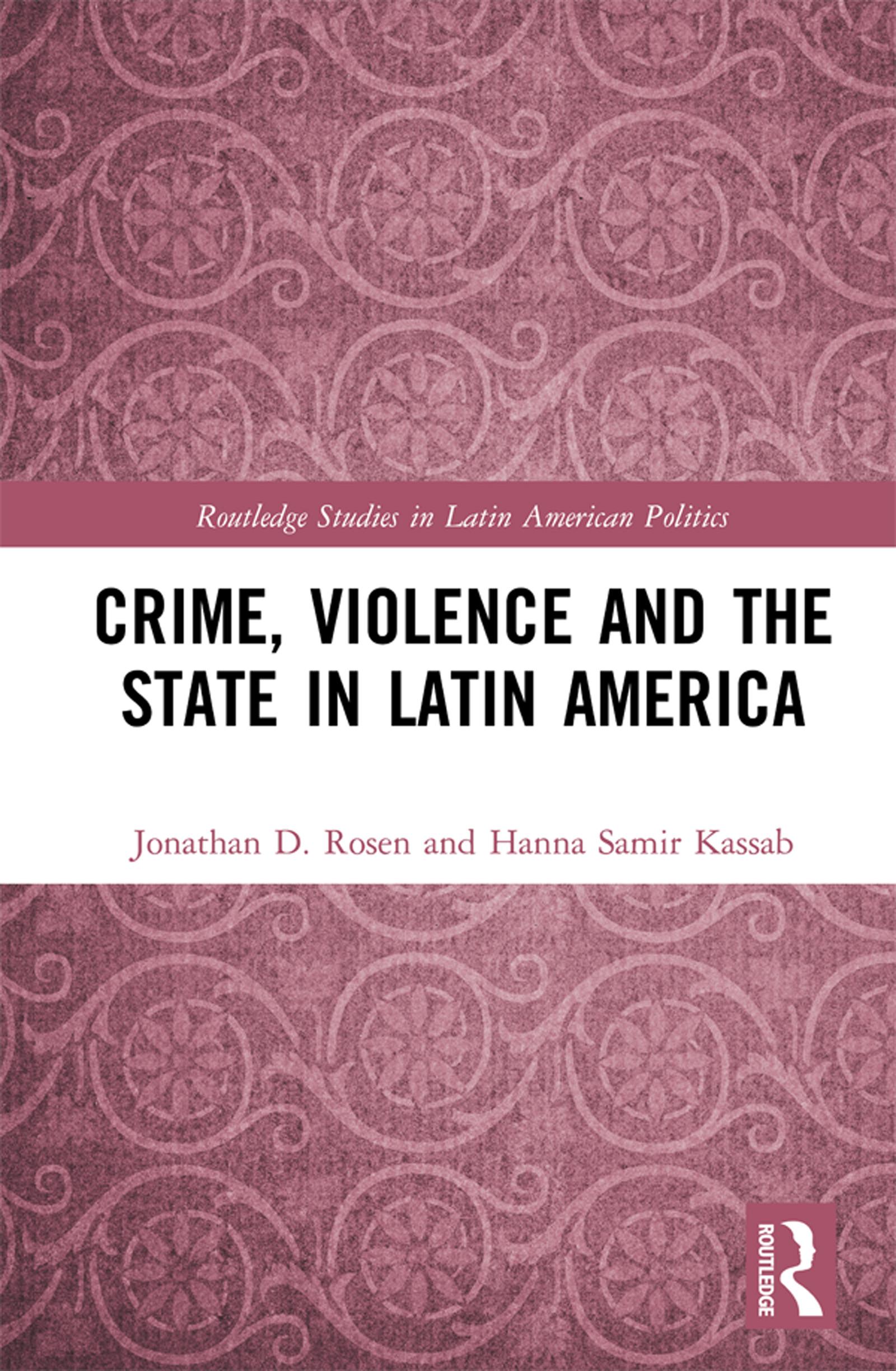
In this succinct text, Jonathan D. Rosen and Hanna Samir Kassab explore the linkage between weak institutions and government policies designed to combat drug trafficking, organized crime, and violence in Latin America.
Using quantitative analysis to examine criminal violence and publicly available survey data from the Latin American Public Opinion Project (LAPOP) to conduct regression analysis, individual case studies on Colombia, Mexico, El Salvador, and Nicaragua highlight the major challenges that governments face and how they have responded to various security issues. Rosen and Kassab later turn their attention to the role of external criminal actors in the region and offer policy recommendations and lessons learned. Questions explored include:
- What are the major trends in organized crime in this country?
- How has organized crime evolved over time?
- Who are the major criminal actors?
- How has state fragility contributed to organized crime and violence (and vice versa)?
- What has been the government’s response to drug trafficking and organized crime?
- Have such policies contributed to violence?
Crime, Violence and the State in Latin America is suitable to both undergraduate and graduate courses in criminal justice, international relations, political science, comparative politics, international political economy, organized crime, drug trafficking, and violence.
Betaal eenvoudig met kaart, Klarna, Apple Pay of Google Pay. Niet tevreden? Je hebt altijd 14 dagen bedenktijd. Lees meer in onze voorwaarden. Heb je vragen, mail ons dan via hello@memmo.org.
Memmo maakt studeren makkelijker – waar je ook bent ter wereld. Wij brengen je cursusboeken en slimme studietools samen op één plek: samenvattingen, quizzen, podcasts en flashcards. En Ted, je studievriend die antwoord geeft op alles wat je je afvraagt. Meer dan 50.000 studenten studeren hier al – gebouwd om je sneller te laten leren en minder stress te geven.