
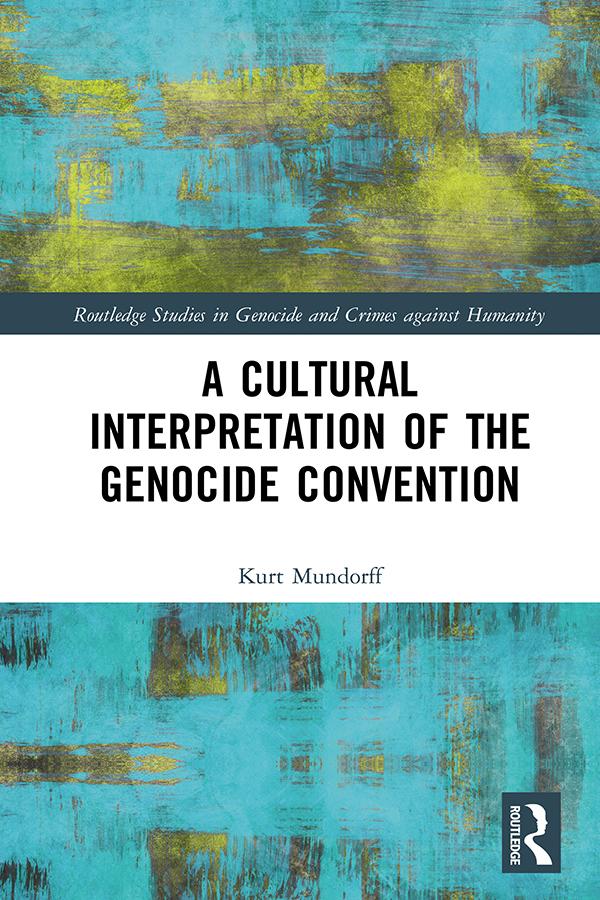
This book critiques the dominant physical and biological interpretation of the Genocide Convention and argues that the idea of "culture" is central to properly understanding the crime of genocide.
Using Raphael Lemkin’s personal papers, archival materials from the State Department and the UN, as well as the mid-century secondary literature, it situates the convention in the longstanding debate between Enlightenment notions of universality and individualism, and Romantic notions of particularism and holism. The author conducts a thorough review of the treaty and its preparatory work to show that the drafters brought strong culturalist ideas to the debate and that Lemkin’s ideas were held widely in the immediate postwar period. Reconstructing the mid-century conversation on genocide and situating it in the much broader mid-century discourse on justice and society he demonstrates that culture is not a distraction to be read out of the Genocide Convention; it is the very reason it exists.
This volume poses a forceful challenge to the materialist interpretation and calls into question decades of international case law. It will be of interest to scholars of genocide, human rights, international law, the history of international law and human rights, and treaty interpretation.
Betaal eenvoudig met kaart, Klarna, Apple Pay of Google Pay. Niet tevreden? Je hebt altijd 14 dagen bedenktijd. Lees meer in onze voorwaarden. Heb je vragen, mail ons dan via hello@memmo.org.
Memmo maakt studeren makkelijker – waar je ook bent ter wereld. Wij brengen je cursusboeken en slimme studietools samen op één plek: samenvattingen, quizzen, podcasts en flashcards. En Ted, je studievriend die antwoord geeft op alles wat je je afvraagt. Meer dan 50.000 studenten studeren hier al – gebouwd om je sneller te laten leren en minder stress te geven.