
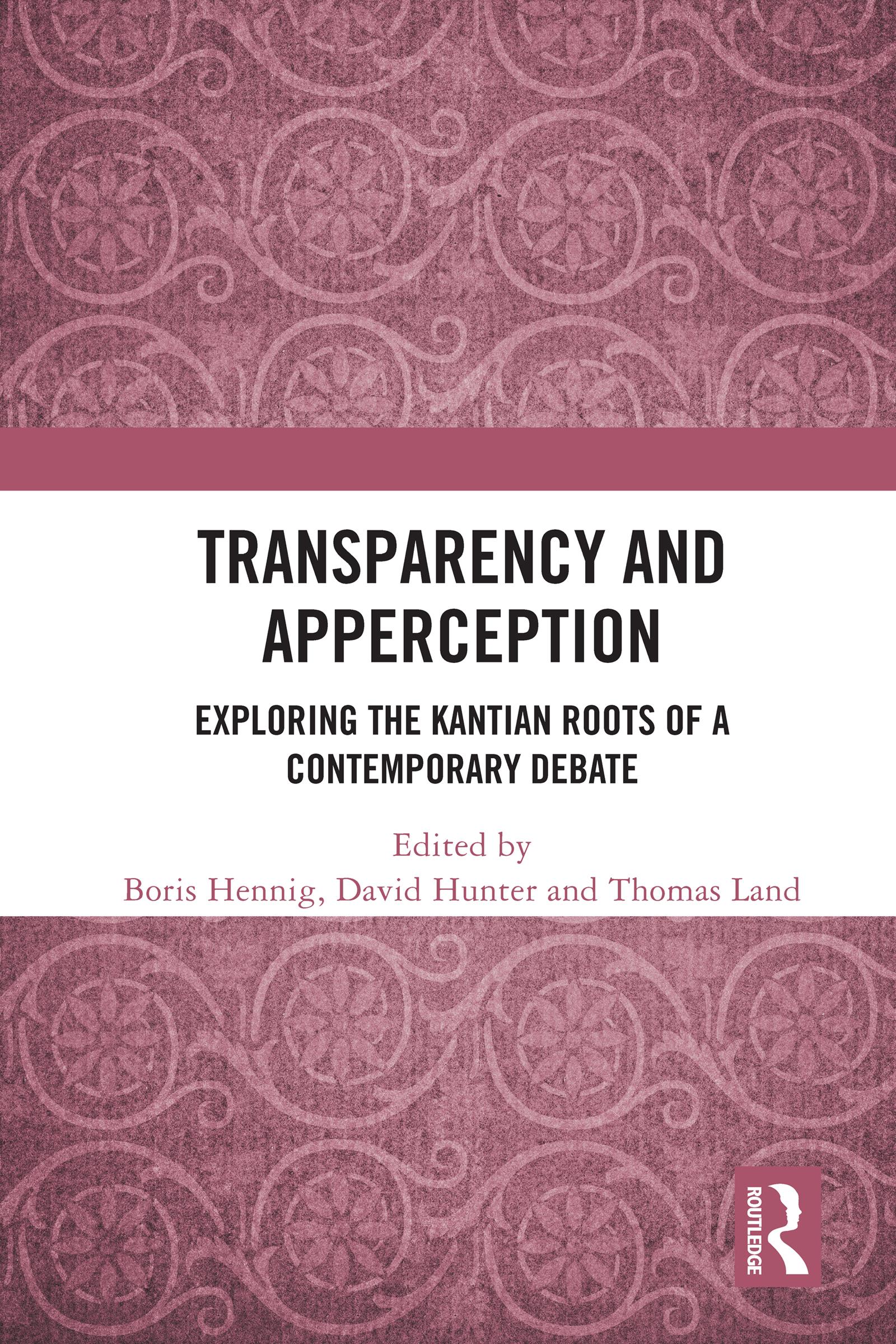
Transparency and Apperception: Exploring the Kantian Roots of a Contemporary Debate explores the links between the idea that belief is transparent and Kant’s claims about apperception.
Transparency is the idea that a person can answer questions about whether she, for instance, believes something by considering, not her own psychological states, but the objects and properties the belief is about. This marks a sharp contrast between a first-person and third-person perspective on one’s current mental states. This idea has deep roots in Kant’s doctrine of apperception, the claim that the human mind is essentially self-conscious, and Kant held that it underlies the responsibility that a person has for certain of their own mental states. Nevertheless, the idea of transparency and its roots in apperception remain obscure and give rise to difficult methodological and exegetical questions. The contributions in this work address these questions and will be required reading for anyone working on this intersection of the philosophy of mind and language, and epistemology.
The chapters in this book were originally published in a special issue of the Canadian Journal of Philosophy.
Betaal eenvoudig met kaart, Klarna, Apple Pay of Google Pay. Niet tevreden? Je hebt altijd 14 dagen bedenktijd. Lees meer in onze voorwaarden. Heb je vragen, mail ons dan via hello@memmo.org.
Memmo maakt studeren makkelijker – waar je ook bent ter wereld. Wij brengen je cursusboeken en slimme studietools samen op één plek: samenvattingen, quizzen, podcasts en flashcards. En Ted, je studievriend die antwoord geeft op alles wat je je afvraagt. Meer dan 50.000 studenten studeren hier al – gebouwd om je sneller te laten leren en minder stress te geven.