
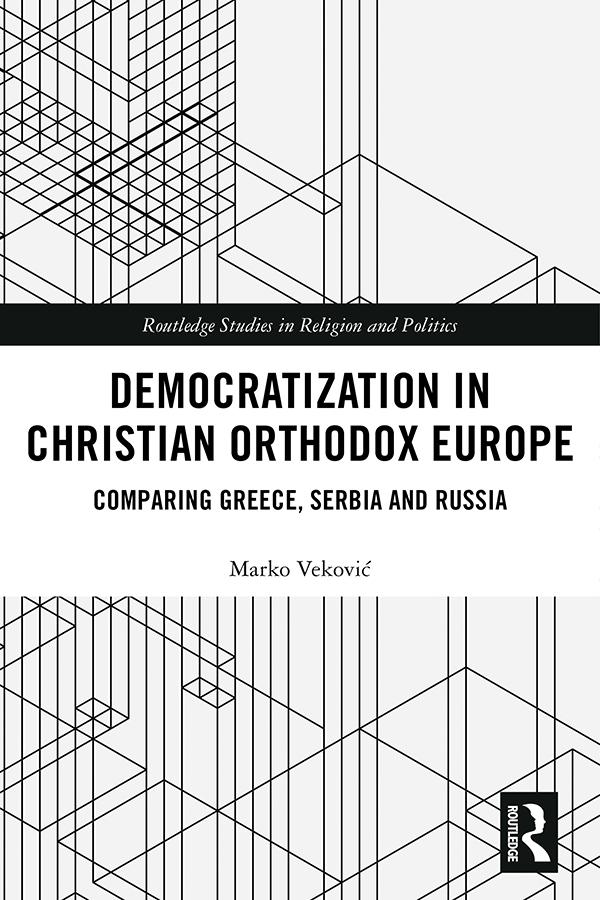
For a long time, Orthodox Christianity was regarded as a religious tradition that was incompatible with democracy. This book challenges this incompatibility thesis, offering an innovative and fresh theoretical framework for dealing with the issue of Orthodoxy and democracy.
This book focuses on the political behaviour of Orthodox Christian Churches in the democratization processes from a comparative perspective, and shows that different Orthodox Churches acted differently in the democratization processes in Greece, Serbia and Russia. The fundamental question that arises is – why? By focusing on institutions, rather than on political theology, this book answers this question from a comparative perspective. By studying the historical, cultural, and political roles of the Orthodox Christian Church in these three countries, the author examines whether it is logical to presume that the Church played a significant role in the democratization process.
This book will be of great interest to academics and students globally who teach, study, and research in the emerging field of religion and democracy.
Betaal eenvoudig met kaart, Klarna, Apple Pay of Google Pay. Niet tevreden? Je hebt altijd 14 dagen bedenktijd. Lees meer in onze voorwaarden. Heb je vragen, mail ons dan via hello@memmo.org.
Memmo maakt studeren makkelijker – waar je ook bent ter wereld. Wij brengen je cursusboeken en slimme studietools samen op één plek: samenvattingen, quizzen, podcasts en flashcards. En Ted, je studievriend die antwoord geeft op alles wat je je afvraagt. Meer dan 50.000 studenten studeren hier al – gebouwd om je sneller te laten leren en minder stress te geven.