
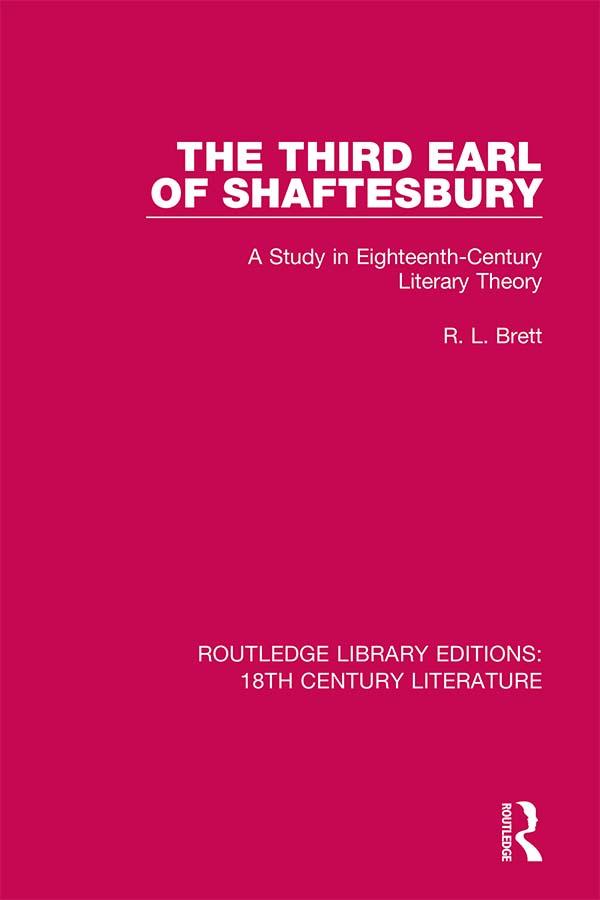
The third Earl of Shaftesbury had generally been known as the forerunner of the Moral Sense school of philosophers in the eighteenth century. Surprisingly little attention had been paid to his importance for literature and yet undoubtedly this had been very great. Originally published in 1951, this study gives an account of Shaftesbury’s aesthetic and literary theory; his discussion of the imagination, ridicule, the aesthetic judgment and the sublime; and his anticipation of later writers such as Burke, Coleridge and Kant. It also considers Shaftesbury’s thought as part of the background of ideas in the Augustan period and his influence in such fields as literature, architecture and landscape gardening. In addition, the author assesses in more general terms Shaftesbury’s attempt to maintain a Platonic viewpoint that would be more congenial to poetry than Locke’s "new way of ideas".
Betaal eenvoudig met kaart, Klarna, Apple Pay of Google Pay. Niet tevreden? Je hebt altijd 14 dagen bedenktijd. Lees meer in onze voorwaarden. Heb je vragen, mail ons dan via hello@memmo.org.
Memmo maakt studeren makkelijker – waar je ook bent ter wereld. Wij brengen je cursusboeken en slimme studietools samen op één plek: samenvattingen, quizzen, podcasts en flashcards. En Ted, je studievriend die antwoord geeft op alles wat je je afvraagt. Meer dan 50.000 studenten studeren hier al – gebouwd om je sneller te laten leren en minder stress te geven.