
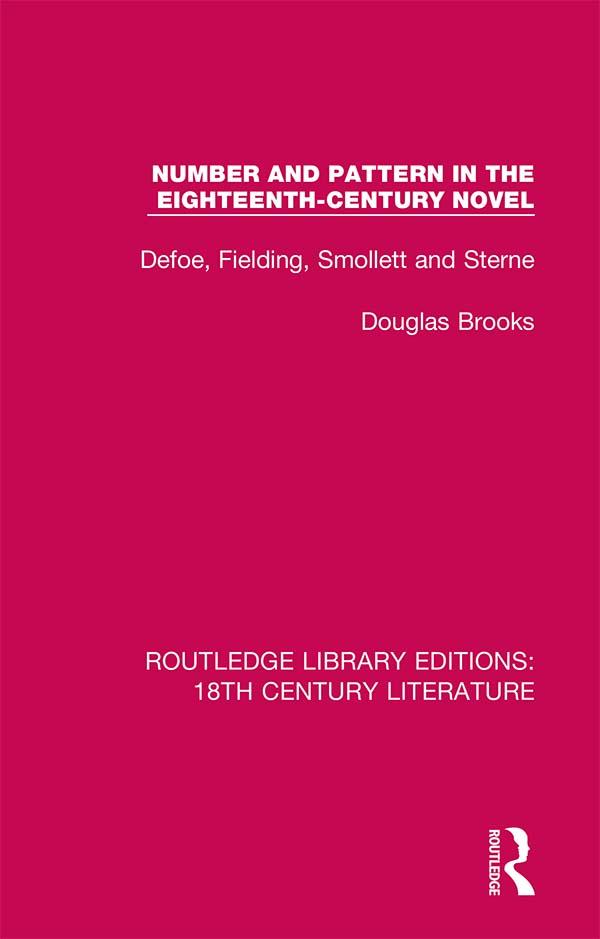
Numerological patterning in literature, where structural details of a literary work are symbolically related to its meaning on the verbal level, was particularly common from the Middle Ages up to the seventeenth century. Originally published in 1973, the author breaks new ground in revealing that familiarity with this technique lived on into the eighteenth century, supplying the more artistically aware of the early British novelists with meaningful formal guidelines.
An account is given of the origins and continuity of the numerological tradition in Western European – and particularly English – thought as it affected literary structure. The careful structural patterning in the novels of Defoe and in Fielding’s Joseph Andrews and Tom Jones is examined in detail. Smollett, too, is shown to have been interested in exploring the possibilities of number and pattern, and the clear-cut numerological framework of Sterne’s Tristram Shandy is revealed.
This original and controversial study combines structural analysis with fresh interpretative insights, and draws parallels with painting, music and architecture. It also has an important bearing on the history of ideas in the first half of the eighteenth century.
Betaal eenvoudig met kaart, Klarna, Apple Pay of Google Pay. Niet tevreden? Je hebt altijd 14 dagen bedenktijd. Lees meer in onze voorwaarden. Heb je vragen, mail ons dan via hello@memmo.org.
Memmo maakt studeren makkelijker – waar je ook bent ter wereld. Wij brengen je cursusboeken en slimme studietools samen op één plek: samenvattingen, quizzen, podcasts en flashcards. En Ted, je studievriend die antwoord geeft op alles wat je je afvraagt. Meer dan 50.000 studenten studeren hier al – gebouwd om je sneller te laten leren en minder stress te geven.