
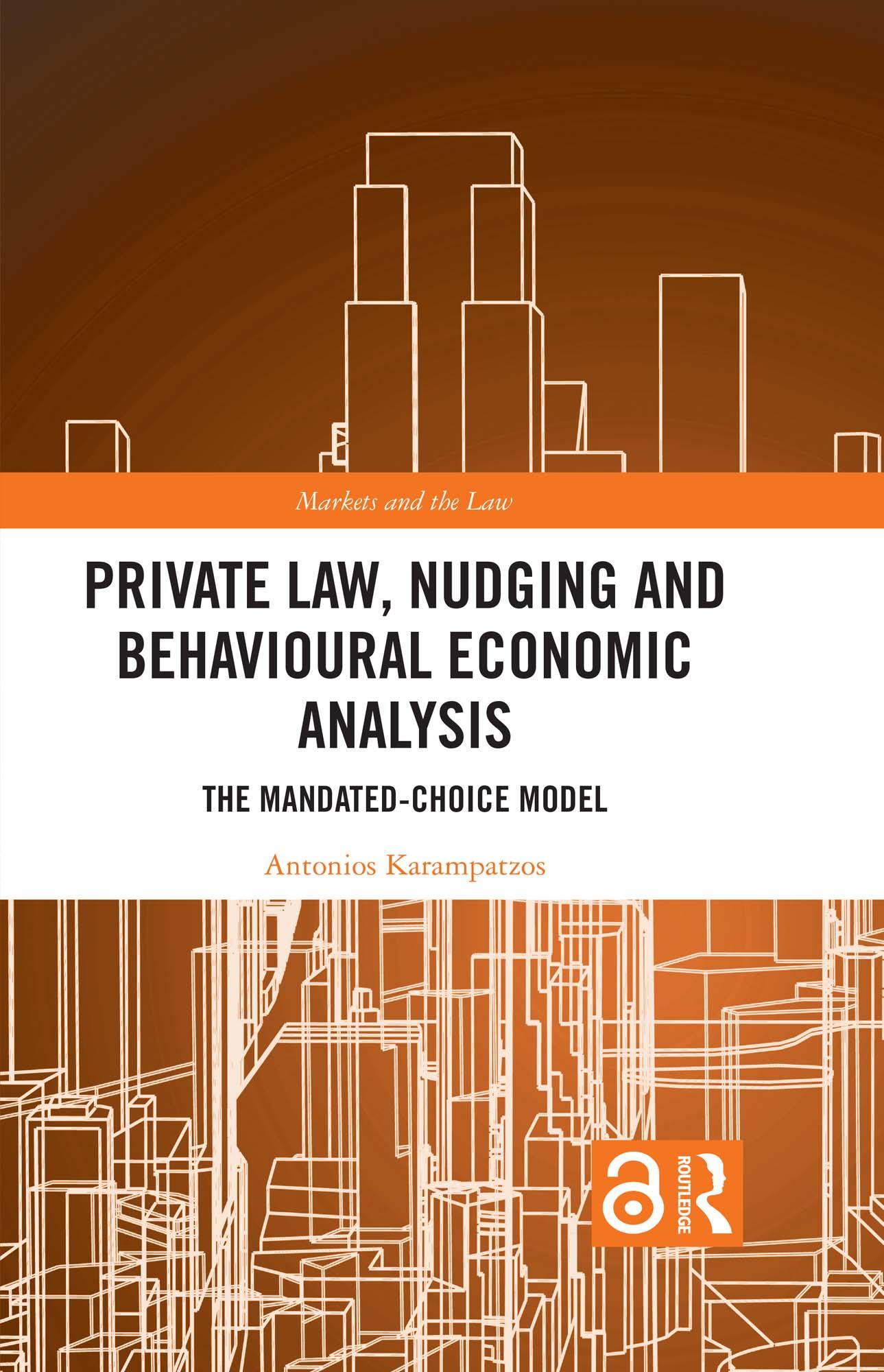
Offering a fresh perspective on "nudging", this book uses legal paternalism to explore how legal systems may promote good policies without ignoring personal autonomy.
It suggests that the dilemma between inefficient opt-in rules and autonomy restricting opt-out schemes fails to realistically capture the span of options available to the policy maker. There is a third path, namely the ‘mandated-choice model’. The book is mainly dedicated to presenting this model and exploring its great potential. Contract law, consumer protection, products safety and regulatory problems such as organ donation or excessive borrowing are the setting for the discussion. Familiarising the reader with a hot debate on paternalism, behavioural economics and private law, this book takes a further step and links this behavioural law and economics discussion with philosophical considerations to shed a light on modern challenges, such as organ donation or consumers protection, by adopting an openly interdisciplinary approach.
The book will be of interest to students and scholars of contract law, legal systems, behavioural law and economics, and consumer law.
The Open Access version of this book, available at http://www.taylorfrancis.com, has been made available under a Creative Commons Attribution-NonCommercial-NoDerivatives (CC BY-NC-ND) 4.0 license.
Betaal eenvoudig met kaart, Klarna, Apple Pay of Google Pay. Niet tevreden? Je hebt altijd 14 dagen bedenktijd. Lees meer in onze voorwaarden. Heb je vragen, mail ons dan via hello@memmo.org.
Memmo maakt studeren makkelijker – waar je ook bent ter wereld. Wij brengen je cursusboeken en slimme studietools samen op één plek: samenvattingen, quizzen, podcasts en flashcards. En Ted, je studievriend die antwoord geeft op alles wat je je afvraagt. Meer dan 50.000 studenten studeren hier al – gebouwd om je sneller te laten leren en minder stress te geven.