
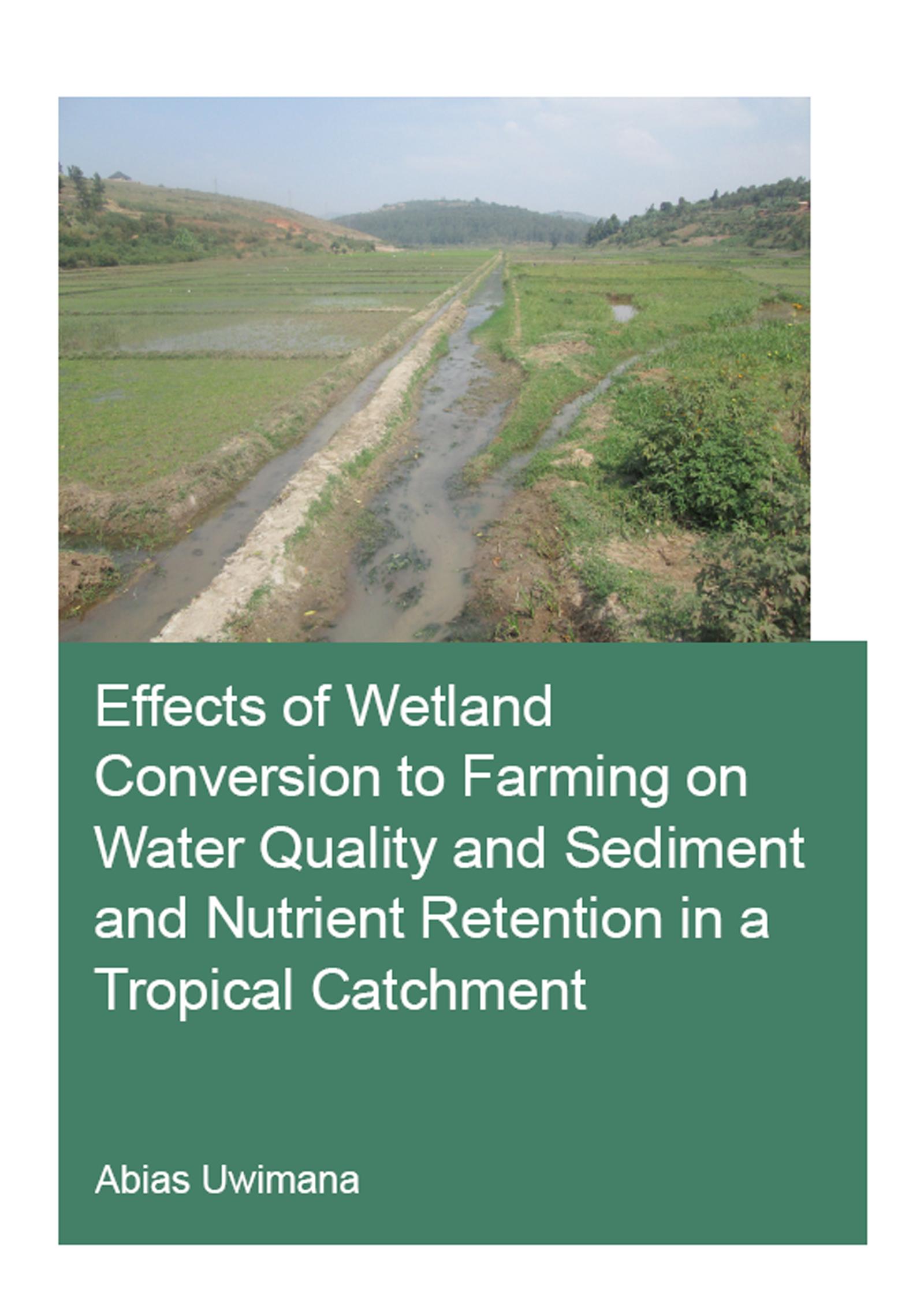
The study used a combination of landscape-scale synoptic surveys (catchment, reaches) and mesocosm surveys (experimental plots) to assess the impacts of conversion of natural valley-bottom wetlands to farming land on the water quality and retention of sediment and nutrients. The results showed that temperature, pH, electrical conductivity and dissolved oxygen concentration decreased, and total suspended solids (TSS) increased with storm water increase. Nitrogen (TN) and phosphorus (TP) accumulated in the catchment during the dry season and washed into the water courses during the early stages of the higher flows, with subsequent lower concentrations at the end of the rains due to dilution. Large proportions of the annual loads of TSS, TP and TN (93%, 60% and 67%, respectively) were transported during rainfall events that occurred in 115 days. Fishponds acted as temporal traps of TSS, TN and TP at the early stages of farming, and were a source of and TN and TP at the end of the farming period, in contrast to rice farming that generated sediments and nutrients early in the farming period and trapped them at the end of the farming season. Wetlands mostly acted as sinks but sometimes as a source of sediment and nutrients.
Betaal eenvoudig met kaart, Klarna, Apple Pay of Google Pay. Niet tevreden? Je hebt altijd 14 dagen bedenktijd. Lees meer in onze voorwaarden. Heb je vragen, mail ons dan via hello@memmo.org.
Memmo maakt studeren makkelijker – waar je ook bent ter wereld. Wij brengen je cursusboeken en slimme studietools samen op één plek: samenvattingen, quizzen, podcasts en flashcards. En Ted, je studievriend die antwoord geeft op alles wat je je afvraagt. Meer dan 50.000 studenten studeren hier al – gebouwd om je sneller te laten leren en minder stress te geven.