
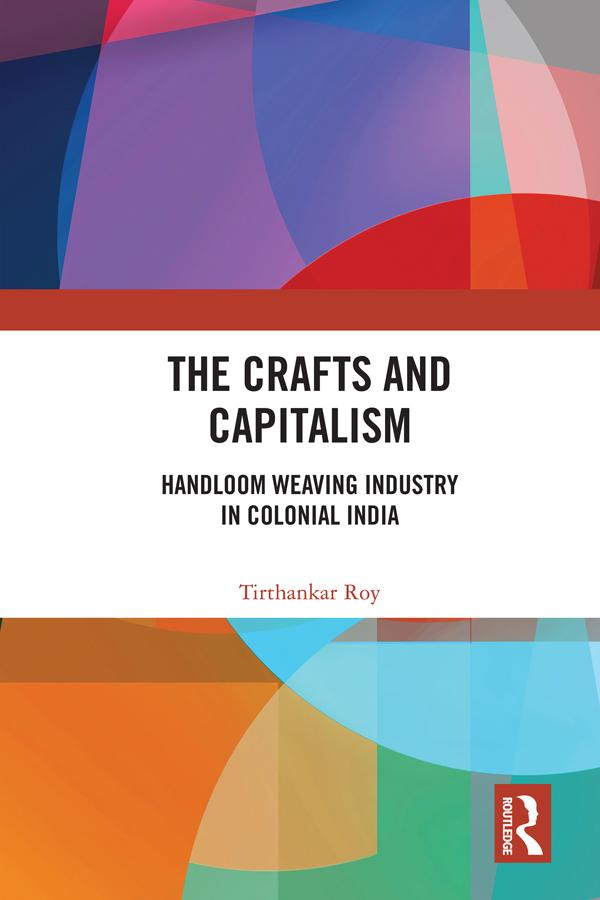
This book presents a comprehensive history of handloom weaving industry in India to challenge and revise the view that competition from machine-produced textiles destroyed the country’s handicrafts as claimed by historians until recently. It shows that skill-intensive handmade textiles survived the competition on a large scale, and that handmade goods and high-quality manual labour played a positive role in the making of modern India. Rich in archival material, The Crafts and Capitalism explores themes such as the historiography of craft technologies; statistical work on nineteenth-century cotton cloth production trends; narratives of merchants, the social leaders, the factory-owners; tools and techniques; and, shift from handloom to power loom. The book argues that changes in the handloom industry were central to the consolidation of new forms of capitalism in India.
An important intervention in Indian economic history, this book will be useful to scholars and researchers of Indian history, economic history, colonial history, modern history, political history, labour history and political economy. It will also interest nongovernmental organizations, textile historians, and design specialists.
Betaal eenvoudig met kaart, Klarna, Apple Pay of Google Pay. Niet tevreden? Je hebt altijd 14 dagen bedenktijd. Lees meer in onze voorwaarden. Heb je vragen, mail ons dan via hello@memmo.org.
Memmo maakt studeren makkelijker – waar je ook bent ter wereld. Wij brengen je cursusboeken en slimme studietools samen op één plek: samenvattingen, quizzen, podcasts en flashcards. En Ted, je studievriend die antwoord geeft op alles wat je je afvraagt. Meer dan 50.000 studenten studeren hier al – gebouwd om je sneller te laten leren en minder stress te geven.