
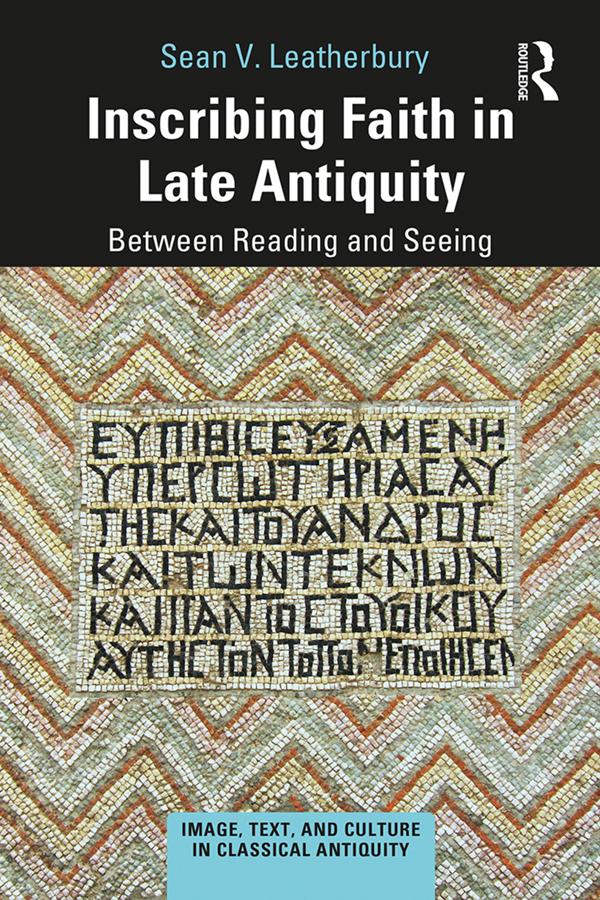
Inscribing Faith in Late Antiquity considers the Greek and Latin texts inscribed in churches and chapels in the late antique Mediterranean (c. 300–800 CE), compares them to similar texts from pagan, Jewish, and Muslim spaces of worship, and explores how they functioned both textually and visually.
These texts not only recorded the names and prayers of the faithful, but were powerful verbal and visual statements of cultural values and religious beliefs, conveying meaning through their words as well as through their appearances. In fact, the two were intimately connected. All of these texts – Christian, Jewish, Muslim, and pagan – acted visually, embracing their own materiality as mosaic, paint, or carved stone. Colourful and artfully arranged, the inscriptions framed human relationships with the divine, encouraged responses from readers, and made prayers material. In the first in-depth examination of the inscriptions as words and as images, the author reimagines the range of aesthetic, cultural, and religious experiences that were possible in spaces of worship.
Inscribing Faith in Late Antiquity is essential reading for those interested in Roman, late antique, and Byzantine material and visual culture, inscriptions and other texts, and religious life in the ancient Mediterranean.
Betaal eenvoudig met kaart, Klarna, Apple Pay of Google Pay. Niet tevreden? Je hebt altijd 14 dagen bedenktijd. Lees meer in onze voorwaarden. Heb je vragen, mail ons dan via hello@memmo.org.
Memmo maakt studeren makkelijker – waar je ook bent ter wereld. Wij brengen je cursusboeken en slimme studietools samen op één plek: samenvattingen, quizzen, podcasts en flashcards. En Ted, je studievriend die antwoord geeft op alles wat je je afvraagt. Meer dan 50.000 studenten studeren hier al – gebouwd om je sneller te laten leren en minder stress te geven.