
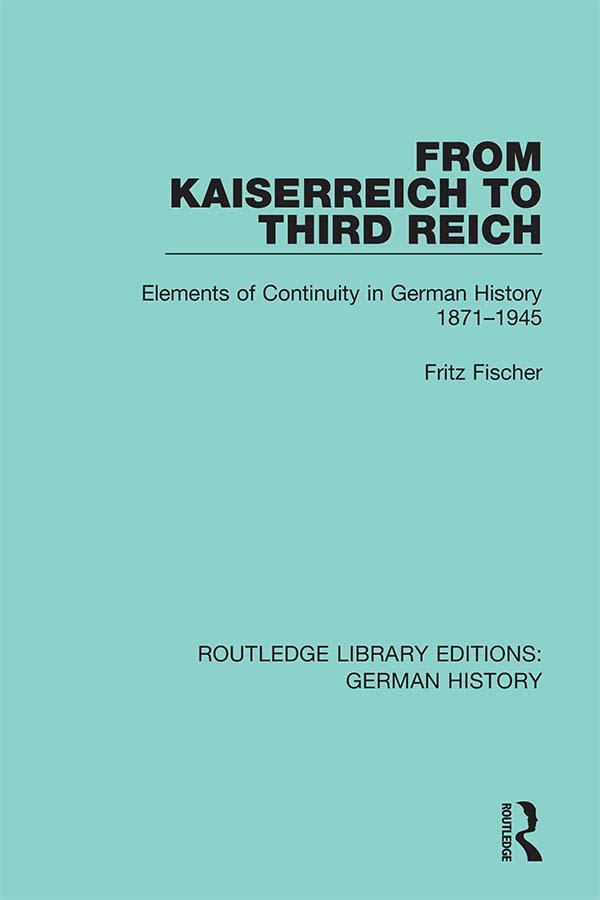
Originally published in English in 1986, this book offers a concise summary of the contribution Fritz Fischer and his school made to German historiography in the 20th century and in particular draws attention to continuity in the development and power structures of the German Reich between 1871 and 1945. After 1866 the traditional elites wanted to avoid fundamental changes in society, expecting a victorious war to secure their own position at home and to broaden the European base of the German Reich. Even as the Blitzkrieg expectations foundered, these ambitions persisted beyond 1918. In the face of working-class hostility, these elites were unable to mobilize mass support for their interests, but Hitler fashioned a mass party. The alliance between these unequal partners led to the Third Reich but with its collapse in 1945 the Prusso-German Reich came to an end. Only with the German Federal Republic did the liberal-democratic traditions of German history again come into their own.
Betaal eenvoudig met kaart, Klarna, Apple Pay of Google Pay. Niet tevreden? Je hebt altijd 14 dagen bedenktijd. Lees meer in onze voorwaarden. Heb je vragen, mail ons dan via hello@memmo.org.
Memmo maakt studeren makkelijker – waar je ook bent ter wereld. Wij brengen je cursusboeken en slimme studietools samen op één plek: samenvattingen, quizzen, podcasts en flashcards. En Ted, je studievriend die antwoord geeft op alles wat je je afvraagt. Meer dan 50.000 studenten studeren hier al – gebouwd om je sneller te laten leren en minder stress te geven.