
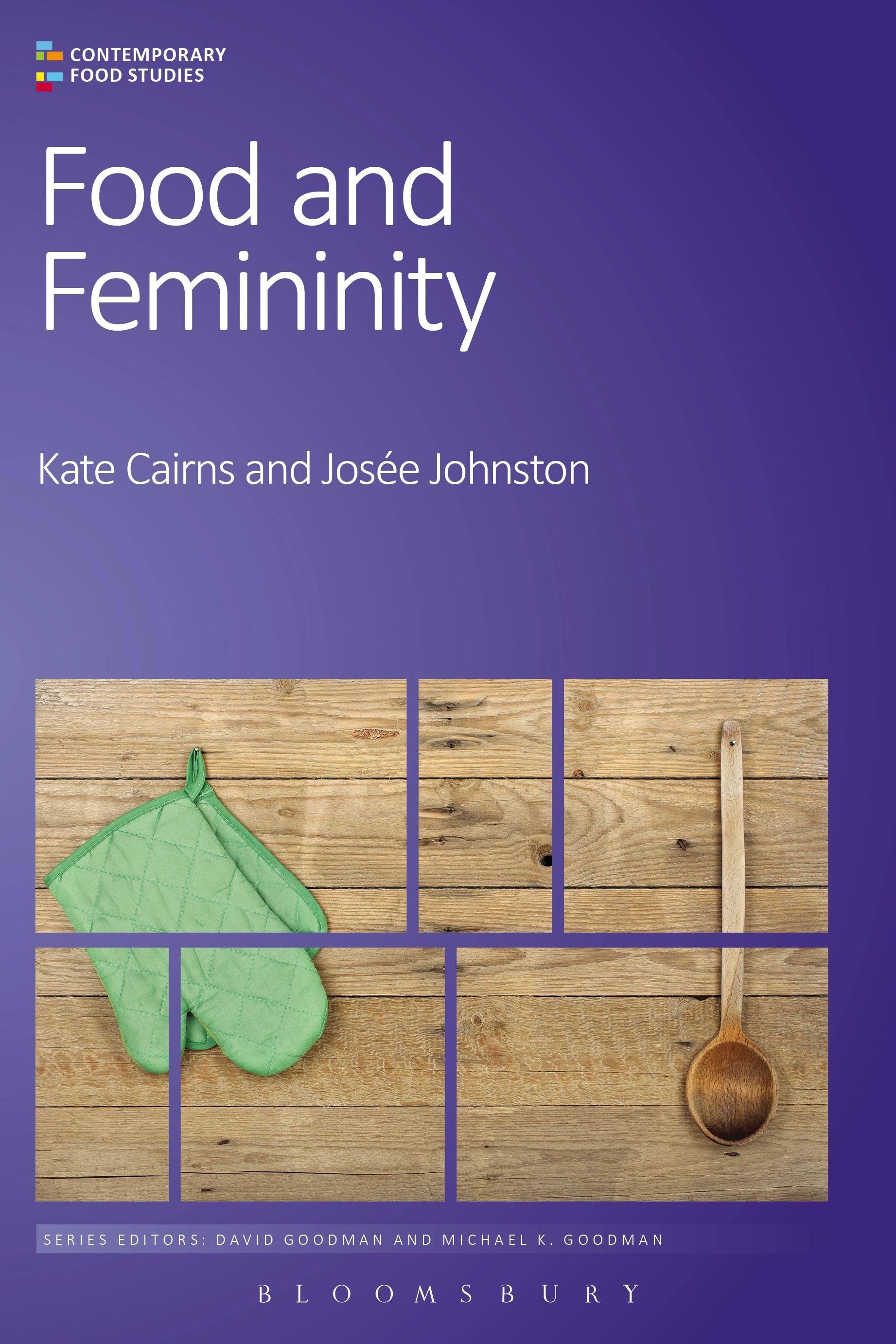
Over the space of a few generations, women's relationship with food has changed dramatically. Yet – despite significant advances in gender equality – food and femininity remain closely connected in the public imagination as well as the emotional lives of women. While women encounter food-related pressures and pleasures as individuals, the social challenge to perform food femininities remains: as the nurturing mother, the talented home cook, the conscientious consumer, the svelte and health-savvy eater.
In Food and Femininity, Kate Cairns and Josée Johnston explore these complex and often emotionally-charged tensions to demonstrate that food is essential to the understanding of femininity today. Drawing on extensive qualitative research in Toronto, they present the voices of over 100 food-oriented men and women from a range of race and class backgrounds. Their research reveals gendered expectations to purchase, prepare, and enjoy food within the context of time crunches, budget restrictions, political commitments, and the pressure to manage health and body weight. The book analyses how women navigate multiple aspects of foodwork for themselves and others, from planning meals, grocery shopping, and feeding children, to navigating conflicting preferences, nutritional and ethical advice, and the often-inequitable division of household labour. What emerges is a world in which women's choices continue to be closely scrutinized – a world where 'failing' at food is still perceived as a failure of femininity.
A compelling rethink of contemporary femininity, this is an indispensable read for anyone interested in the sociology of food, gender studies and consumer culture.
In Food and Femininity, Kate Cairns and Josée Johnston explore these complex and often emotionally-charged tensions to demonstrate that food is essential to the understanding of femininity today. Drawing on extensive qualitative research in Toronto, they present the voices of over 100 food-oriented men and women from a range of race and class backgrounds. Their research reveals gendered expectations to purchase, prepare, and enjoy food within the context of time crunches, budget restrictions, political commitments, and the pressure to manage health and body weight. The book analyses how women navigate multiple aspects of foodwork for themselves and others, from planning meals, grocery shopping, and feeding children, to navigating conflicting preferences, nutritional and ethical advice, and the often-inequitable division of household labour. What emerges is a world in which women's choices continue to be closely scrutinized – a world where 'failing' at food is still perceived as a failure of femininity.
A compelling rethink of contemporary femininity, this is an indispensable read for anyone interested in the sociology of food, gender studies and consumer culture.
Betaal eenvoudig met kaart, Klarna, Apple Pay of Google Pay. Niet tevreden? Je hebt altijd 14 dagen bedenktijd. Lees meer in onze voorwaarden. Heb je vragen, mail ons dan via hello@memmo.org.
Memmo maakt studeren makkelijker – waar je ook bent ter wereld. Wij brengen je cursusboeken en slimme studietools samen op één plek: samenvattingen, quizzen, podcasts en flashcards. En Ted, je studievriend die antwoord geeft op alles wat je je afvraagt. Meer dan 50.000 studenten studeren hier al – gebouwd om je sneller te laten leren en minder stress te geven.