
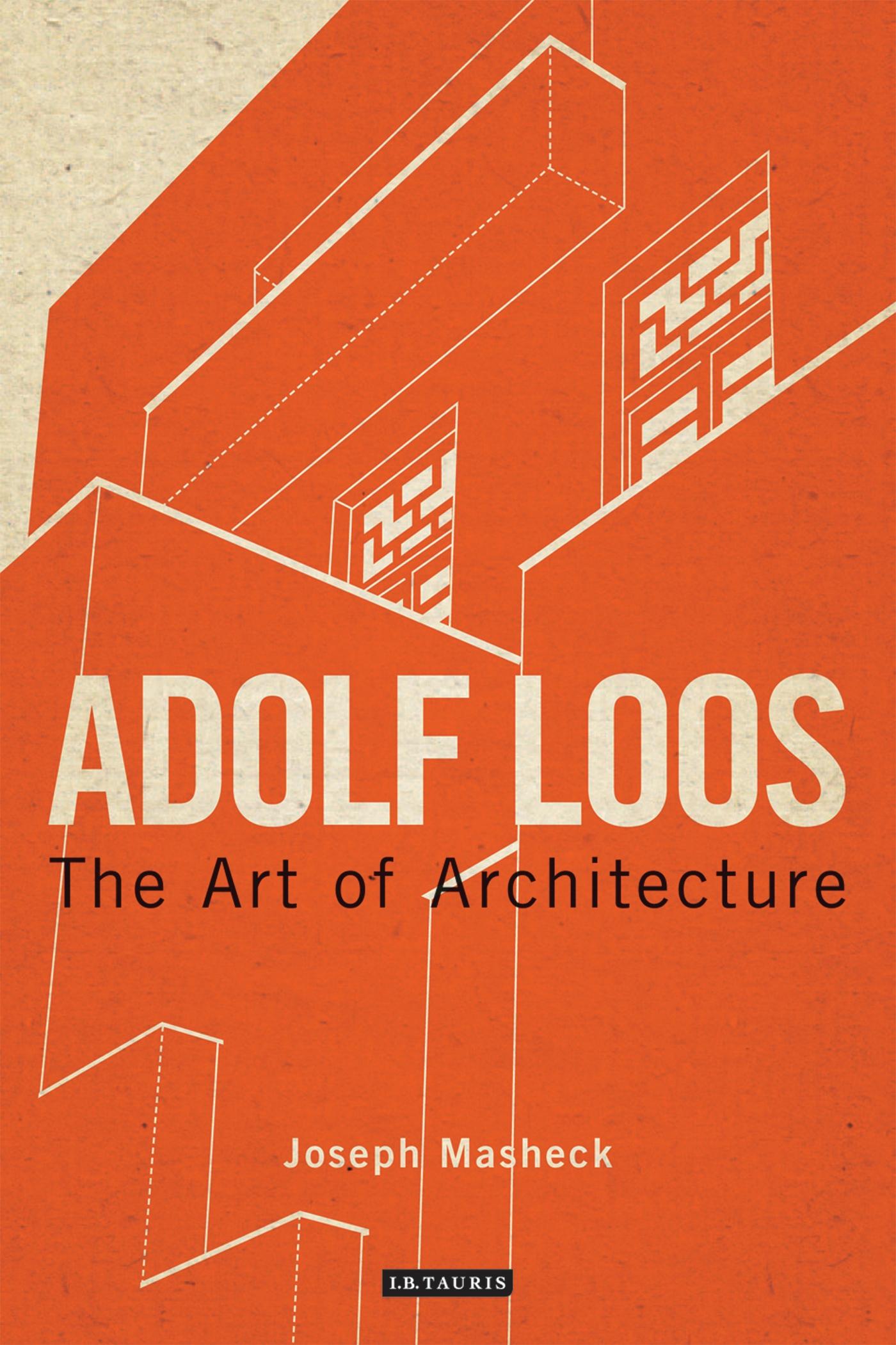
Widely regarded as one of the most significant prophets of modern architecture, Adolf Loos was a celebrity in his own day. His work was emblematic of the turn-of-the-century generation that was torn between the traditional culture of the nineteenth century and the innovative modernism of the twentieth. His essay 'Ornament and Crime' equated superfluous ornament and 'decorative arts' with tattooing in an attempt to tell modern Europeans that they should know better. But the negation of ornament was supposed to reveal, not negate, good style; and an incorrigible ironist has been taken too literally in denying architecture as a fine art. Without normalizing his edgy radicality, Masheck argues that Loos' masterful "astylistic architecture" was an appreciation of tradition and utility and not, as most architectural historians have argued, a mere repudiation of the florid style of the Vienna Secession. Masheck reads Loos as a witty, ironic rhetorician who has all too often been taken at face value. Far from being the anti-architect of the modern era, Masheck's Loos is 'an unruly yet integrally canonical artist-architect'.
He believed in culture, comfort, intimacy and privacy and advocated the evolution of artful architecture. This is a brilliantly written revisionist reading of a perennially popular architect.
He believed in culture, comfort, intimacy and privacy and advocated the evolution of artful architecture. This is a brilliantly written revisionist reading of a perennially popular architect.
Betaal eenvoudig met kaart, Klarna, Apple Pay of Google Pay. Niet tevreden? Je hebt altijd 14 dagen bedenktijd. Lees meer in onze voorwaarden. Heb je vragen, mail ons dan via hello@memmo.org.
Memmo maakt studeren makkelijker – waar je ook bent ter wereld. Wij brengen je cursusboeken en slimme studietools samen op één plek: samenvattingen, quizzen, podcasts en flashcards. En Ted, je studievriend die antwoord geeft op alles wat je je afvraagt. Meer dan 50.000 studenten studeren hier al – gebouwd om je sneller te laten leren en minder stress te geven.