
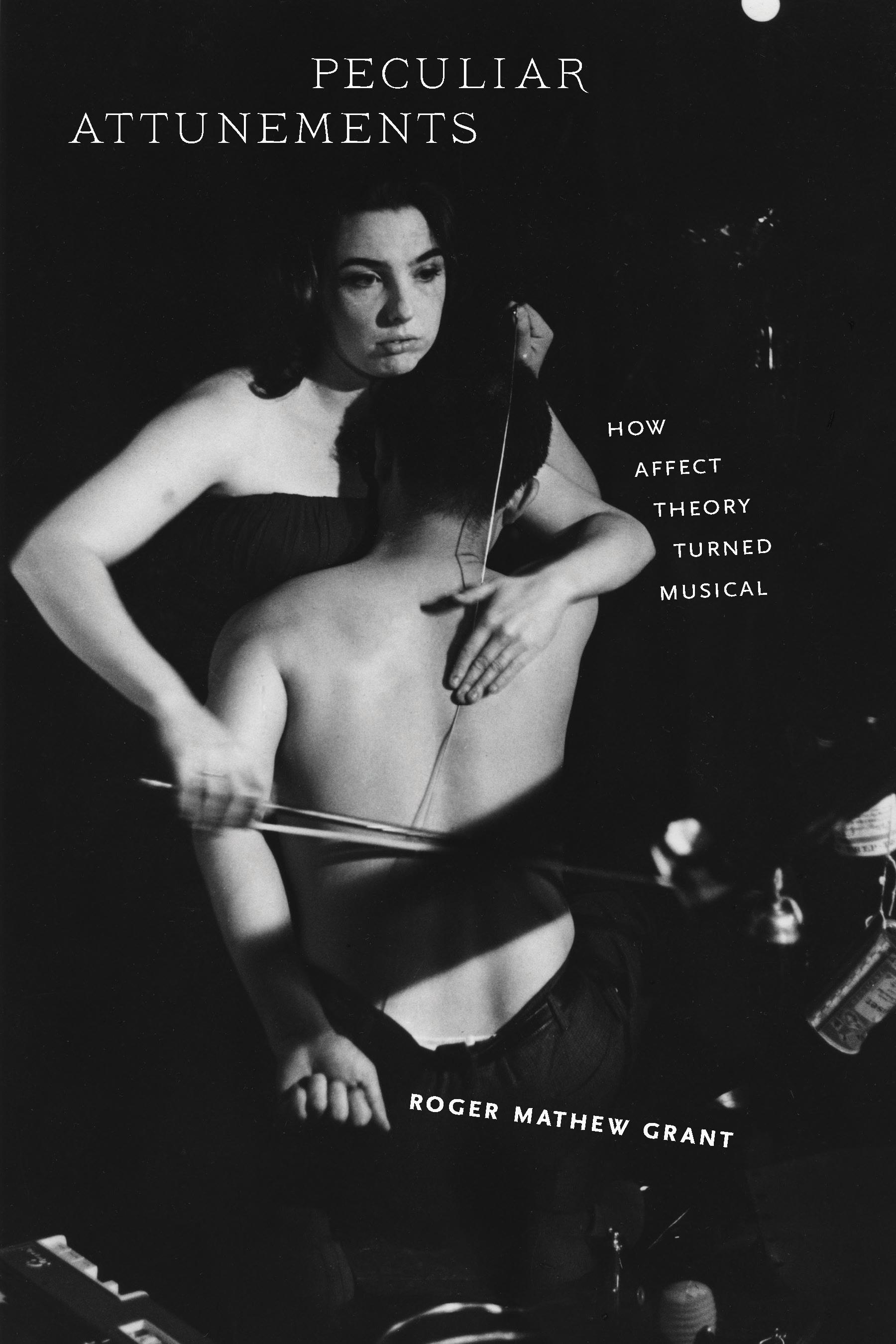
Peculiar Attunements places the recent turn to affect into conversation with a parallel movement in European music theory of the eighteenth century. During that time the affects—or passions, as they were also called—formed a vital component of a mimetic model of the arts. Eighteenth-century critics held that artworks imitated or copied the natural world in order to produce copies of the affects in their beholders. But music caused a problem for such theories, since it wasn’t apparent that musical tones could imitate anything with any dependability, beyond the rare thunderclap or birdcall.
Struggling to articulate how it was that music managed to move its auditors without imitation, certain theorists developed a new affect theory crafted especially for music, postulating that music’s physical materiality as sound vibrated the nerves of listeners and attuned them to the affects through sympathetic resonance. This was a theory of affective attunement that bypassed the entire structure of representation, offering a non-discursive, corporeal alternative. It is a pendant to contemporary theories of affect, and one from which they have much to learn. Inflecting our current intellectual moment through eighteenth-century music theory and aesthetics, this book offers a reassessment of affect theory’s common systems and processes. It offers a new way of thinking through affect dialectically, drawing attention to patterns and problems in affect theory that we have been given to repeating. Finally, taking a cue from eighteenth-century theory, it gives renewed attention to the objects that generate affects in subjects.
Betaal eenvoudig met kaart, Klarna, Apple Pay of Google Pay. Niet tevreden? Je hebt altijd 14 dagen bedenktijd. Lees meer in onze voorwaarden. Heb je vragen, mail ons dan via hello@memmo.org.
Memmo maakt studeren makkelijker – waar je ook bent ter wereld. Wij brengen je cursusboeken en slimme studietools samen op één plek: samenvattingen, quizzen, podcasts en flashcards. En Ted, je studievriend die antwoord geeft op alles wat je je afvraagt. Meer dan 50.000 studenten studeren hier al – gebouwd om je sneller te laten leren en minder stress te geven.