
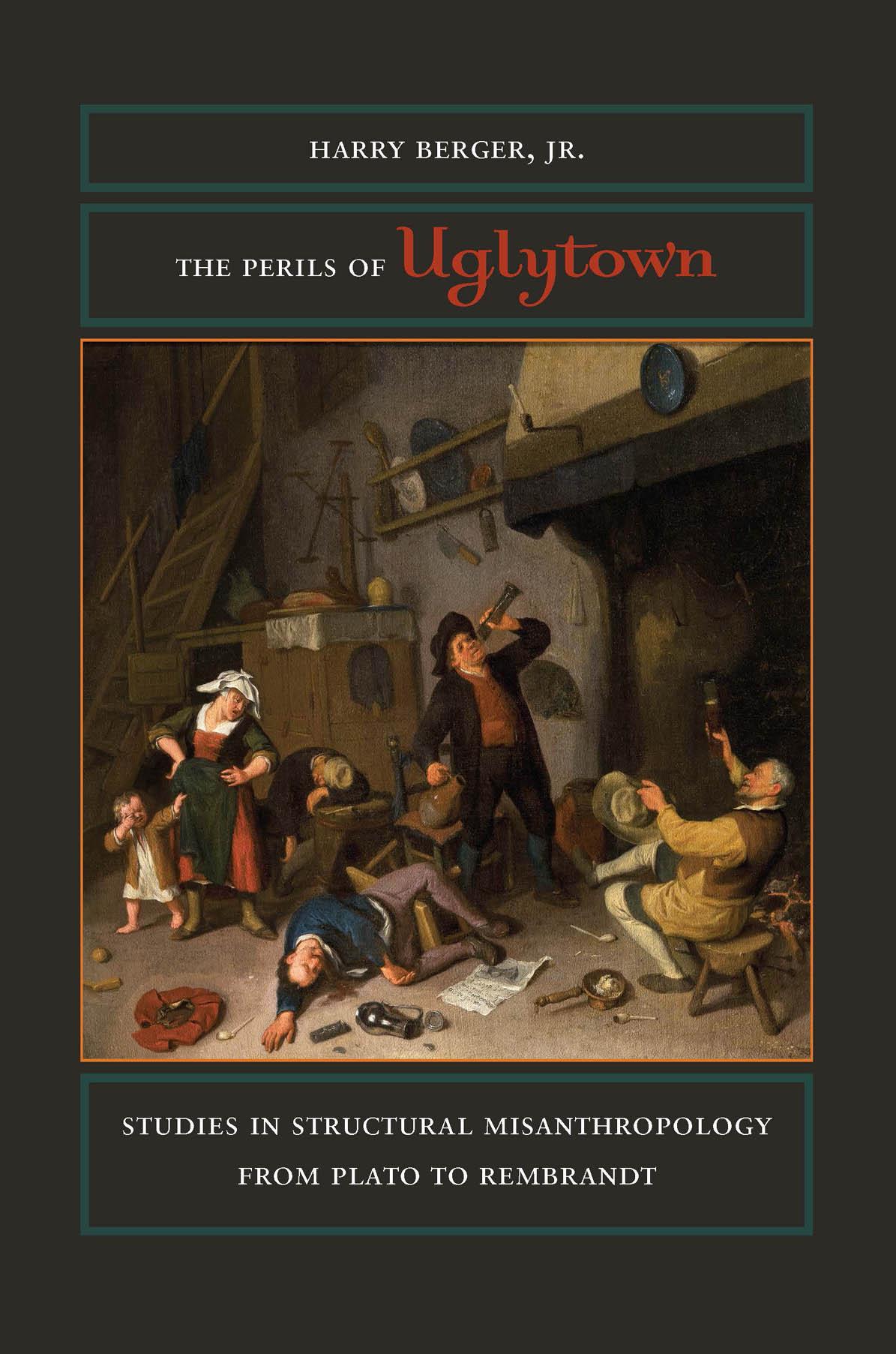
With characteristic wit, Harry Berger, Jr., brings his flair for close reading to texts and images across two millennia that illustrate what he calls “structural misanthropology.” Beginning with a novel reading of Plato, Berger emphasizes Socrates’s self-acknowledged failures. The dialogues, he shows, offer up, only to dispute, a misanthropic polis. The Athenian city-state, they worry, is founded on a social order motivated by apprehension—both the desire to take and the fear of being taken. In addition to suggesting new political
and philosophical dimensions to Platonic thought, Berger’s attention to rhetorical practice offers novel ways of parsing the dialogic method itself.
In the book’s second half, Berger revisits and revises his earlier accounts of Italian humanism, Elizabethan drama, and Dutch painting. Berger shows how structural misanthropology helps us to read the competitive practices that characterize Renaissance writing and art, whether in Machiavelli’s constitutional prostheses, Shakespeare’s pageants of humiliation, or the elbow jabs of Dutch portraiture.
Betaal eenvoudig met kaart, Klarna, Apple Pay of Google Pay. Niet tevreden? Je hebt altijd 14 dagen bedenktijd. Lees meer in onze voorwaarden. Heb je vragen, mail ons dan via hello@memmo.org.
Memmo maakt studeren makkelijker – waar je ook bent ter wereld. Wij brengen je cursusboeken en slimme studietools samen op één plek: samenvattingen, quizzen, podcasts en flashcards. En Ted, je studievriend die antwoord geeft op alles wat je je afvraagt. Meer dan 50.000 studenten studeren hier al – gebouwd om je sneller te laten leren en minder stress te geven.