
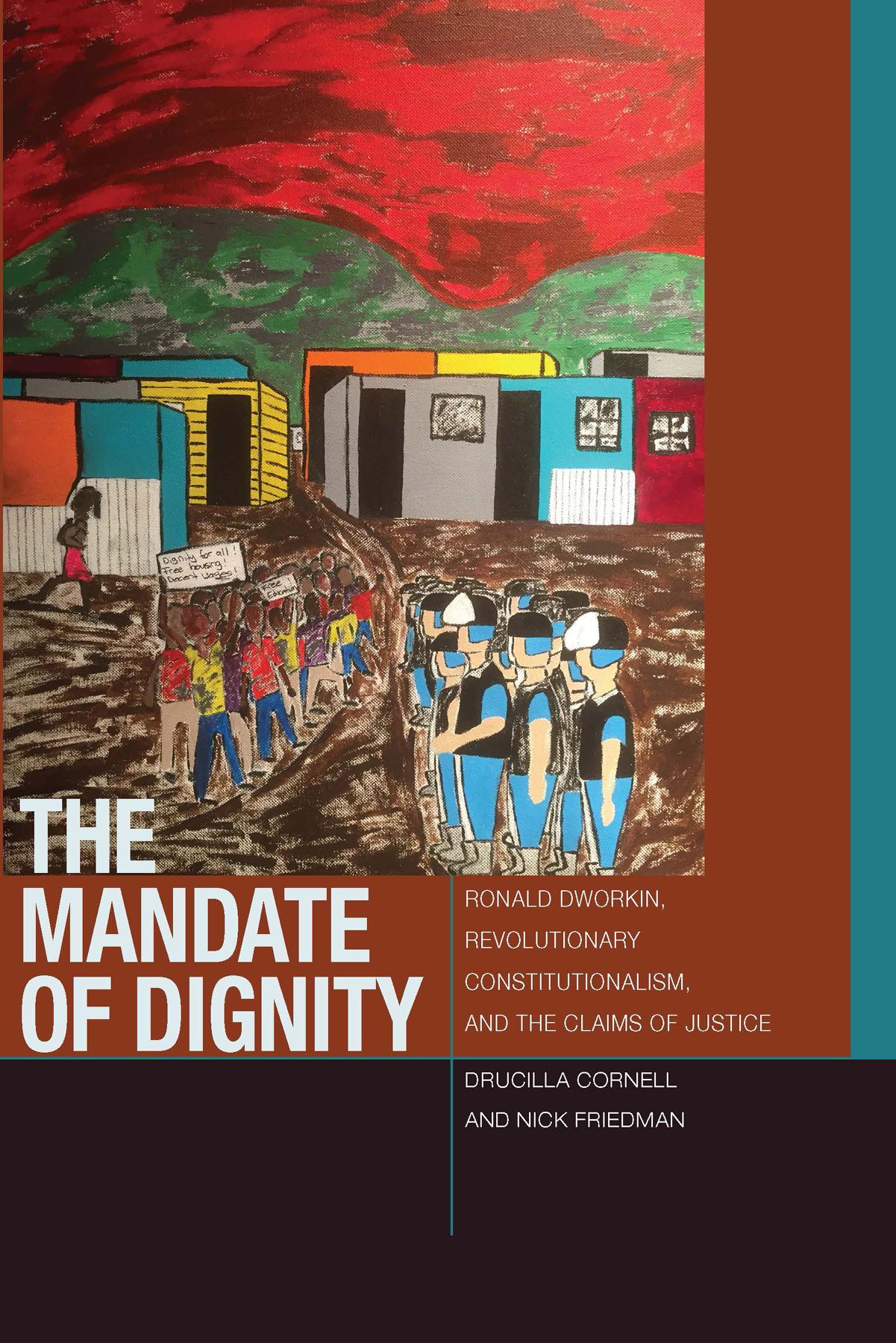
A major American legal thinker, the late Ronald Dworkin also helped shape new dispensations in the Global South. In South Africa, in particular, his work has been fiercely debated in the context of one of the world’s most progressive constitutions. Despite Dworkin’s discomfort with that document’s enshrinement of “socioeconomic rights,” his work enables an important defense of a jurisprudence premised on justice, rather than on legitimacy.
Beginning with a critical overview of Dworkin’s work culminating in his two principles of dignity, Cornell and Friedman turn to Kant and Hegel for an approach better able to ground the principles of dignity Dworkin advocates. Framed thus, Dworkin’s challenge to legal positivism enables a theory of constitutional revolution in which existing legal structures are transformatively revalued according to ethical mandates. By founding law on dignity, Dworkin begins to articulate an ethical jurisprudence responsive to the lived experience of injustice. This book, then, articulates a revolutionary constitutionalism crucial to the struggle for decolonization.
Betaal eenvoudig met kaart, Klarna, Apple Pay of Google Pay. Niet tevreden? Je hebt altijd 14 dagen bedenktijd. Lees meer in onze voorwaarden. Heb je vragen, mail ons dan via hello@memmo.org.
Memmo maakt studeren makkelijker – waar je ook bent ter wereld. Wij brengen je cursusboeken en slimme studietools samen op één plek: samenvattingen, quizzen, podcasts en flashcards. En Ted, je studievriend die antwoord geeft op alles wat je je afvraagt. Meer dan 50.000 studenten studeren hier al – gebouwd om je sneller te laten leren en minder stress te geven.