
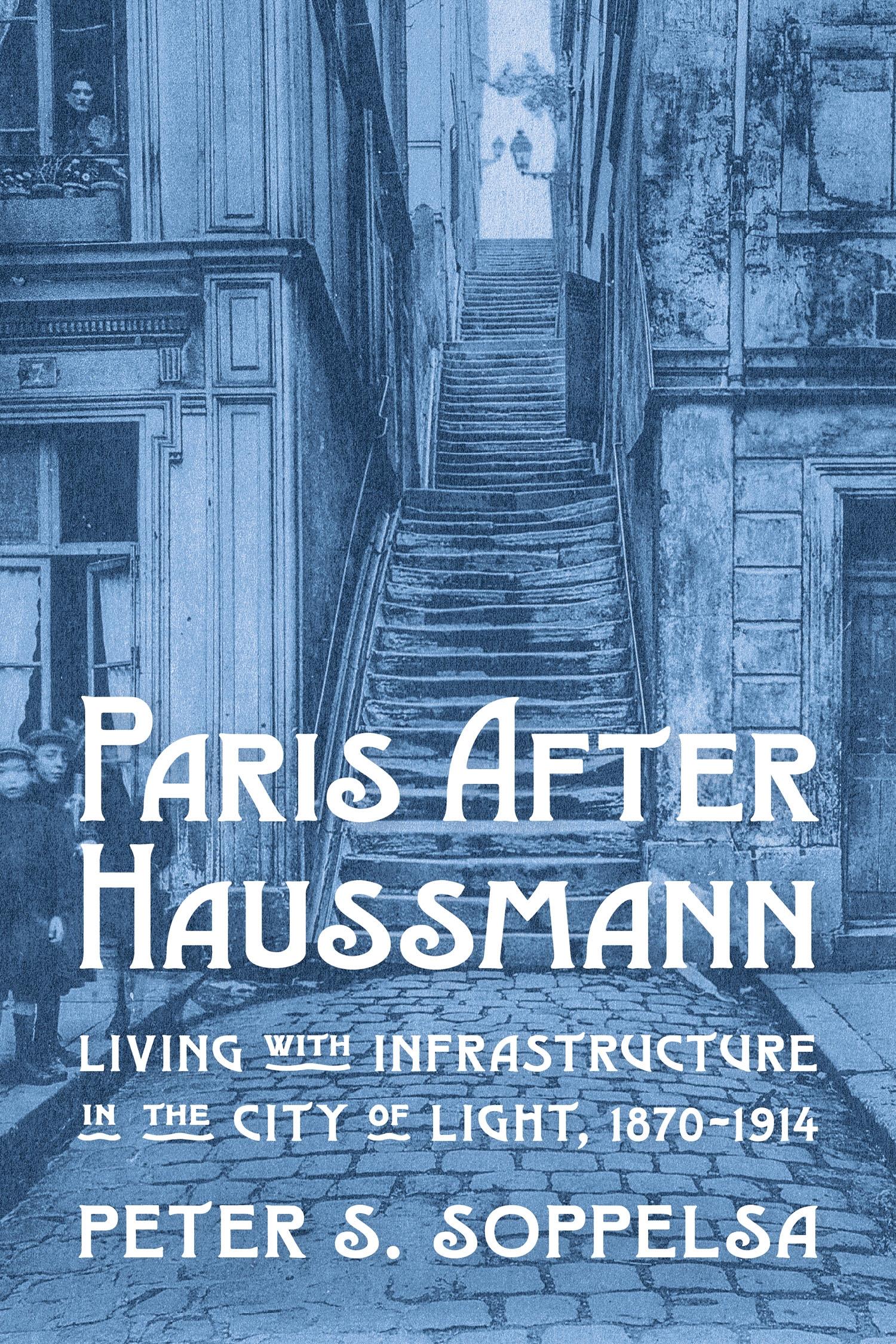
Modern Paris is often hailed as a capital of urban infrastructure. Baron Georges-Eugène Haussmann’s rebuilding of Paris in 1853–1870, branded “Haussmannization,” helped define urban modernity for cities worldwide. But even as infrastructures expanded and modernized, some Parisians were left behind: as late as 1928, 18 percent of houses still lacked direct sewerage. Haussmannization often hid infrastructures behind walls and floors, under streets, or in peripheral districts. In the forty years after 1870, a period that Peter Soppelsa calls “secondary Haussmannization,” Parisians inverted them—revealed their hidden components to scrutinize their workings and costs for society, environment, and health—and in turn politicized them. Drawing on French government archives, engineers’ maps, the illustrated press, and a collection of over 100 photographic postcards, Soppelsa charts the diverse embodied, emotional, and everyday experiences of living with expanding urban infrastructures—streets, housing, tramways, subways, the water supply, sewers, and rivers—in Paris from 1870 to 1914. Parisians learned that infrastructures were not simply technical solutions for the social and environmental problems of city life but could also bring about new dangers and dependencies.
Betaal eenvoudig met kaart, Klarna, Apple Pay of Google Pay. Niet tevreden? Je hebt altijd 14 dagen bedenktijd. Lees meer in onze voorwaarden. Heb je vragen, mail ons dan via hello@memmo.org.
Memmo maakt studeren makkelijker – waar je ook bent ter wereld. Wij brengen je cursusboeken en slimme studietools samen op één plek: samenvattingen, quizzen, podcasts en flashcards. En Ted, je studievriend die antwoord geeft op alles wat je je afvraagt. Meer dan 50.000 studenten studeren hier al – gebouwd om je sneller te laten leren en minder stress te geven.
Misschien vind je dit ook leuk
Koop het boek0