
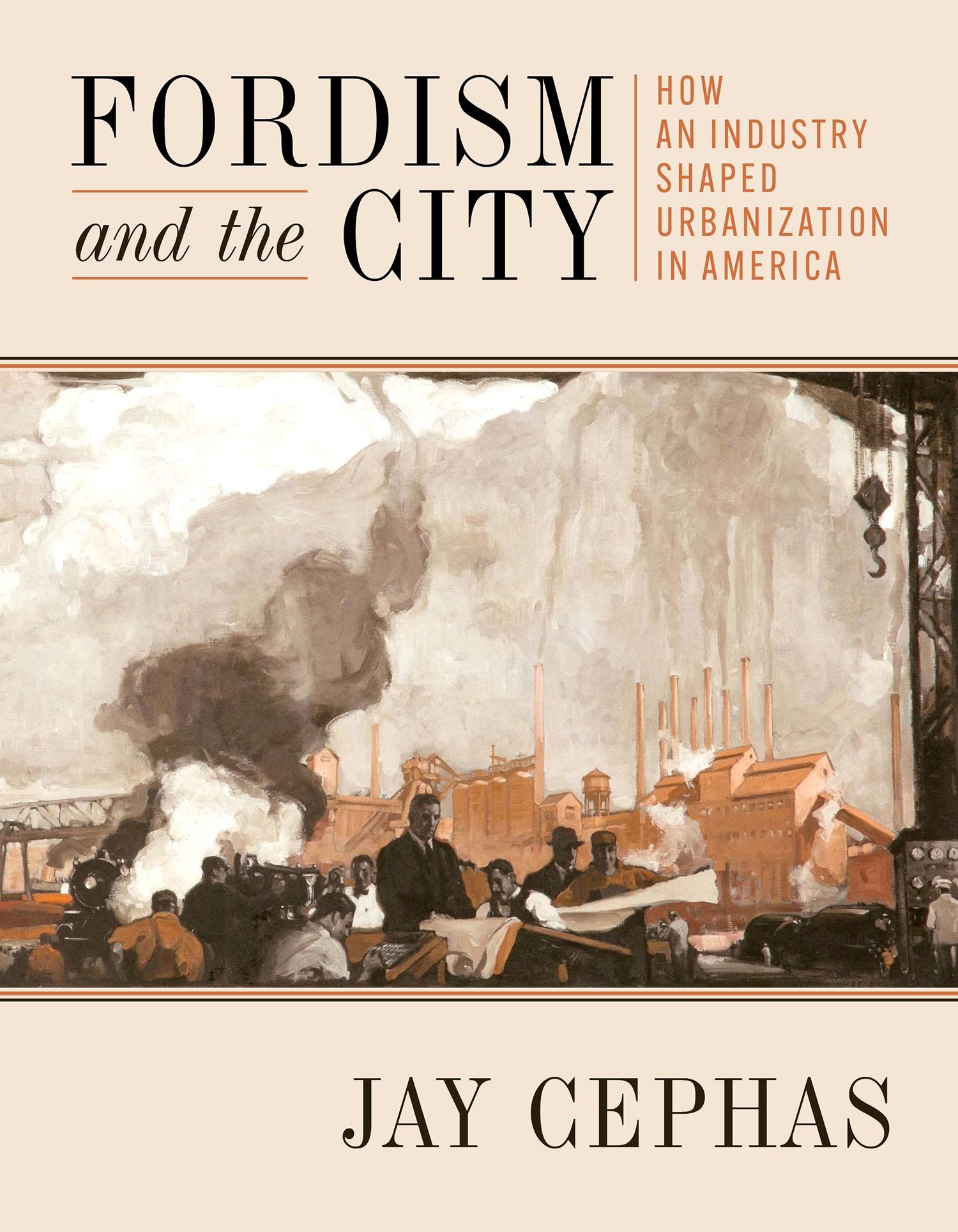
In the early twentieth century, the Ford Motor Company built an industrial empire with massive factory complexes and associated infrastructures. Henry Ford’s 1915 plan to decentralize industrial manufacturing relied on moving key technical processes closer to sites of resource extraction while distributing elements of production. In Fordism and the City, Jay Cephas analyzes key infrastructures—from factories and mills to roads, rail lines, and canals—to trace the impact of automated, assembly-line production on the urban and rural landscapes of Michigan. The overwhelming scale of the Ford Motor Company’s plant in Dearborn, the idyllic setting of its small village factories throughout the Rouge River corridor, and the remoteness of the company’s iron ore mines and hardwood forests in the Upper Peninsula all played an important role. Under the rubric of “the industrial city,” Fordism sought to replace conventional urbanism, reconfiguring factory production and then making its practices visible and intelligible to a consuming public through an industrial aesthetic. In doing so, Cephas shows, Fordism functioned as a normalizing force that helped to usher in the new industrial society.
Categorie: Arkitektur & Stadsplanering
e-ISBN: 9780822992301
Betaal eenvoudig met kaart, Klarna, Apple Pay of Google Pay. Niet tevreden? Je hebt altijd 14 dagen bedenktijd. Lees meer in onze voorwaarden. Heb je vragen, mail ons dan via hello@memmo.org.
Memmo maakt studeren makkelijker – waar je ook bent ter wereld. Wij brengen je cursusboeken en slimme studietools samen op één plek: samenvattingen, quizzen, podcasts en flashcards. En Ted, je studievriend die antwoord geeft op alles wat je je afvraagt. Meer dan 50.000 studenten studeren hier al – gebouwd om je sneller te laten leren en minder stress te geven.
Misschien vind je dit ook leuk
Koop het boek0