
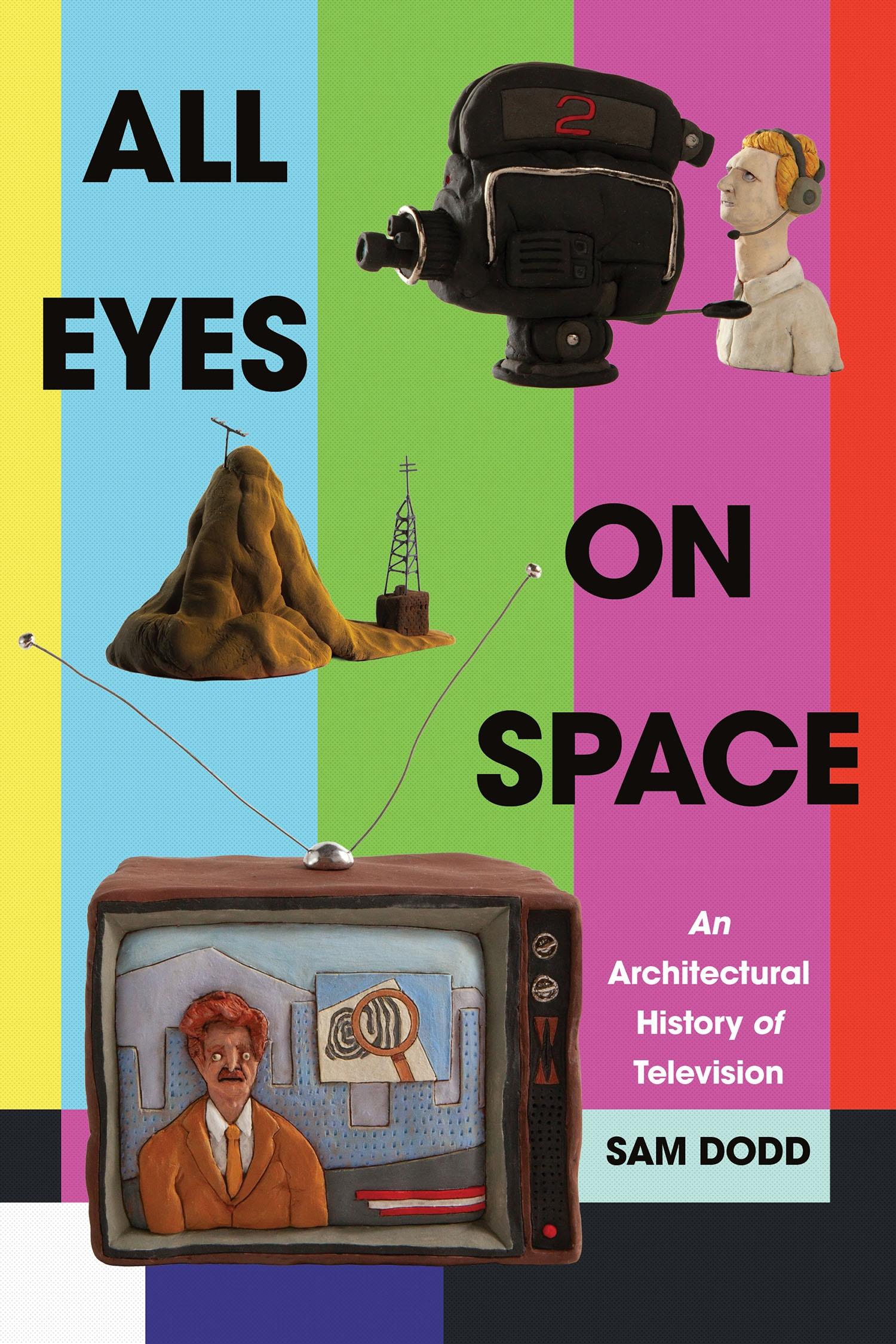
In All Eyes on Space, Sam Dodd looks at television and sees architecture: a dynamic system of spatial design, environmental planning, and bodily control operating behind and beyond the small screen. By transmitting images and sounds across vast distances, television brings faraway places into immediate view and, in the process, reshapes how space is imagined and inhabited. Yet, this seemingly effortless presentation of “distant sight” is only possible because of deliberate architectural investments made throughout the second half of the twentieth century. From the 1940s onward, American architects and planners designed stations, studios, towers, cables, and screens while also experimenting with television as a medium for public communication and engagement. Drawing on archival records, original broadcasts, and works of art and design, Dodd plots a history of television architecture in the United States to show how the medium produced a distinctly American spatial logic that tethered expansionist ambitions to the management of visibility and access. Ultimately, this book reveals how a ubiquitous medium commonly understood as immaterial—if not ephemeral—became one of the century’s most consequential built environments.
Categorie: Film- & Medievetenskap
e-ISBN: 9780822992134
Betaal eenvoudig met kaart, Klarna, Apple Pay of Google Pay. Niet tevreden? Je hebt altijd 14 dagen bedenktijd. Lees meer in onze voorwaarden. Heb je vragen, mail ons dan via hello@memmo.org.
Memmo maakt studeren makkelijker – waar je ook bent ter wereld. Wij brengen je cursusboeken en slimme studietools samen op één plek: samenvattingen, quizzen, podcasts en flashcards. En Ted, je studievriend die antwoord geeft op alles wat je je afvraagt. Meer dan 50.000 studenten studeren hier al – gebouwd om je sneller te laten leren en minder stress te geven.
Misschien vind je dit ook leuk
Koop het boek0