
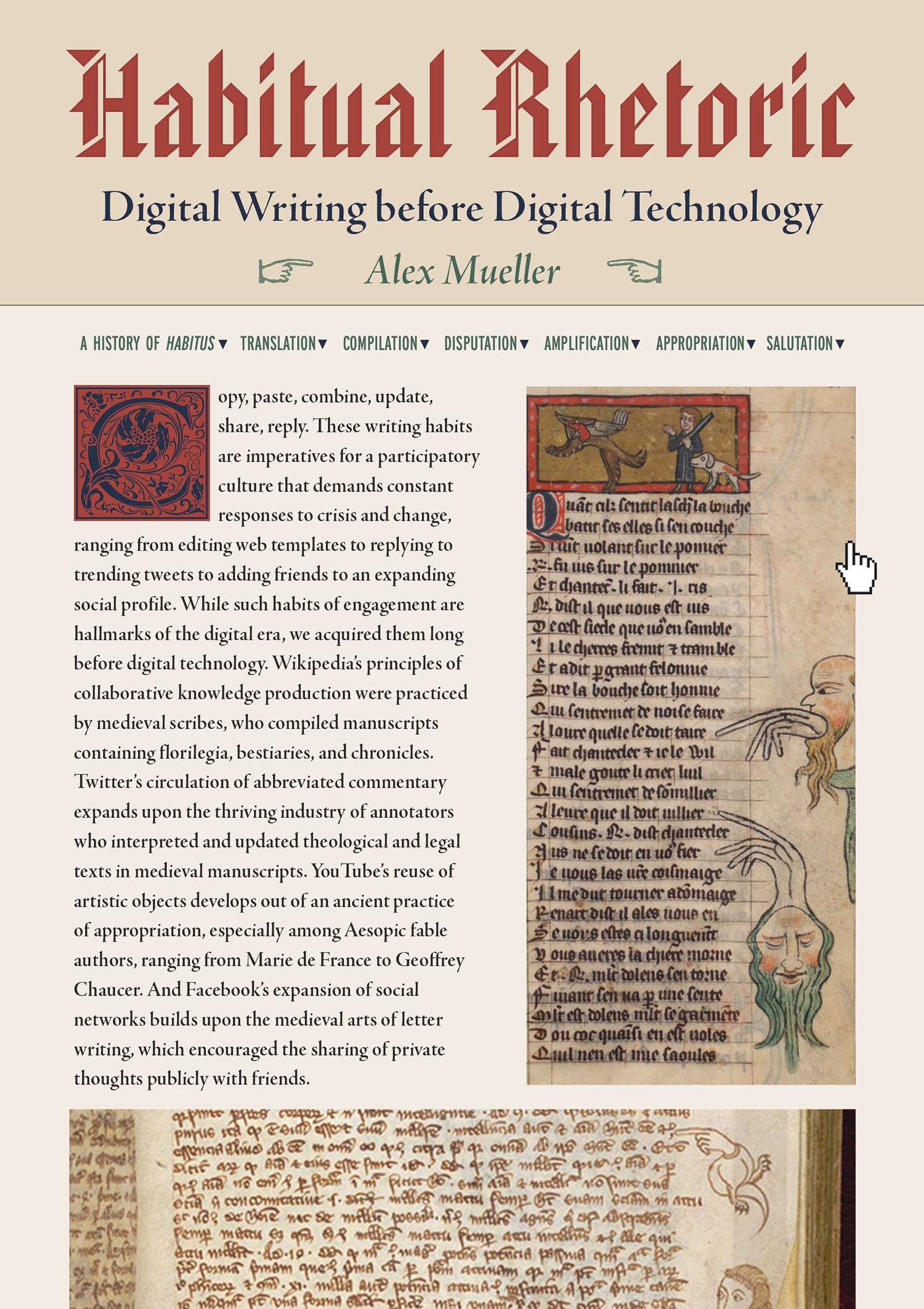
Writing has always been digital. Just as digits scribble with the quill or tap the typewriter, digits compose binary code and produce text on a screen. Over time, however, digital writing has come to be defined by numbers and chips, not fingers and parchment. We therefore assume that digital writing began with the invention of the computer and created new writing habits, such as copying, pasting, and sharing. Habitual Rhetoric: Digital Writing before Digital Technology makes the counterargument that these digital writing practices were established by the handwritten cultures of early medieval universities, which codified rhetorical habits—from translation to compilation to disputation to amplification to appropriation to salutation—through repetitive classroom practices and within annotatable manuscript environments. These embodied habits have persisted across time and space to develop durable dispositions, or habitus, which have the potential to challenge computational cultures of disinformation and surveillance that pervade the social media of today.
Betaal eenvoudig met kaart, Klarna, Apple Pay of Google Pay. Niet tevreden? Je hebt altijd 14 dagen bedenktijd. Lees meer in onze voorwaarden. Heb je vragen, mail ons dan via hello@memmo.org.
Memmo maakt studeren makkelijker – waar je ook bent ter wereld. Wij brengen je cursusboeken en slimme studietools samen op één plek: samenvattingen, quizzen, podcasts en flashcards. En Ted, je studievriend die antwoord geeft op alles wat je je afvraagt. Meer dan 50.000 studenten studeren hier al – gebouwd om je sneller te laten leren en minder stress te geven.
Misschien vind je dit ook leuk
Koop het boek0