
Honorable Mention, 2022 Rhetoric Society of America Book Award
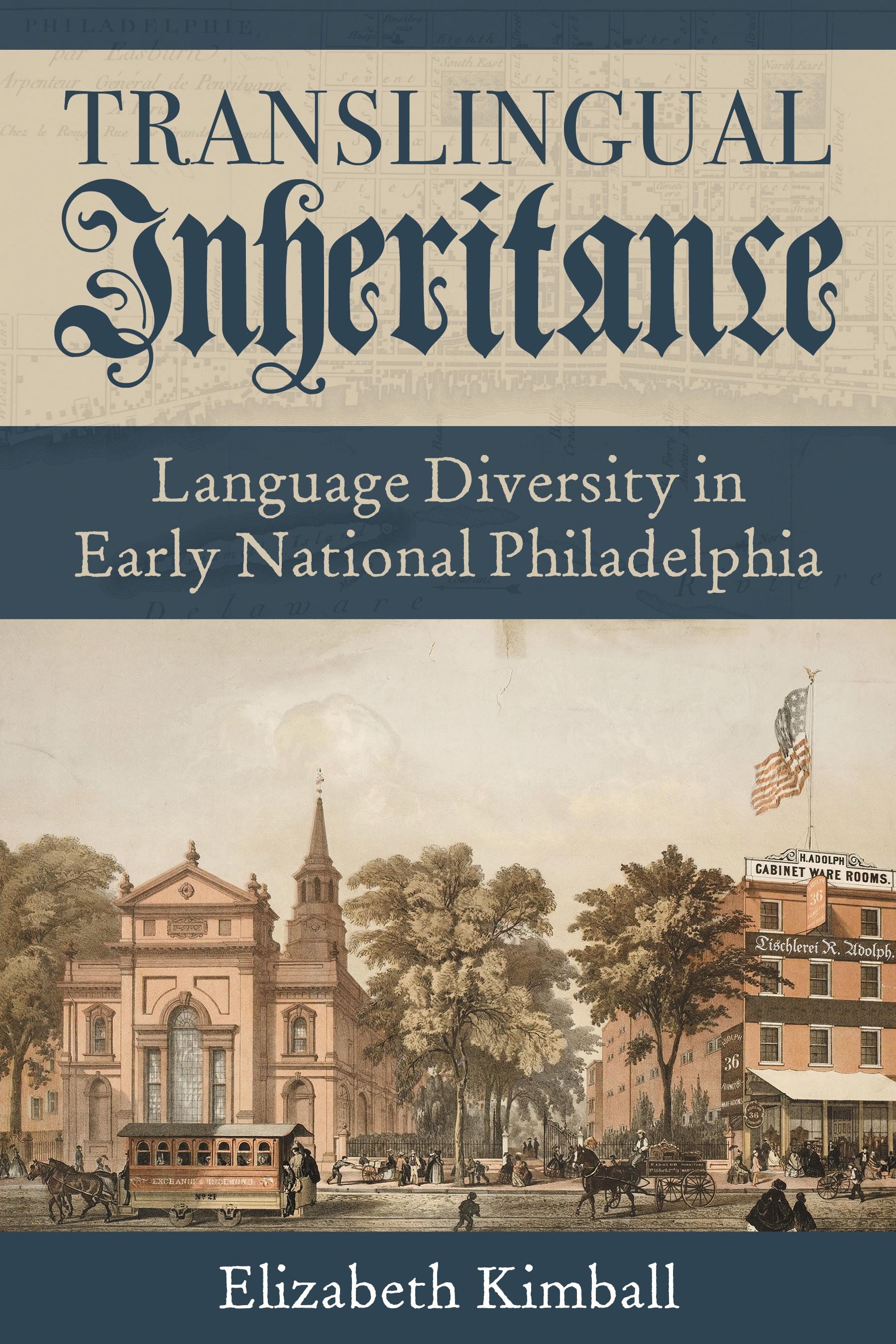
Translingual Inheritance tells a new story of the early days of democracy in the United States, when English had not yet become the only dominant language. Drawing on translingual theory, which exposes how language use contrasts with the political constructions of named languages, Elizabeth Kimball argues that Philadelphians developed complex metalinguistic conceptions of what language is and how it mattered in their relations. In-depth chapters introduce the democratically active communities of Philadelphia between 1750 and 1830 and introduce the three most populous: Germans, Quakers (the Society of Friends), and African Americans. These communities had ways of knowing and using their own languages to create identities and serve the common good outside of English. They used these practices to articulate plans and pedagogies for schools, exercise their faith, and express the promise of the young democracy. Kimball draws on primary sources and archival texts that have been little seen or considered to show how citizens consciously took on the question of language and its place in building their young country and how such practice is at the root of what made democracy possible.
Translingual Inheritance tells a new story of the early days of democracy in the United States, when English had not yet become the only dominant language. Drawing on translingual theory, which exposes how language use contrasts with the political constructions of named languages, Elizabeth Kimball argues that Philadelphians developed complex metalinguistic conceptions of what language is and how it mattered in their relations. In-depth chapters introduce the democratically active communities of Philadelphia between 1750 and 1830 and introduce the three most populous: Germans, Quakers (the Society of Friends), and African Americans. These communities had ways of knowing and using their own languages to create identities and serve the common good outside of English. They used these practices to articulate plans and pedagogies for schools, exercise their faith, and express the promise of the young democracy. Kimball draws on primary sources and archival texts that have been little seen or considered to show how citizens consciously took on the question of language and its place in building their young country and how such practice is at the root of what made democracy possible.
Categorie: Språk & Lingvistik
e-ISBN: 9780822988137
Betaal eenvoudig met kaart, Klarna, Apple Pay of Google Pay. Niet tevreden? Je hebt altijd 14 dagen bedenktijd. Lees meer in onze voorwaarden. Heb je vragen, mail ons dan via hello@memmo.org.
Memmo maakt studeren makkelijker – waar je ook bent ter wereld. Wij brengen je cursusboeken en slimme studietools samen op één plek: samenvattingen, quizzen, podcasts en flashcards. En Ted, je studievriend die antwoord geeft op alles wat je je afvraagt. Meer dan 50.000 studenten studeren hier al – gebouwd om je sneller te laten leren en minder stress te geven.
Misschien vind je dit ook leuk
Koop het boek0