
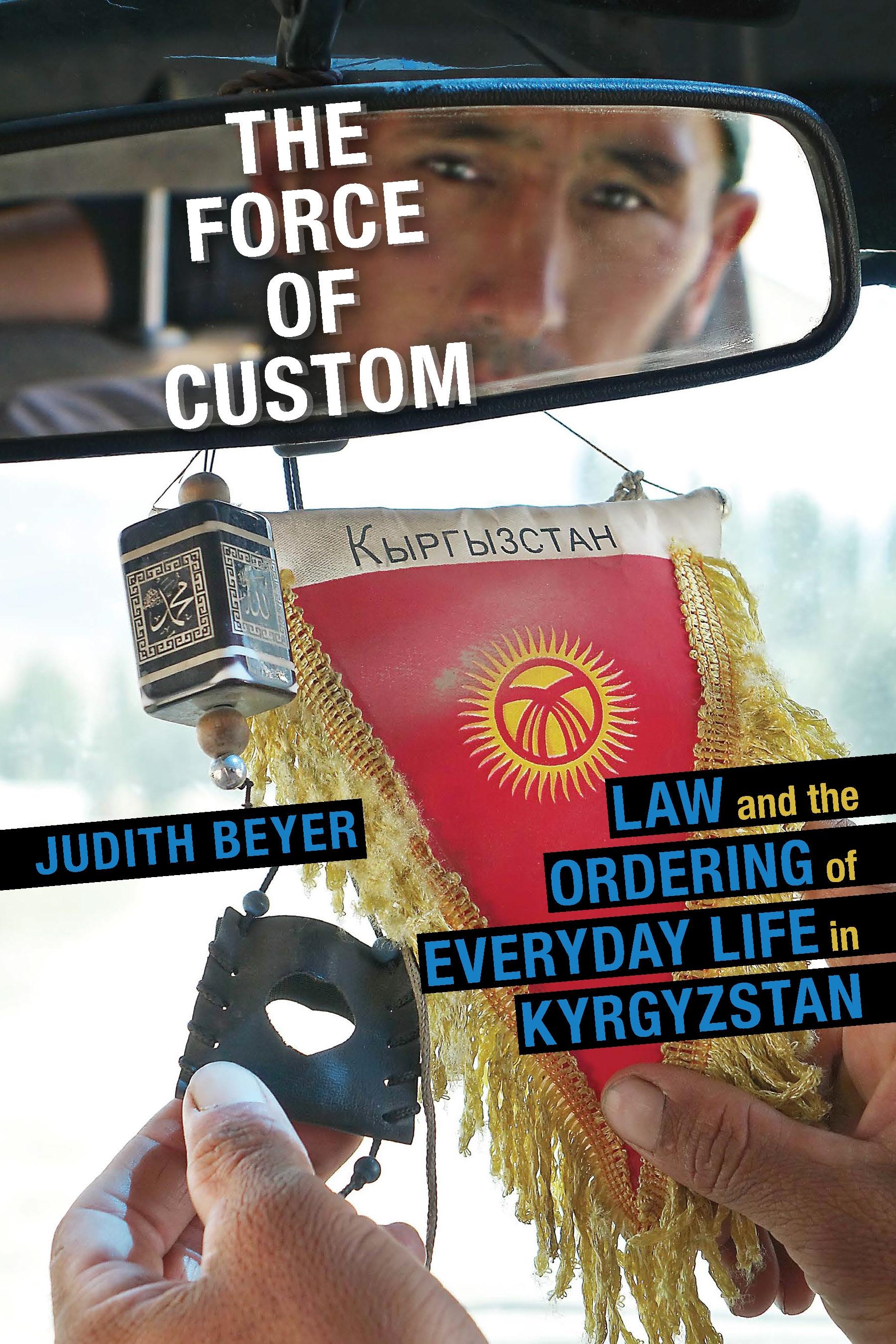
Judith Beyer presents a finely textured ethnographic study that sheds new light on the legal and moral ordering of everyday life in northwestern Kyrgyzstan. Through her extensive fieldwork, Beyer captures the thoughts and voices of local people in two villages, Aral and Engels, and combines these with firsthand observations to create an original ethnography.
Beyer shows how local Kyrgyz negotiate proper behavior and regulate disputes by invoking custom, known to the locals as salt. While salt is presented as age-old tradition, its invocation needs to be understood as a highly developed and flexible rhetorical strategy that people adapt to suit the political, legal, economic, and religious environments. Officially, codified state law should take precedence when it comes to dispute resolution, yet the unwritten laws of salt and the increasing importance of Islamic law provide the standards for ordering everyday life. As Beyer further reveals, interpretations of both Islamic and state law are also intrinsically linked to salt.
By interweaving case studies on kinship, legal negotiations, festive events, mourning rituals, and political and business dealings, Beyer shows how salt is the binding element in rural Kyrgyz social life, used to explain and negotiate moral behavior and to postulate communal identity. In this way, salt provides a time-tested, sustainable source of authentication that defies changes in government and the tides of religious movements. Beyer's ground-level analysis provides a broad base of knowledge that will be valuable for students and researchers of contemporary Central Asia.
Beyer shows how local Kyrgyz negotiate proper behavior and regulate disputes by invoking custom, known to the locals as salt. While salt is presented as age-old tradition, its invocation needs to be understood as a highly developed and flexible rhetorical strategy that people adapt to suit the political, legal, economic, and religious environments. Officially, codified state law should take precedence when it comes to dispute resolution, yet the unwritten laws of salt and the increasing importance of Islamic law provide the standards for ordering everyday life. As Beyer further reveals, interpretations of both Islamic and state law are also intrinsically linked to salt.
By interweaving case studies on kinship, legal negotiations, festive events, mourning rituals, and political and business dealings, Beyer shows how salt is the binding element in rural Kyrgyz social life, used to explain and negotiate moral behavior and to postulate communal identity. In this way, salt provides a time-tested, sustainable source of authentication that defies changes in government and the tides of religious movements. Beyer's ground-level analysis provides a broad base of knowledge that will be valuable for students and researchers of contemporary Central Asia.
Betaal eenvoudig met kaart, Klarna, Apple Pay of Google Pay. Niet tevreden? Je hebt altijd 14 dagen bedenktijd. Lees meer in onze voorwaarden. Heb je vragen, mail ons dan via hello@memmo.org.
Memmo maakt studeren makkelijker – waar je ook bent ter wereld. Wij brengen je cursusboeken en slimme studietools samen op één plek: samenvattingen, quizzen, podcasts en flashcards. En Ted, je studievriend die antwoord geeft op alles wat je je afvraagt. Meer dan 50.000 studenten studeren hier al – gebouwd om je sneller te laten leren en minder stress te geven.
Misschien vind je dit ook leuk
Koop het boek0