
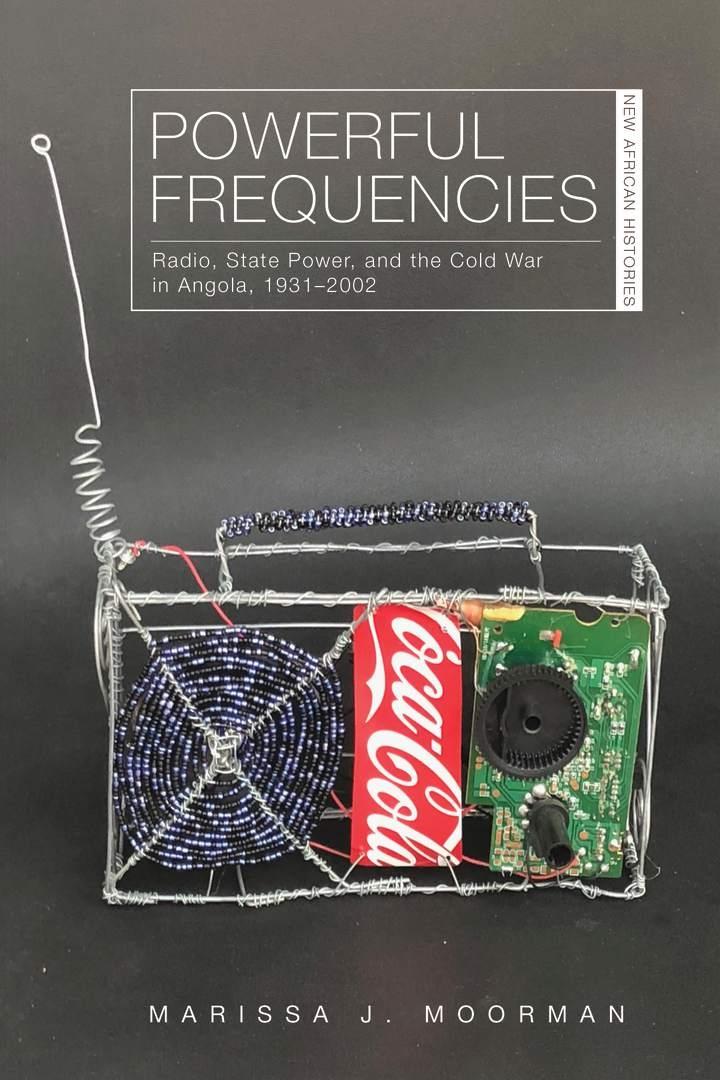
Powerful Frequencies details the central role that radio technology and broadcasting played in the formation of colonial Portuguese Southern Africa and the postcolonial nation-state, Angola. In Intonations, Marissa J. Moorman examined the crucial relationship between music and Angolan independence during the 1960s and ’70s. Now, Moorman turns to the history of Angolan radio as an instrument for Portuguese settlers, the colonial state, African nationalists, and the postcolonial state. They all used radio to project power, while the latter employed it to challenge empire.
From the 1930s introduction of radio by settlers, to the clandestine broadcasts of guerrilla groups, to radio’s use in the Portuguese counterinsurgency strategy during the Cold War era and in developing the independent state’s national and regional voice, Powerful Frequencies narrates a history of canny listeners, committed professionals, and dissenting political movements. All of these employed radio’s peculiarities—invisibility, ephemerality, and its material effects—to transgress social, political, “physical,” and intellectual borders. Powerful Frequencies follows radio’s traces in film, literature, and music to illustrate how the technology’s sonic power—even when it made some listeners anxious and frightened—created and transformed the late colonial and independent Angolan soundscape.
Betaal eenvoudig met kaart, Klarna, Apple Pay of Google Pay. Niet tevreden? Je hebt altijd 14 dagen bedenktijd. Lees meer in onze voorwaarden. Heb je vragen, mail ons dan via hello@memmo.org.
Memmo maakt studeren makkelijker – waar je ook bent ter wereld. Wij brengen je cursusboeken en slimme studietools samen op één plek: samenvattingen, quizzen, podcasts en flashcards. En Ted, je studievriend die antwoord geeft op alles wat je je afvraagt. Meer dan 50.000 studenten studeren hier al – gebouwd om je sneller te laten leren en minder stress te geven.