
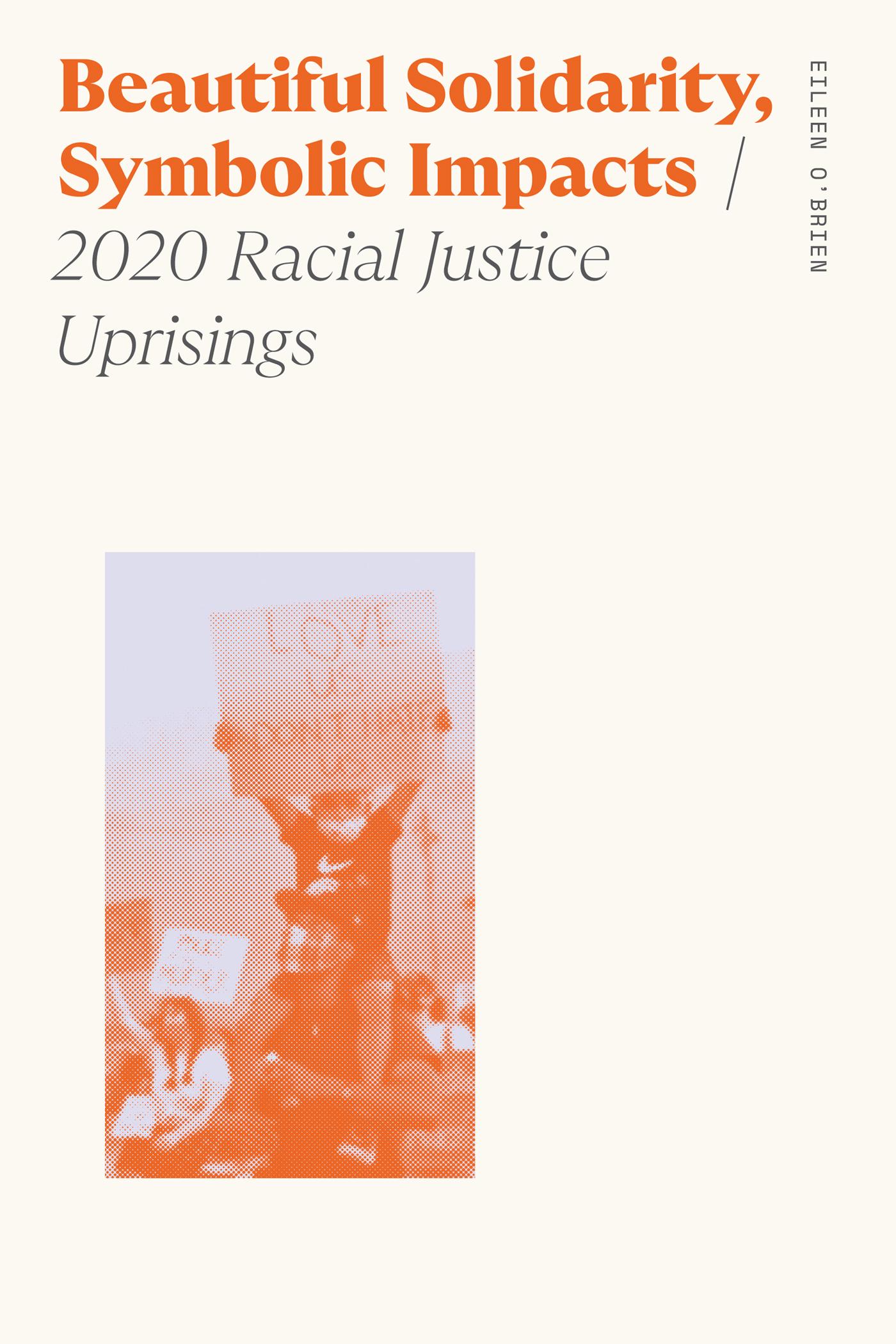
For activists working for racial justice for decades, the year 2020 stood out from the rest. More people seemed to care about racism than ever before. Due to this unprecedented surge, was anything more accomplished than in prior efforts?
Through interviews with uprising participants (a mix of first-time protesters and seasoned veterans; from both large cities and smaller towns), participant observation from three U.S. cities, and secondary data sources on U.S. and global 2020 protest actions, Eileen O’Brien documents what exactly was different about 2020 from a boots-on-the-ground vantage point.
Participants in the uprising drew a sense of meaning being part of something larger than themselves and were able to grieve racist violence collectively during a lockdown. They also created beautiful protest art out of plywood made necessary by white supremacist counter-protesters’ destruction of local businesses. They toppled Confederate monuments and felt that sentences like Derek Chauvin’s murder conviction or the three killers of Ahmaud Arbery on federal hate crime charges were rare victories only made possible through their activism. Later, many went back to business as usual after 2020, broader societal antiracist changes proved elusive, and backlash was swift. Yet, cross-racial interest convergence occurred for a brief antiracist moment, and “the struggle itself was redemptive.”
Betaal eenvoudig met kaart, Klarna, Apple Pay of Google Pay. Niet tevreden? Je hebt altijd 14 dagen bedenktijd. Lees meer in onze voorwaarden. Heb je vragen, mail ons dan via hello@memmo.org.
Memmo maakt studeren makkelijker – waar je ook bent ter wereld. Wij brengen je cursusboeken en slimme studietools samen op één plek: samenvattingen, quizzen, podcasts en flashcards. En Ted, je studievriend die antwoord geeft op alles wat je je afvraagt. Meer dan 50.000 studenten studeren hier al – gebouwd om je sneller te laten leren en minder stress te geven.