
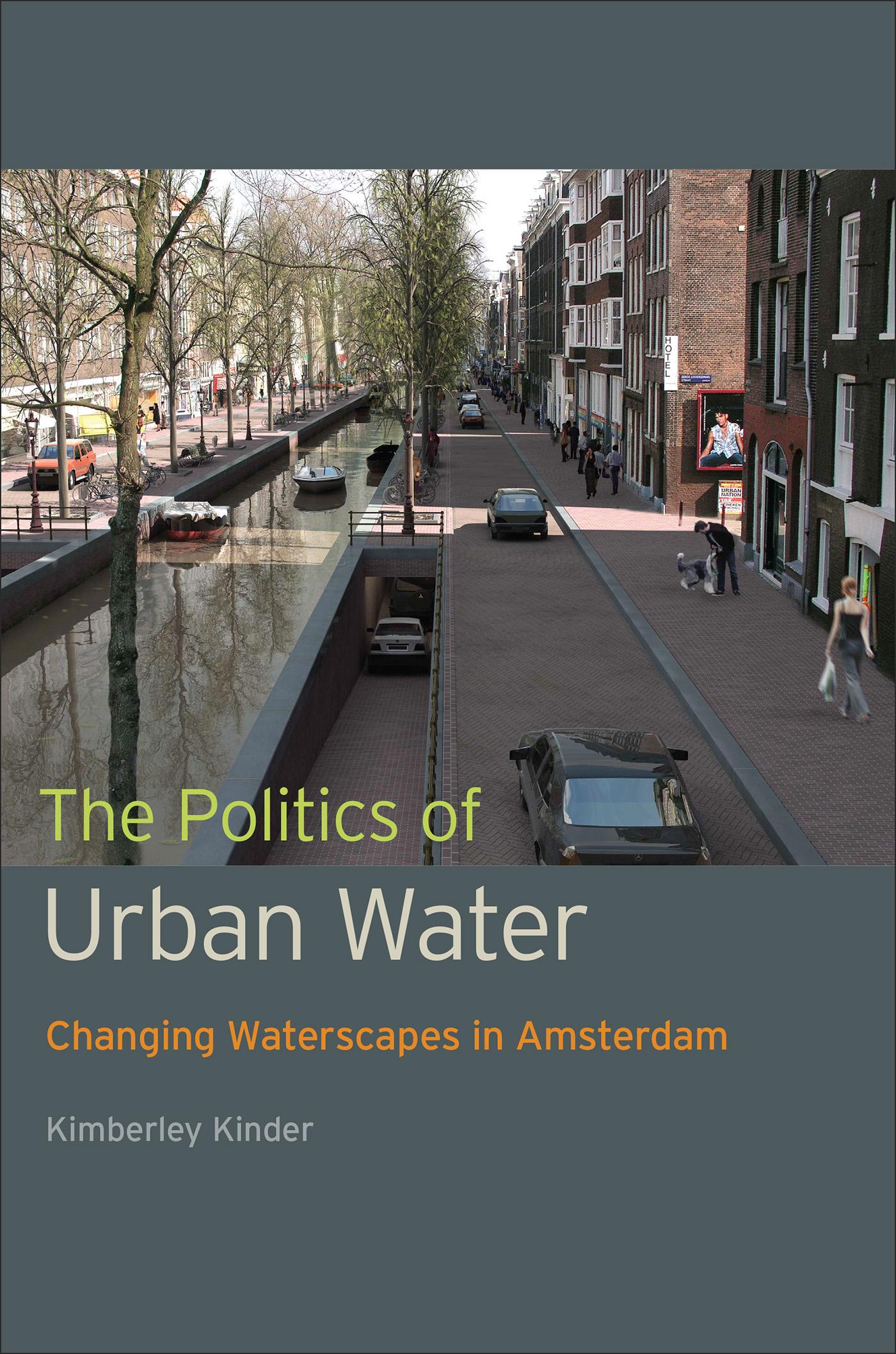
Fifty years ago, urban waterfronts were industrial, polluted, and diseased. Today, luxury homes and shops line riverbanks, harbors, and lakes across Europe and North America. The visual drama of physical reconstruction makes this transition look swift and decisive, but reimaging water is a slow process, punctuated by small cultural shifts and informal spatial seizures that change the meaning of wet urban spaces. In The Politics of Urban Water, Kimberley Kinder explores how active residents in Amsterdam deployed their cityscape when rallying around these concerns, turning space into a vehicle for social reform.
While market dynamics certainly contributed to the transformation of Amsterdam’s shorelines, squatters, partiers, artists, historians, environmentalists, tourists, reporters, and government officials also played crucial roles in bringing waterscapes to life. Their interventions pulled water in new directions, connecting it to political discussions about affordable housing, cultural tolerance, climate change, and national identity. Over time, these political valences have become embedded in laws, norms, symbols, markets, and landscapes, bringing rich undercurrents of friction to urban shores. Amsterdam’s development serves as both an inspiration and a cautionary tale for cities across Europe and North America where rapid new growth creates similar pressures and anxieties.
Betaal eenvoudig met kaart, Klarna, Apple Pay of Google Pay. Niet tevreden? Je hebt altijd 14 dagen bedenktijd. Lees meer in onze voorwaarden. Heb je vragen, mail ons dan via hello@memmo.org.
Memmo maakt studeren makkelijker – waar je ook bent ter wereld. Wij brengen je cursusboeken en slimme studietools samen op één plek: samenvattingen, quizzen, podcasts en flashcards. En Ted, je studievriend die antwoord geeft op alles wat je je afvraagt. Meer dan 50.000 studenten studeren hier al – gebouwd om je sneller te laten leren en minder stress te geven.