
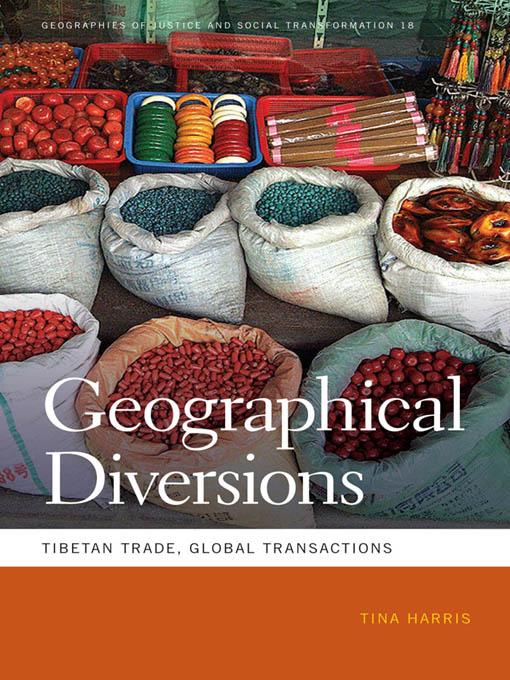
Working at the intersections of cultural anthropology, human geography, and material culture, Tina Harris explores the social and economic transformations taking place along one trade route that winds its way across China, Nepal, Tibet, and India.
How might we make connections between seemingly mundane daily life and more abstract levels of global change? Geographical Diversions focuses on two generations of traders who exchange goods such as sheep wool, pang gdan aprons, and more recently, household appliances. Exploring how traders "make places," Harris examines the creation of geographies of trade that work against state ideas of what trade routes should look like. She argues that the tensions between the apparent fixity of national boundaries and the mobility of local individuals around such restrictions are precisely how routes and histories of trade are produced.
The economic rise of China and India has received attention from the international media, but the effects of major new infrastructure at the intersecting borderlands of these nationstates—in places like Tibet, northern India, and Nepal—have rarely been covered. Geographical Diversions challenges globalization theories based on bounded conceptions of nation-states and offers a smaller-scale perspective that differs from many theories of macroscale economic change.
Betaal eenvoudig met kaart, Klarna, Apple Pay of Google Pay. Niet tevreden? Je hebt altijd 14 dagen bedenktijd. Lees meer in onze voorwaarden. Heb je vragen, mail ons dan via hello@memmo.org.
Memmo maakt studeren makkelijker – waar je ook bent ter wereld. Wij brengen je cursusboeken en slimme studietools samen op één plek: samenvattingen, quizzen, podcasts en flashcards. En Ted, je studievriend die antwoord geeft op alles wat je je afvraagt. Meer dan 50.000 studenten studeren hier al – gebouwd om je sneller te laten leren en minder stress te geven.