
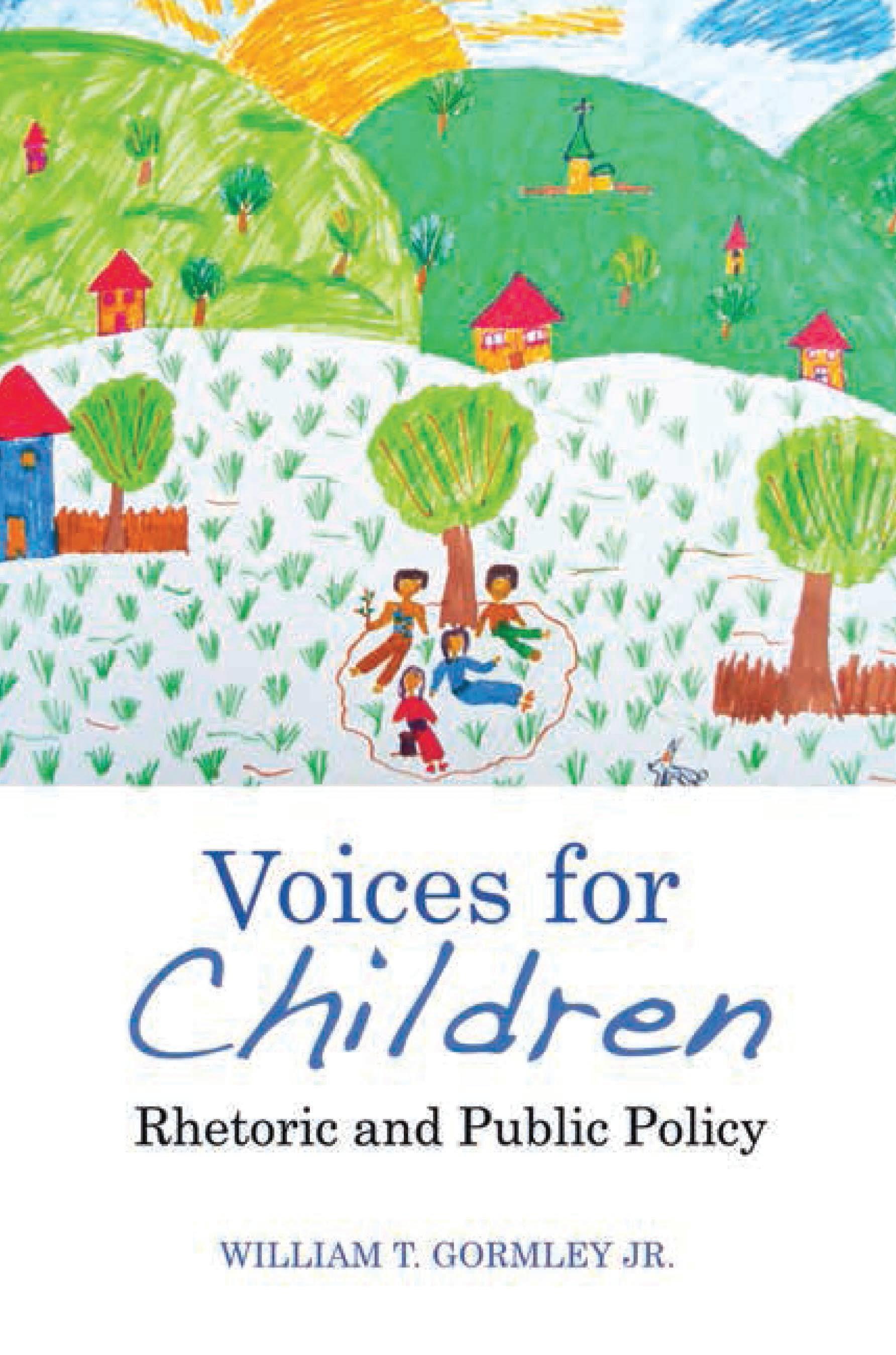
The United States spends more on programs for the elderly than it does on programs that enhance child development and improve child welfare. Why has public policy neglected the development phase of young Americans' lives not only in substantive dollars spent, but also in program design and implementation? Noted child care and education policy expert William Gormley highlights the portrayal of children's issues in both the mass media and in public policymaking to explain why children have gotten short shrift. A key explanation is the limited mass media coverage of strong arguments in support of children's programs.
After documenting changes in rhetoric on children and public policy over time and variations across policy domains and government venues, Gormley demonstrates that some ""issue frames"" are more effective than others in persuading voters. In two randomized experiments, he finds that ""economic"" frames are more effective than ""moralistic"" frames in generating public support for children's programs. Independent voters are especially responsive to economic frames. In several illuminating case studies, in Connecticut, Utah, North Carolina, and Pennsylvania, he finds that strong rhetoric makes a difference but that it is sometimes eclipsed by even stronger political and economic constraints.
Voices for Children offers a fresh perspective on raging debates over child health, child poverty, child welfare, and education programs at the federal and state levels. It finds some hopeful examples that could transform how we think about children's issues and the kinds of public policies we adopt.
After documenting changes in rhetoric on children and public policy over time and variations across policy domains and government venues, Gormley demonstrates that some ""issue frames"" are more effective than others in persuading voters. In two randomized experiments, he finds that ""economic"" frames are more effective than ""moralistic"" frames in generating public support for children's programs. Independent voters are especially responsive to economic frames. In several illuminating case studies, in Connecticut, Utah, North Carolina, and Pennsylvania, he finds that strong rhetoric makes a difference but that it is sometimes eclipsed by even stronger political and economic constraints.
Voices for Children offers a fresh perspective on raging debates over child health, child poverty, child welfare, and education programs at the federal and state levels. It finds some hopeful examples that could transform how we think about children's issues and the kinds of public policies we adopt.
Pagina's: 198
Categorie: Statsvetenskap & Politik
e-ISBN: 9780815724032
Verzendgewicht: 1.2 kg
Verzending binnen: 1-2 dagen
Betaal eenvoudig met kaart, Klarna, Apple Pay of Google Pay. Niet tevreden? Je hebt altijd 14 dagen bedenktijd. Lees meer in onze voorwaarden. Heb je vragen, mail ons dan via hello@memmo.org.
Memmo maakt studeren makkelijker – waar je ook bent ter wereld. Wij brengen je cursusboeken en slimme studietools samen op één plek: samenvattingen, quizzen, podcasts en flashcards. En Ted, je studievriend die antwoord geeft op alles wat je je afvraagt. Meer dan 50.000 studenten studeren hier al – gebouwd om je sneller te laten leren en minder stress te geven.