
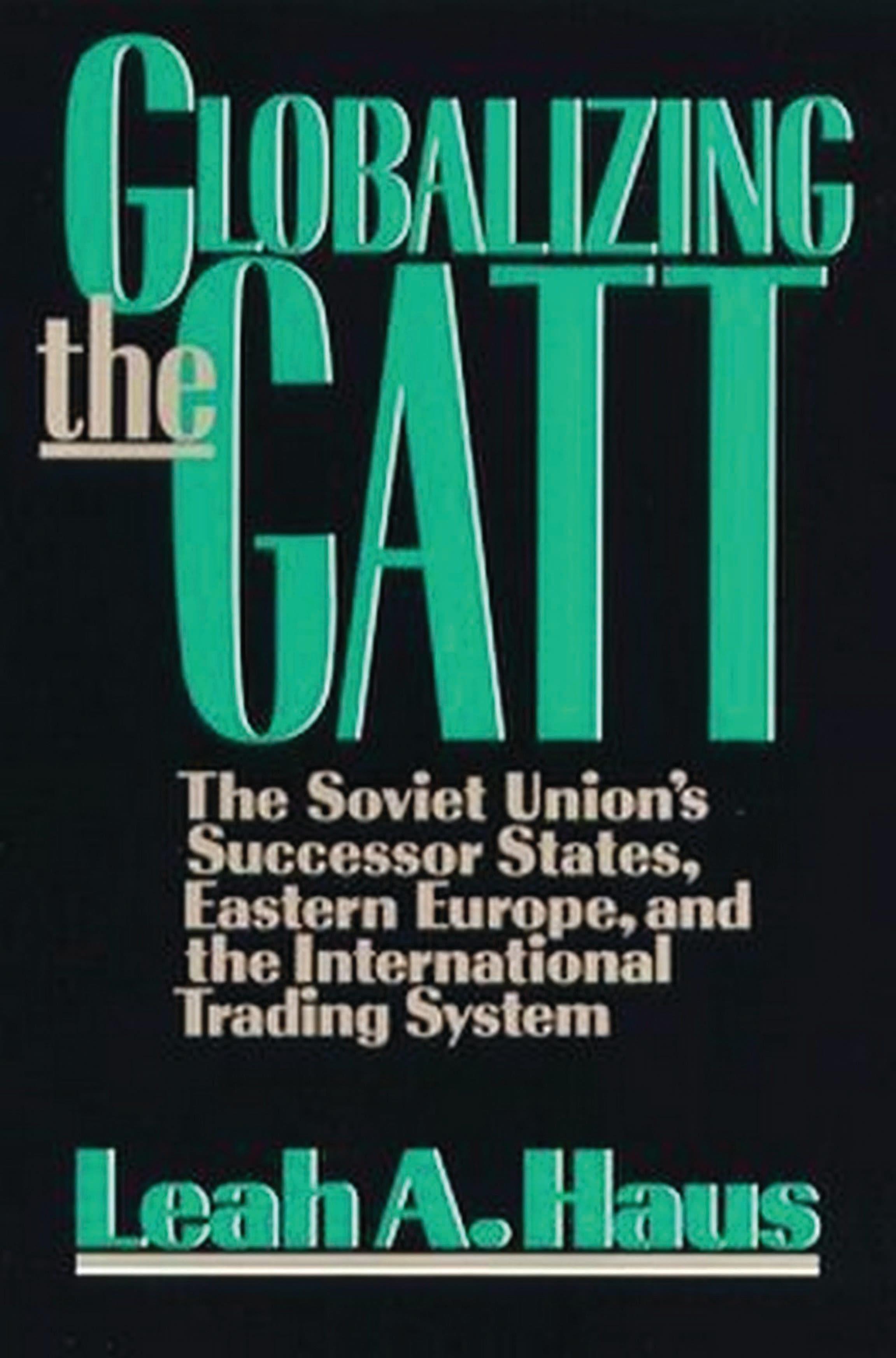
The explosive events in Eastern Europe and the dissolution of the Soviet Union have dramatically changed the political landscape that had existed for decades. The West must now develop new policies that are suitable for addressing the opportunities and challenges of the post-cold war world. Globalizing the GATT describes the task of integrating the Soviet Union's successor states and Eastern European counties into the global economy and focuses on their participation in the international trade participation in the international trade institution, the General Agreement on Tariffs and Trade (GATT). Through a comparative analysis of the history of negotiations between the former Eastern European countries and the GATT, Leah Haus explains the current policy problems that must be addressed.
Drawing on documentary sources and extensive interviews with former and current officials from the European Community, the GATT secretariat, Hungary, Poland, and the Untied States, the author traces the historical origins and evolution of the Soviet and Eastern European countries' relations with the GATT from the 1940s to the present.
Haus demonstrates that economic issues have been less relevant to these negotiations than might be expected, because Western political-security concerns have predominated in the past. Strategic political objectives have driven Western policies when determining whether an eastern European country could affiliate with the GATT.
Haus shows that trade policy issues generally surfaced when strategic political objectives dictated cooperation with an eastern European country, and in these cases the negotiations became enmeshed in broader West-West conflicts over multilateral and bilateral trade practices.
Drawing on documentary sources and extensive interviews with former and current officials from the European Community, the GATT secretariat, Hungary, Poland, and the Untied States, the author traces the historical origins and evolution of the Soviet and Eastern European countries' relations with the GATT from the 1940s to the present.
Haus demonstrates that economic issues have been less relevant to these negotiations than might be expected, because Western political-security concerns have predominated in the past. Strategic political objectives have driven Western policies when determining whether an eastern European country could affiliate with the GATT.
Haus shows that trade policy issues generally surfaced when strategic political objectives dictated cooperation with an eastern European country, and in these cases the negotiations became enmeshed in broader West-West conflicts over multilateral and bilateral trade practices.
Pagina's: 180
Categorie: Ekonomi & Utveckling
e-ISBN: 9780815716211
Verzendgewicht: 1.2 kg
Verzending binnen: 1-2 dagen
Betaal eenvoudig met kaart, Klarna, Apple Pay of Google Pay. Niet tevreden? Je hebt altijd 14 dagen bedenktijd. Lees meer in onze voorwaarden. Heb je vragen, mail ons dan via hello@memmo.org.
Memmo maakt studeren makkelijker – waar je ook bent ter wereld. Wij brengen je cursusboeken en slimme studietools samen op één plek: samenvattingen, quizzen, podcasts en flashcards. En Ted, je studievriend die antwoord geeft op alles wat je je afvraagt. Meer dan 50.000 studenten studeren hier al – gebouwd om je sneller te laten leren en minder stress te geven.