
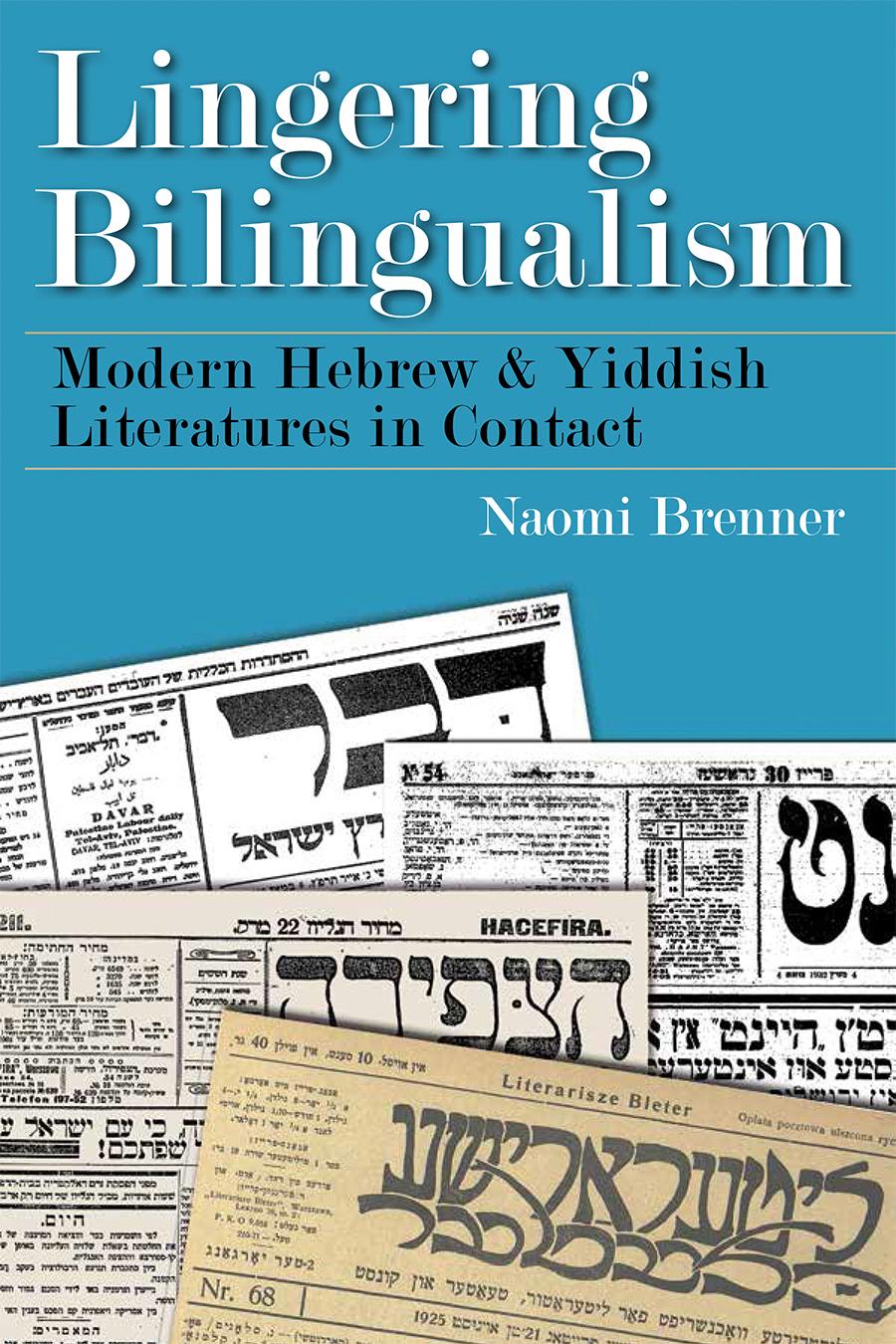
In a famous comment made by the poet Chayim Nachman Bialik, Hebrew—the language of the Jewish religious and intellectual tradition—and Yiddish—the East European Jewish vernacular—were "a match made in heaven that cannot be separated." That marriage, so the story goes, collapsed in the years immediately preceding and following World War I. But did the "exes" really go their separate ways?
Lingering Bilingualism argues that the interwar period represents not an endpoint but rather a new phase in Hebrew-Yiddish linguistic and literary contact. Though the literatures followed different geographic and ideological paths, their writers and readers continued to interact in places like Berlin, Tel Aviv, and New York—and imagined new paradigms for cultural production in Jewish languages. Brenner traces a shift from traditional bilingualism to a new translingualism in response to profound changes in Jewish life and culture. By foregrounding questions of language, she examines both the unique literary-linguistic circumstances of Ashkenazi Jewish writing and the multilingualism that can lurk within national literary canons.
Betaal eenvoudig met kaart, Klarna, Apple Pay of Google Pay. Niet tevreden? Je hebt altijd 14 dagen bedenktijd. Lees meer in onze voorwaarden. Heb je vragen, mail ons dan via hello@memmo.org.
Memmo maakt studeren makkelijker – waar je ook bent ter wereld. Wij brengen je cursusboeken en slimme studietools samen op één plek: samenvattingen, quizzen, podcasts en flashcards. En Ted, je studievriend die antwoord geeft op alles wat je je afvraagt. Meer dan 50.000 studenten studeren hier al – gebouwd om je sneller te laten leren en minder stress te geven.