
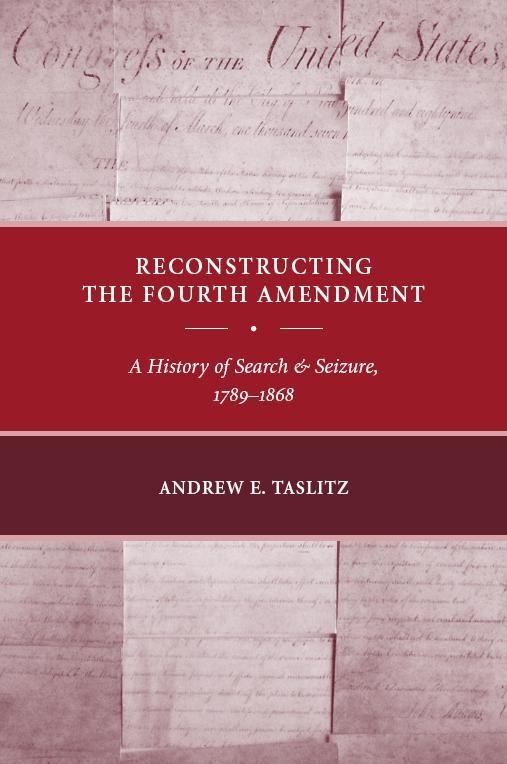
The modern law of search and seizure permits warrantless searches that ruin the citizenry's trust in law enforcement, harms minorities, and embraces an individualistic notion of the rights that it protects, ignoring essential roles that properly-conceived protections of privacy, mobility, and property play in uniting Americans. Many believe the Fourth Amendment is a poor bulwark against state tyrannies, particularly during the War on Terror.
Historical amnesia has obscured the Fourth Amendment's positive aspects, and Andrew E. Taslitz rescues its forgotten history in Reconstructing the Fourth Amendment, which includes two novel arguments. First, that the original Fourth Amendment of 1791—born in political struggle between the English and the colonists—served important political functions, particularly in regulating expressive political violence. Second, that the Amendment’s meaning changed when the Fourteenth Amendment was created to give teeth to outlawing slavery, and its focus shifted from primary emphasis on individualistic privacy notions as central to a white democratic polis to enhanced protections for group privacy, individual mobility, and property in a multi-racial republic.
With an understanding of the historical roots of the Fourth Amendment, suggests Taslitz, we can upend negative assumptions of modern search and seizure law, and create new institutional approaches that give political voice to citizens and safeguard against unnecessary humiliation and dehumanization at the hands of the police.
Betaal eenvoudig met kaart, Klarna, Apple Pay of Google Pay. Niet tevreden? Je hebt altijd 14 dagen bedenktijd. Lees meer in onze voorwaarden. Heb je vragen, mail ons dan via hello@memmo.org.
Memmo maakt studeren makkelijker – waar je ook bent ter wereld. Wij brengen je cursusboeken en slimme studietools samen op één plek: samenvattingen, quizzen, podcasts en flashcards. En Ted, je studievriend die antwoord geeft op alles wat je je afvraagt. Meer dan 50.000 studenten studeren hier al – gebouwd om je sneller te laten leren en minder stress te geven.