
2009 Choice Outstanding Academic Title
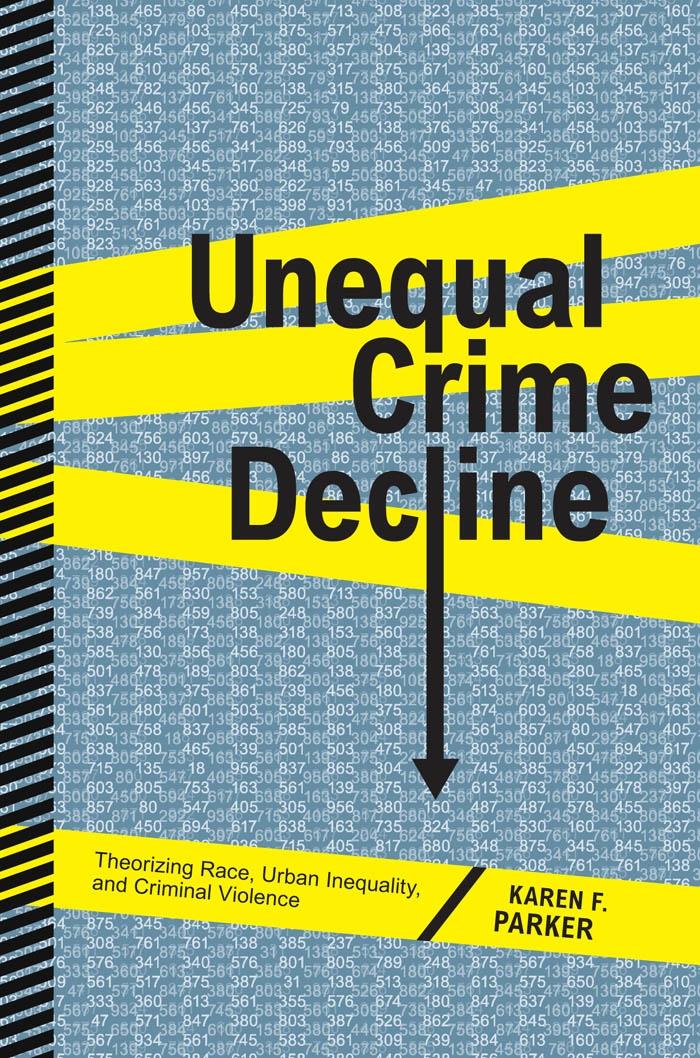
Crime in most urban areas has been falling since 1991. While the decline has been well-documented, few scholars have analyzed which groups have most benefited from the crime decline and which are still on the frontlines of violence—and why that might be. In Unequal Crime Decline, Karen F. Parker presents a structural and theoretical analysis of the various factors that affect the crime decline, looking particularly at the past three decades and the shifts that have taken place, and offers original insight into which trends have declined and why.
Taking into account such indicators as employment, labor market opportunities, skill levels, housing, changes in racial composition, family structure, and drug trafficking, Parker provides statistics that illustrate how these factors do or do not affect urban violence, and carefully considers these factors in relation to various crime trends, such as rates involving blacks, whites, but also trends among black males, white females, as well as others. Throughout the book she discusses popular structural theories of crime and their limitations, in the end concentrating on today’s issues and important contemporary policy to be considered. Unequal Crime Decline is a comprehensive and theoretically sophisticated look at the relationship among race, urban inequality, and violence in the years leading up to and following America’s landmark crime drop.
Betaal eenvoudig met kaart, Klarna, Apple Pay of Google Pay. Niet tevreden? Je hebt altijd 14 dagen bedenktijd. Lees meer in onze voorwaarden. Heb je vragen, mail ons dan via hello@memmo.org.
Memmo maakt studeren makkelijker – waar je ook bent ter wereld. Wij brengen je cursusboeken en slimme studietools samen op één plek: samenvattingen, quizzen, podcasts en flashcards. En Ted, je studievriend die antwoord geeft op alles wat je je afvraagt. Meer dan 50.000 studenten studeren hier al – gebouwd om je sneller te laten leren en minder stress te geven.