
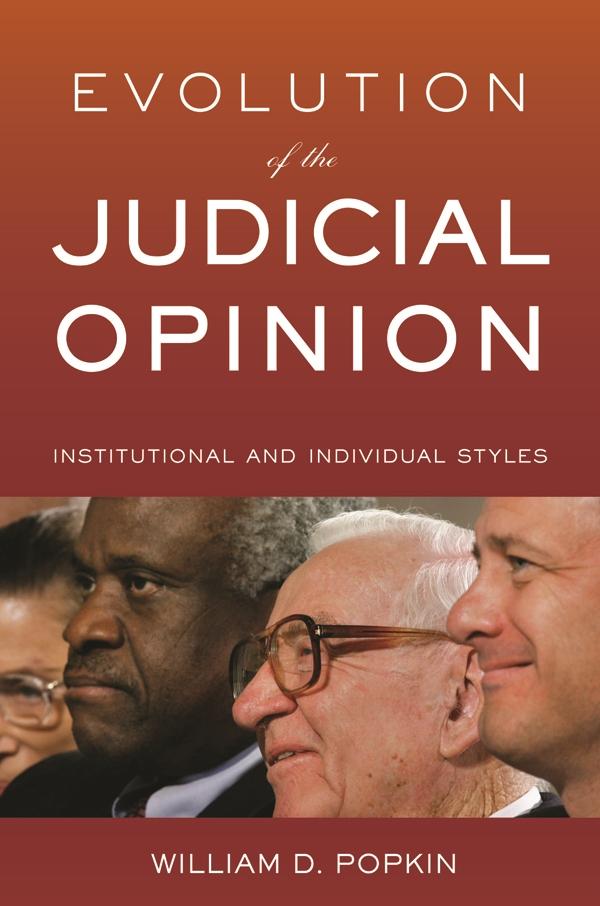
In this sweeping study of the judicial opinion, William D. Popkin examines how judges' opinions have been presented from the early American Republic to the present. Throughout history, he maintains, judges have presented their opinions within political contexts that involve projecting judicial authority to the external public, yet within a professional legal culture that requires opinions to develop judicial law through particular institutional and individual judicial styles.
Tracing the history of judicial opinion from its roots in English common law, Popkin documents a general shift from unofficially reported oral opinions, to semi-official reports, to the U.S. Supreme Court's adoption in the early nineteenth century of generally unanimous opinions. While this institutional base was firmly established by the twentieth century, Popkin suggests that the modern U.S. judicial opinion has reverted—in some respects—to one in which each judge expresses an individual point of view. Ultimately, he concludes that a shift from an authoritative to a more personal and exploratory individual style of writing opinions is consistent with a more democratic judicial institution.
Betaal eenvoudig met kaart, Klarna, Apple Pay of Google Pay. Niet tevreden? Je hebt altijd 14 dagen bedenktijd. Lees meer in onze voorwaarden. Heb je vragen, mail ons dan via hello@memmo.org.
Memmo maakt studeren makkelijker – waar je ook bent ter wereld. Wij brengen je cursusboeken en slimme studietools samen op één plek: samenvattingen, quizzen, podcasts en flashcards. En Ted, je studievriend die antwoord geeft op alles wat je je afvraagt. Meer dan 50.000 studenten studeren hier al – gebouwd om je sneller te laten leren en minder stress te geven.