
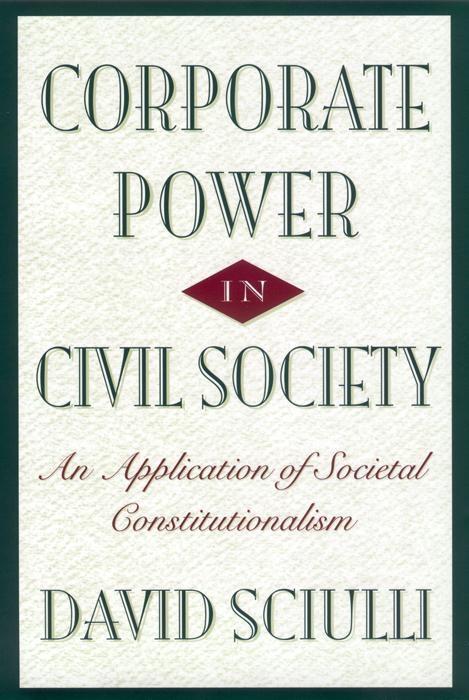
The corporate mega-mergers of the 1980s and 1990s raise many troubling questions for social scientists and legal scholars. Do corporate globalism and the new, streamlined corporation help or hinder the development of civil society? Does the new power that increasingly deregulated businesses wield undermine the rights of citizens, or is this threat being exaggerated? Who has the authority to get things done in a corporation's name and who can be held legally responsible for a corporation's misbehavior? What role, if any, should the courts play in strengthening the rights of individuals who challenge the actions of big business?
David Sciulli maps the legal limits of corporate power in our democratic society, and explores the role of the corporate judiciary in creating public policy. He argues that the judiciary must be more vigilant and act to curb corporate abuses. He demonstrates that when corporations exercise their private power in civil society, they are just as capable as the state of exercising it in ways that are dangerous, arbitrary, and challenge the basic institutional arrangements of society. Finally, Sciulli calls for sociologists to involve themselves more deeply in issues of corporate governance and commit their discipline to influencing the decisions of the courts.
Betaal eenvoudig met kaart, Klarna, Apple Pay of Google Pay. Niet tevreden? Je hebt altijd 14 dagen bedenktijd. Lees meer in onze voorwaarden. Heb je vragen, mail ons dan via hello@memmo.org.
Memmo maakt studeren makkelijker – waar je ook bent ter wereld. Wij brengen je cursusboeken en slimme studietools samen op één plek: samenvattingen, quizzen, podcasts en flashcards. En Ted, je studievriend die antwoord geeft op alles wat je je afvraagt. Meer dan 50.000 studenten studeren hier al – gebouwd om je sneller te laten leren en minder stress te geven.